Short answer
The main bead weaving stitches are loom weaving, square stitch, peyote (mosaic), brick stitch, herringbone (Ndebele), netting and right angle weave. Cubic right angle weave, bead crochet and parallel weave on wire add ropes and 3D figures. They differ in how each bead sits against its neighbours, which sets the look, the flexibility and the chart.
What you need
- Seed beads: Miyuki Delica 11/0 for peyote and brick stitch, round 10/0 for loom, netting and crochet
- Beading thread and beading needles (two needles for cross weave)
- A bead loom for loom weaving, a steel hook for bead crochet, thin wire for parallel weave
- A chart drawn on the grid of your stitch
- A bead mat and good light
Words the chart uses
- Off-loom
- Bead weaving done with a needle and thread alone, no loom. Peyote, brick, square stitch, herringbone, netting and right angle weave are all off-loom stitches.
- Offset
- The half-bead shift between neighbouring rows or columns in peyote and brick stitch. It is why their charts are staggered grids.
- Ladder stitch
- A row of beads sewn side by side. It is the base row for brick stitch and herringbone.
- Two-drop
- Two beads picked up and treated as one stitch, usually in peyote or brick stitch.
- Unit
- One ring of four beads in right angle weave. Units share their beads with their neighbours.
- Word chart
- A written list of the beads to pick up, such as 2A, 1B, 3A. 3D peyote shapes are usually worked from one.
Types of bead weaving stitches compared
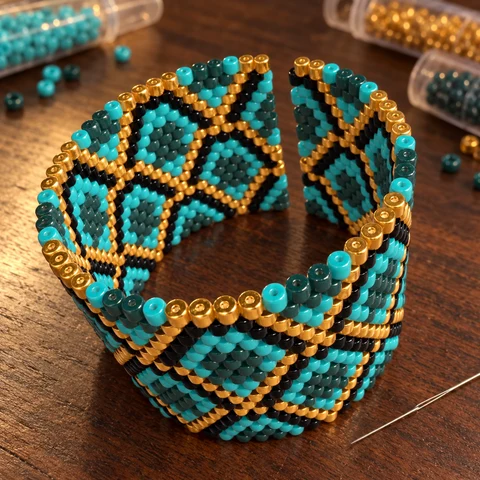
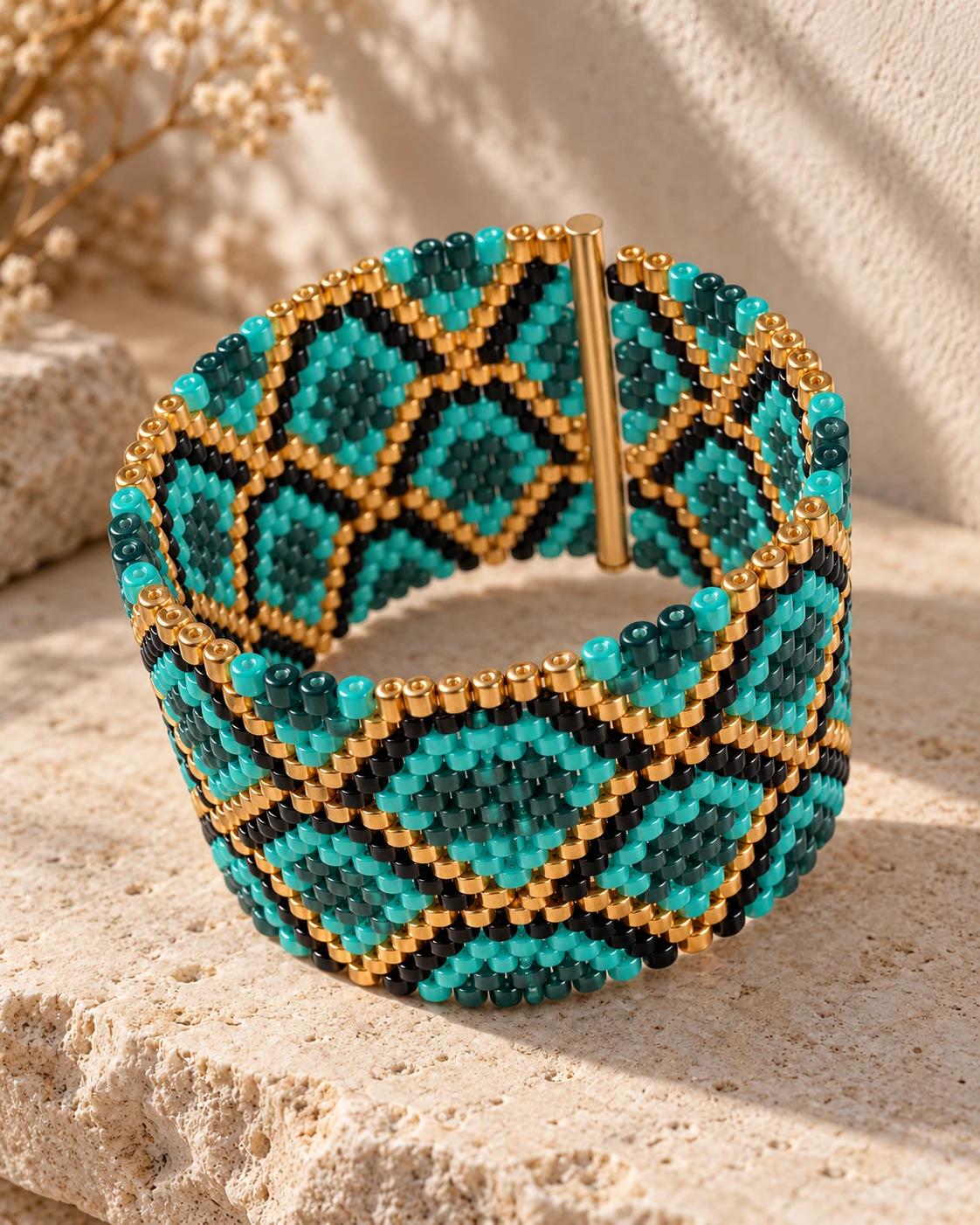
Bead weaving joins seed beads to each other with thread, and sometimes wire or fishing line, so the beads themselves become the fabric. The different types of bead weaving split into loom work and off-loom stitches done with a needle, and each stitch has its own rule for where the next bead sits.
That rule is what tells the stitches apart. In loom work and square stitch the beads line up in straight rows and columns. In peyote and brick stitch every other column or row shifts half a bead. Netting and right angle weave leave holes between the beads, and crochet and the 3D stitches close the work into a tube or a shape.
| Stitch | How the beads sit | Look | Typical beads | Best for | Difficulty |
|---|---|---|---|---|---|
| Loom weaving | Side by side in straight rows, held between warp threads | Flat, even grid | Preciosa 10/0 (2.3 mm), Delica 11/0 (1.6 mm) | Gerdans, bracelets, big pictures | 1 |
| Square stitch | Straight rows and columns, each bead sewn to the one below | Like loom work, firmer | Delica 11/0, round 11/0 | Small bands, charms, stepped edges | 1 |
| Peyote (mosaic), flat | In the gap between two beads; columns offset half a bead | Smooth, tight, like tiles | Delica 11/0 | Cuffs, panels, lettering | 1-2 |
| Peyote, tubular and 3D | The same offset in rounds, with pairs at the corners | Tubes, stars, balls, pods | Delica 11/0, round 11/0 | Ornaments, beaded beads, toys | 3 |
| Brick stitch | On their side, hung on the thread between two beads below | Like peyote turned a quarter | Delica 11/0 | Earrings, pendants, shaped motifs | 2 |
| Herringbone (Ndebele) | In pairs that lean into a V | Ribbed chevron columns | Round or cylinder 11/0 | Ropes, textured bands | 2 |
| Netting | Groups joined through shared beads, leaving open diamonds | Light, open mesh | Preciosa 10/0 | Sylianky, collars, lariats | 2 |
| Right angle weave | Rings of four, each bead at a right angle to the next | Soft fabric with a hole in every unit | Round 10/0 or 11/0 | Pendants, keychains, bookmarks | 2 |
| Cubic right angle weave | Cubes of 12 beads: front, back and four pillars | Solid, square in section | Round 10/0 or 11/0 | Square ropes, 3D shapes | 3 |
| Bead crochet | One bead per slip stitch, nested in a spiral | Round, smooth tube | Preciosa 10/0, round 11/0 | Ropes, bangles, balls, coasters | 3 |
| Parallel weave | Rows on wire, each crossed by the other wire end | Rows like rungs, holds its shape | Round seed beads on thin wire | 3D animals, keychains | 1 |
| Bead amigurumi | Rings of cross weave that close into a shell | Plump 3D figure | Round seed beads, 6/0 for eyes | Animal charms and gifts | 3 |
The offset matters for planning, not just for looks. The same 2 × 18 cm band in Preciosa 10/0 takes 948 beads on a loom or in square stitch, and 1,260 in peyote or brick stitch, because offset rows nest into each other and each adds only three quarters of a bead's height. In Delica 11/0 it is 1,808 against 2,250. The bead pattern size calculator does this for any chart.
Loom weaving and square stitch: beads in straight rows
On a bead loom the warp threads run the length of the piece. A whole row of beads is picked up on the working thread, pushed up between the warps from underneath and locked by passing back through the same beads above them. You need one more warp thread than beads across: 22 for a 21-bead panel.
Loom beads sit side by side with their holes across the band, so each cell is a little taller than wide. In Preciosa 10/0 a row is 2.3 mm long and a bead takes 1.73 mm of the width. A design drawn on square cells comes out stretched.
Loom bracelets
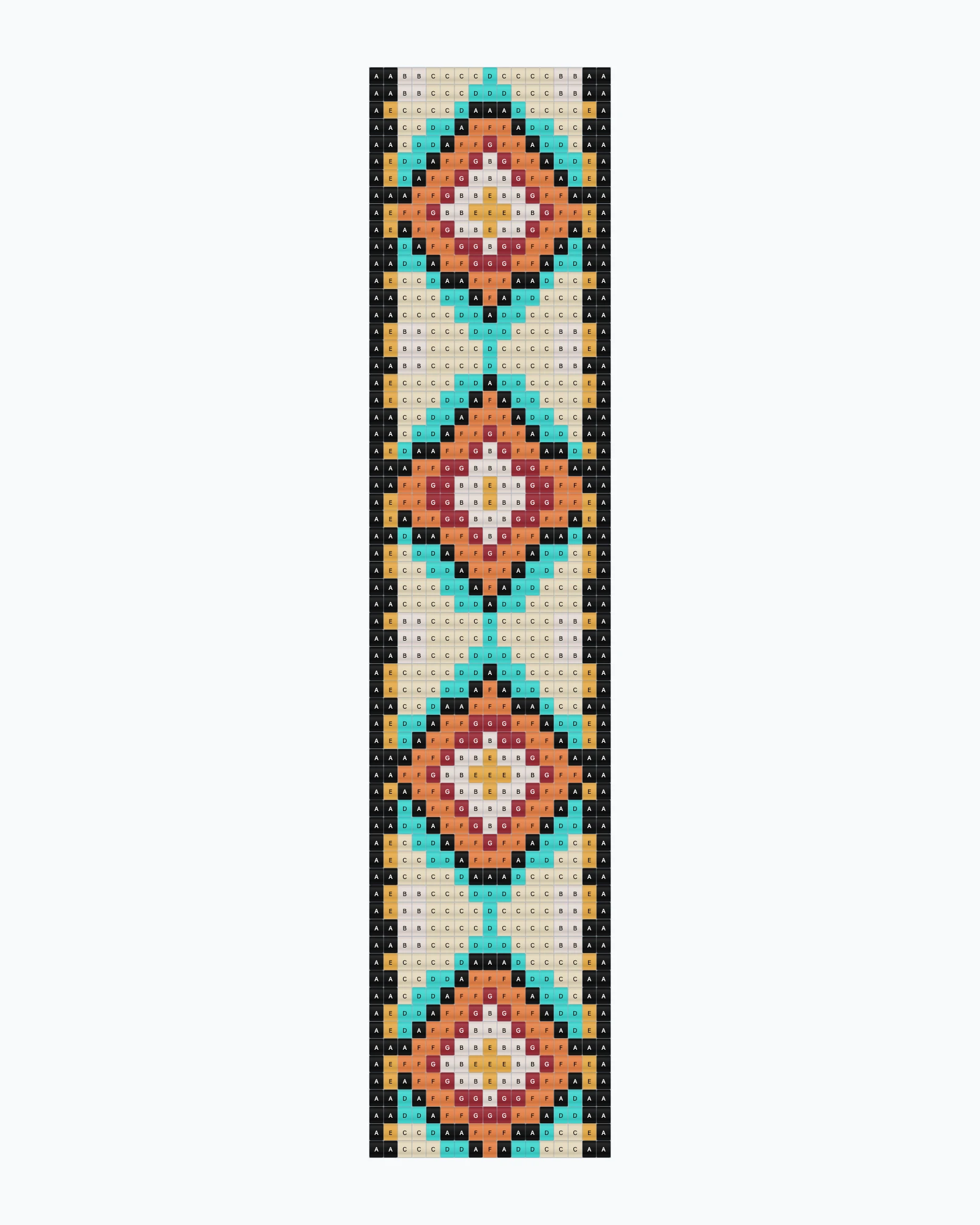
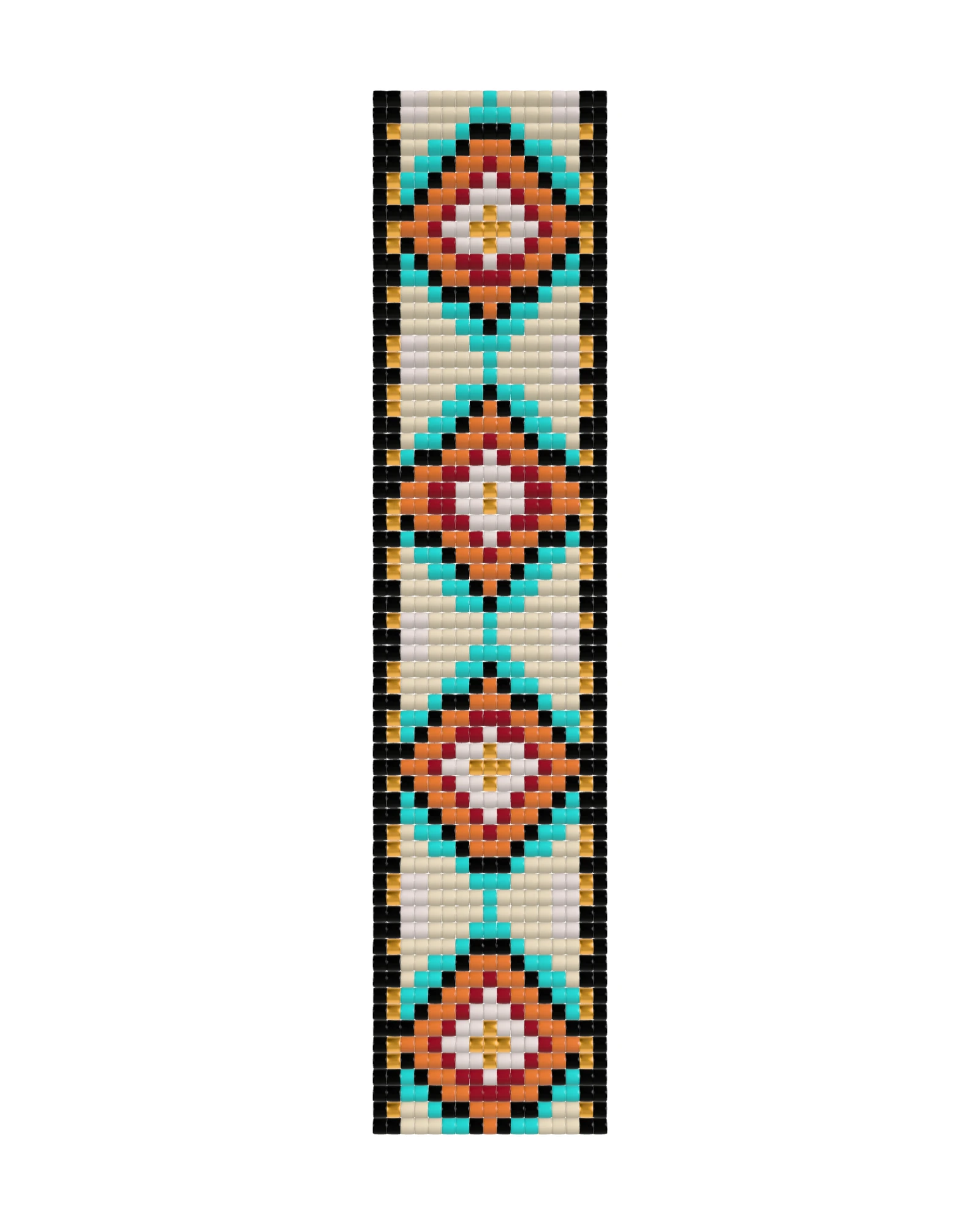
A loom bracelet is a narrow band, often 10 to 25 beads wide. Wevy's loom bracelet grid starts at 26 × 72 beads, about 4.5 × 16.6 cm in Preciosa 10/0. Read a loom chart one row at a time, every row in the same direction, and keep the chart the same way up as the loom. The bead loom guide walks through the first rows.
Gerdans
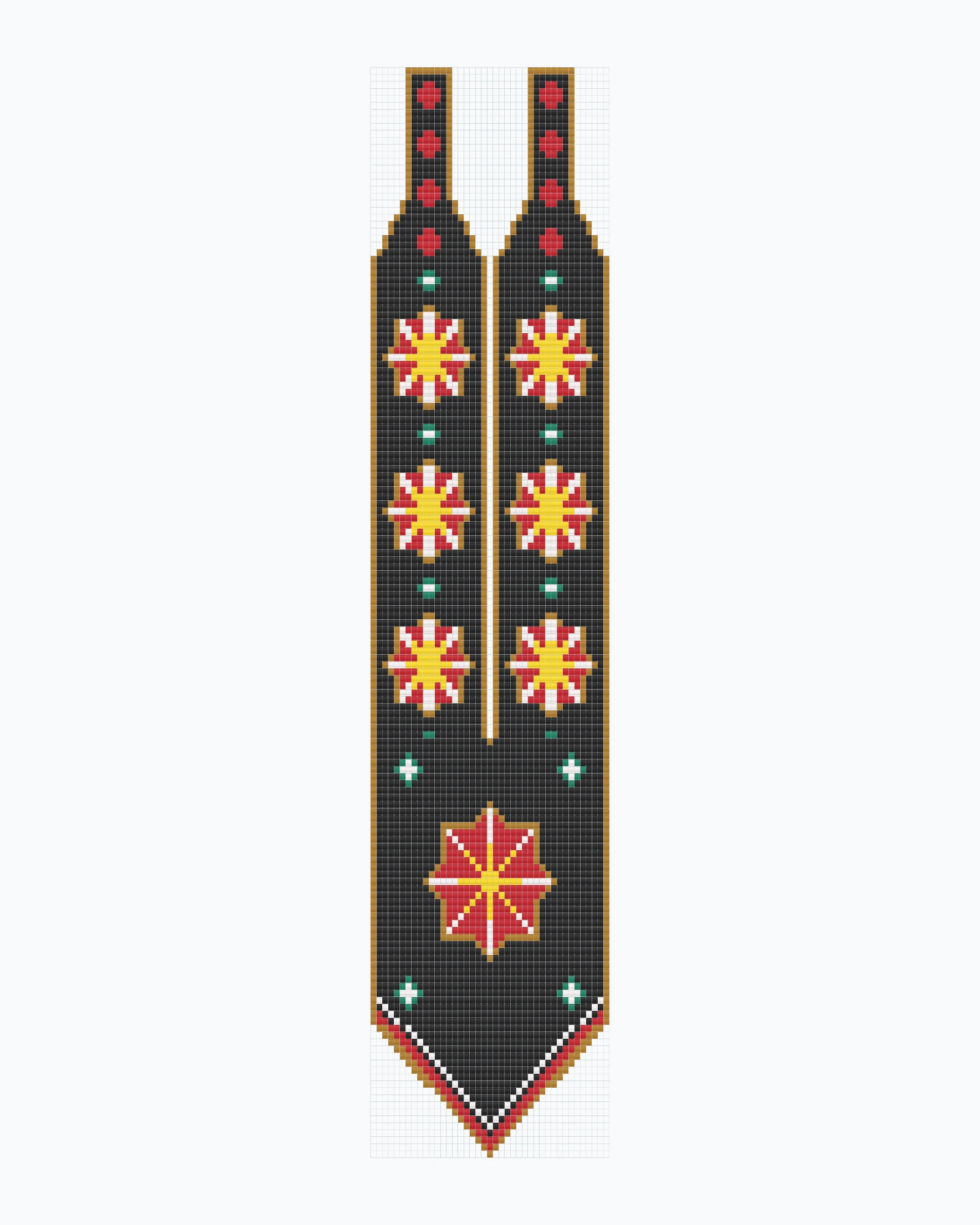
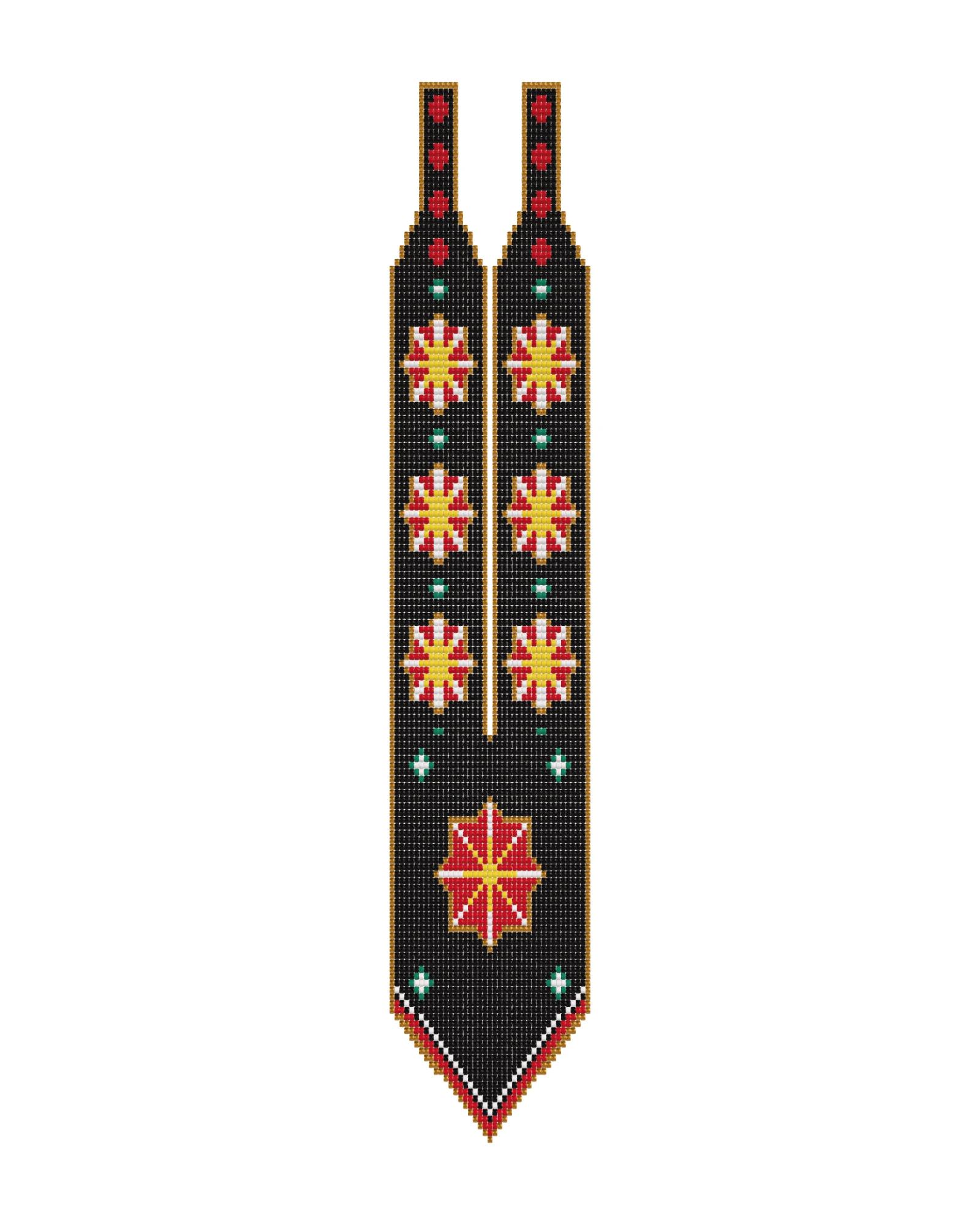
A gerdan is the Ukrainian beaded necklace best known from the Hutsul region and Bukovyna. A Wevy gerdan is one loom piece: two neck straps and two mirrored halves, split by a one-bead gap, that join lower down into one panel ending in a point. The gerdan grid starts at 58 × 170 beads, about 10 × 39 cm in Preciosa 10/0, and the gerdan design guide covers sizing and motifs.
Square stitch
Square stitch gives the same straight grid by hand. Each new bead is sewn to the bead below it, so there are no warp ends to finish and the edges can step in and out. It is slower than a loom for long bands and makes a firmer fabric. A loom chart works bead for bead in square stitch, so one chart serves both.
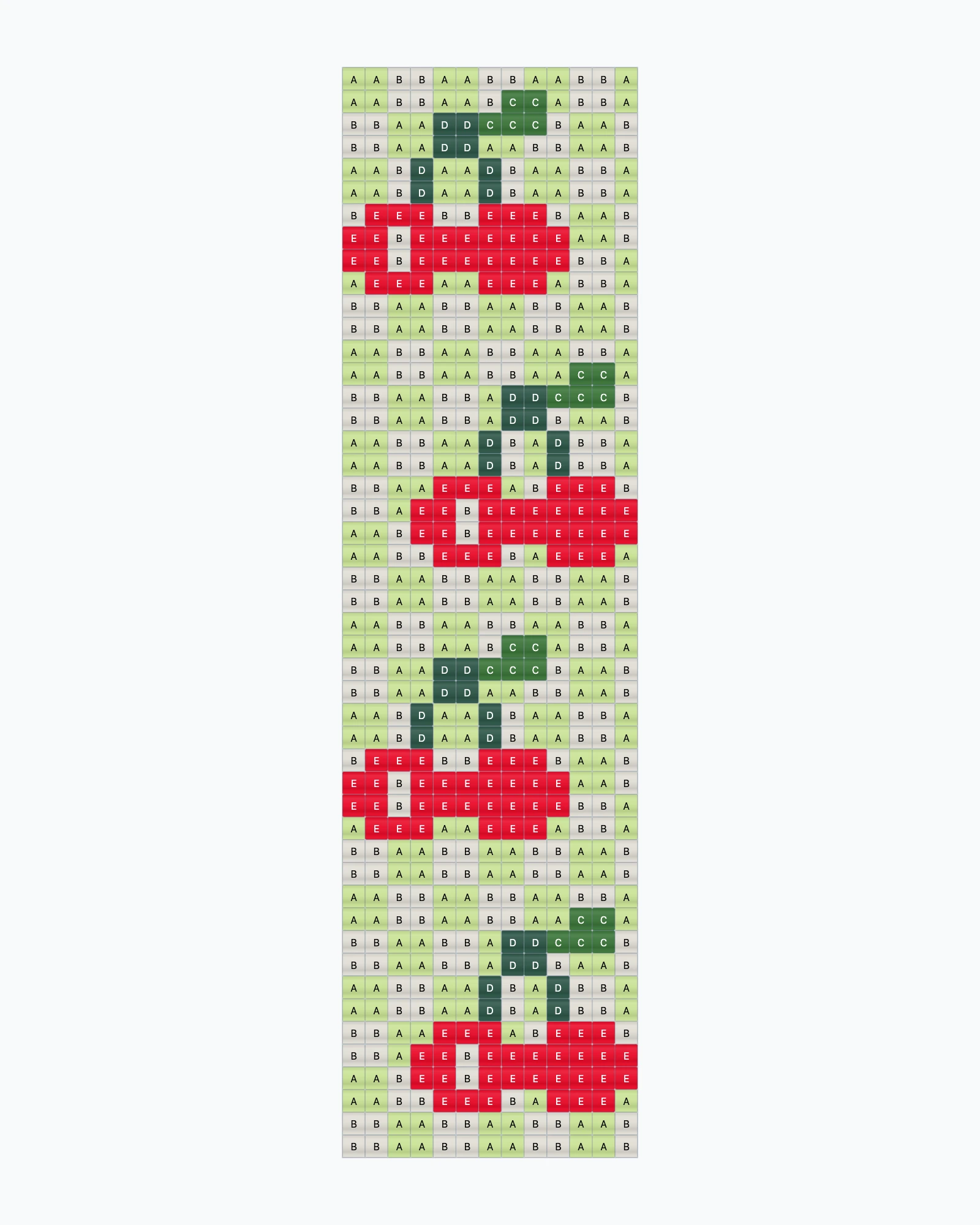
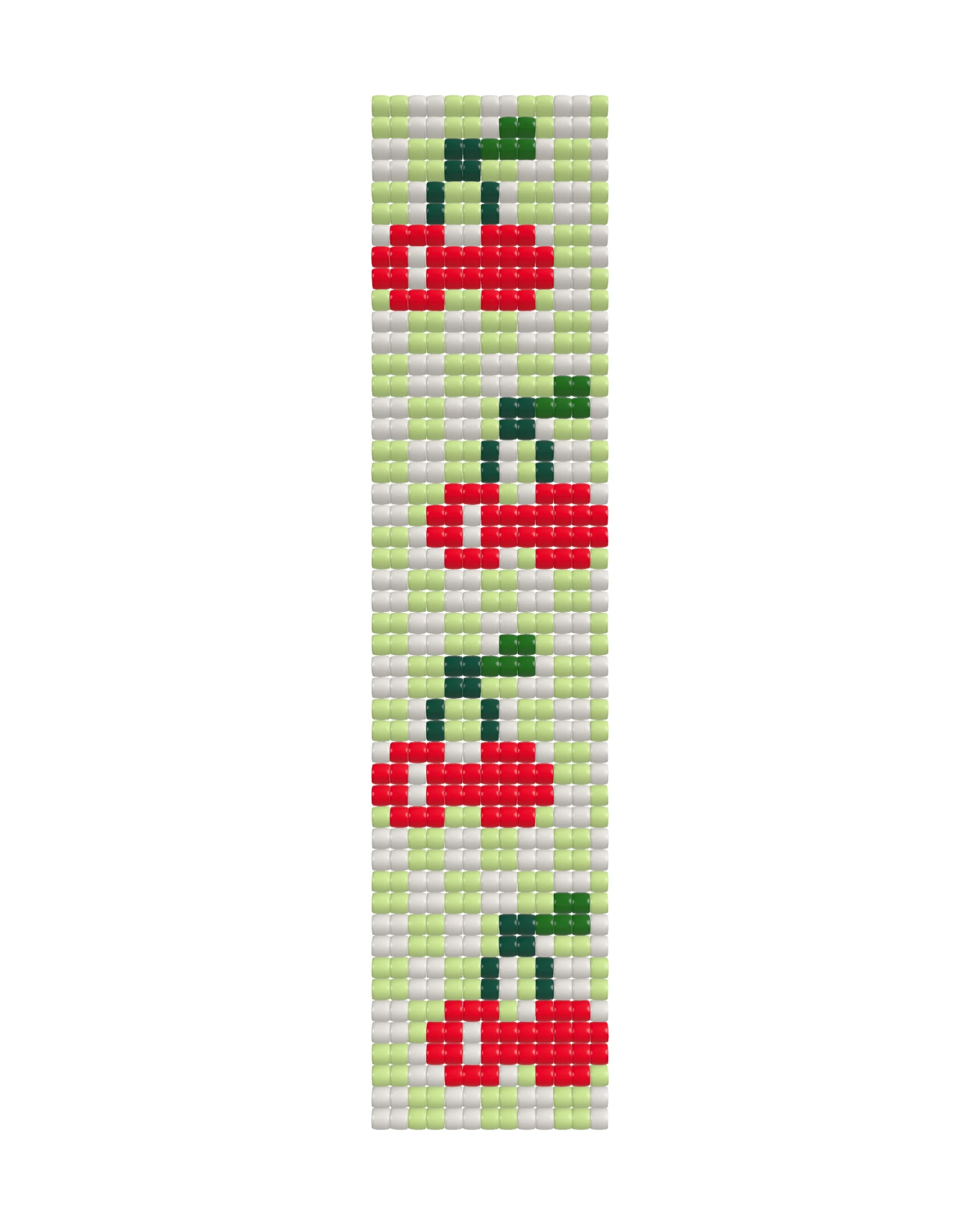
Peyote (mosaic) stitch: even, odd, two-drop and 3D
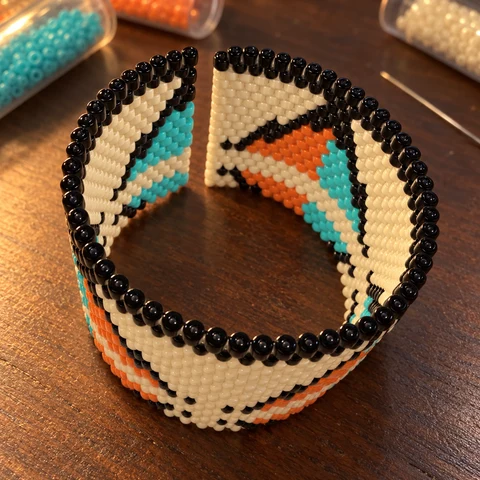
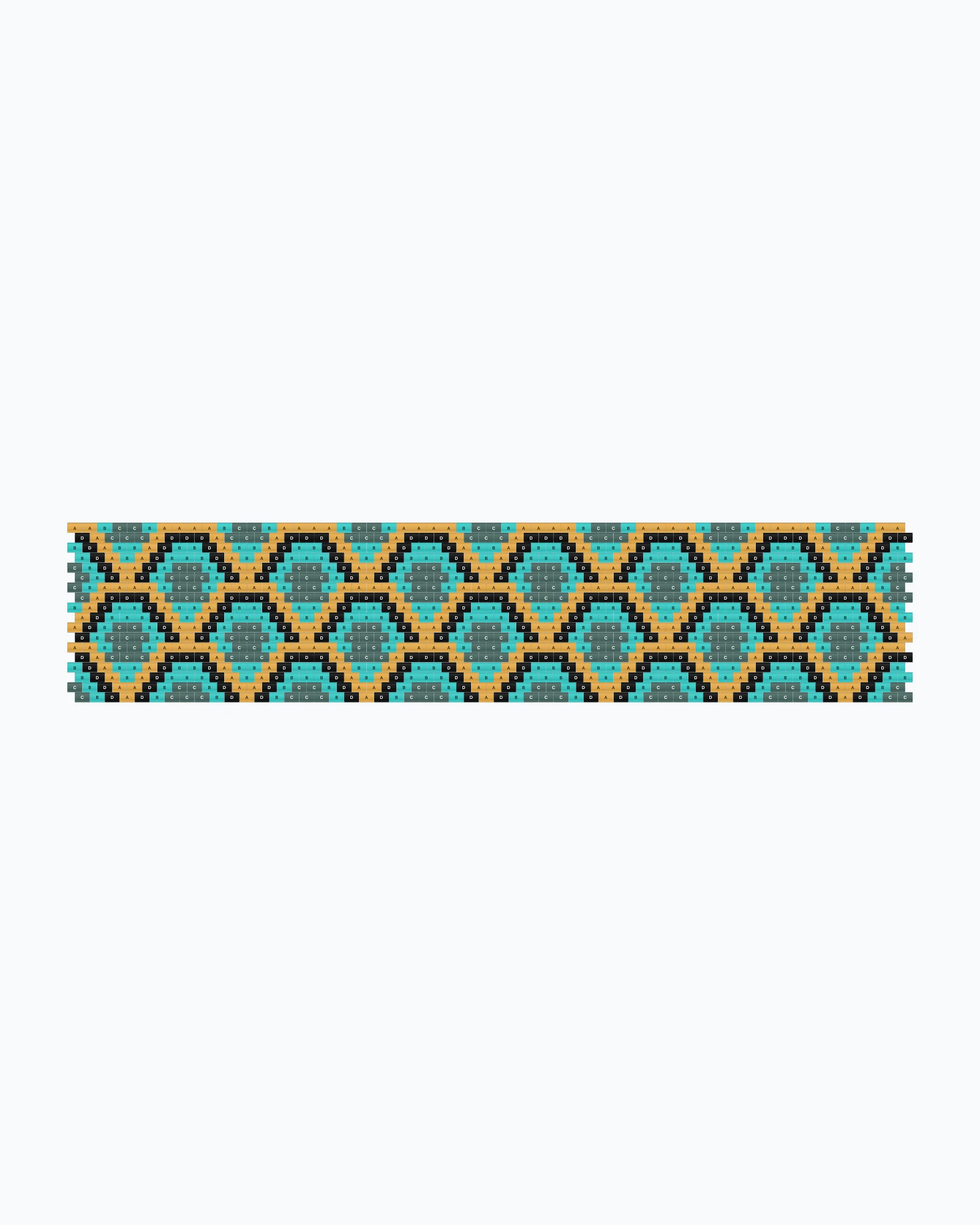
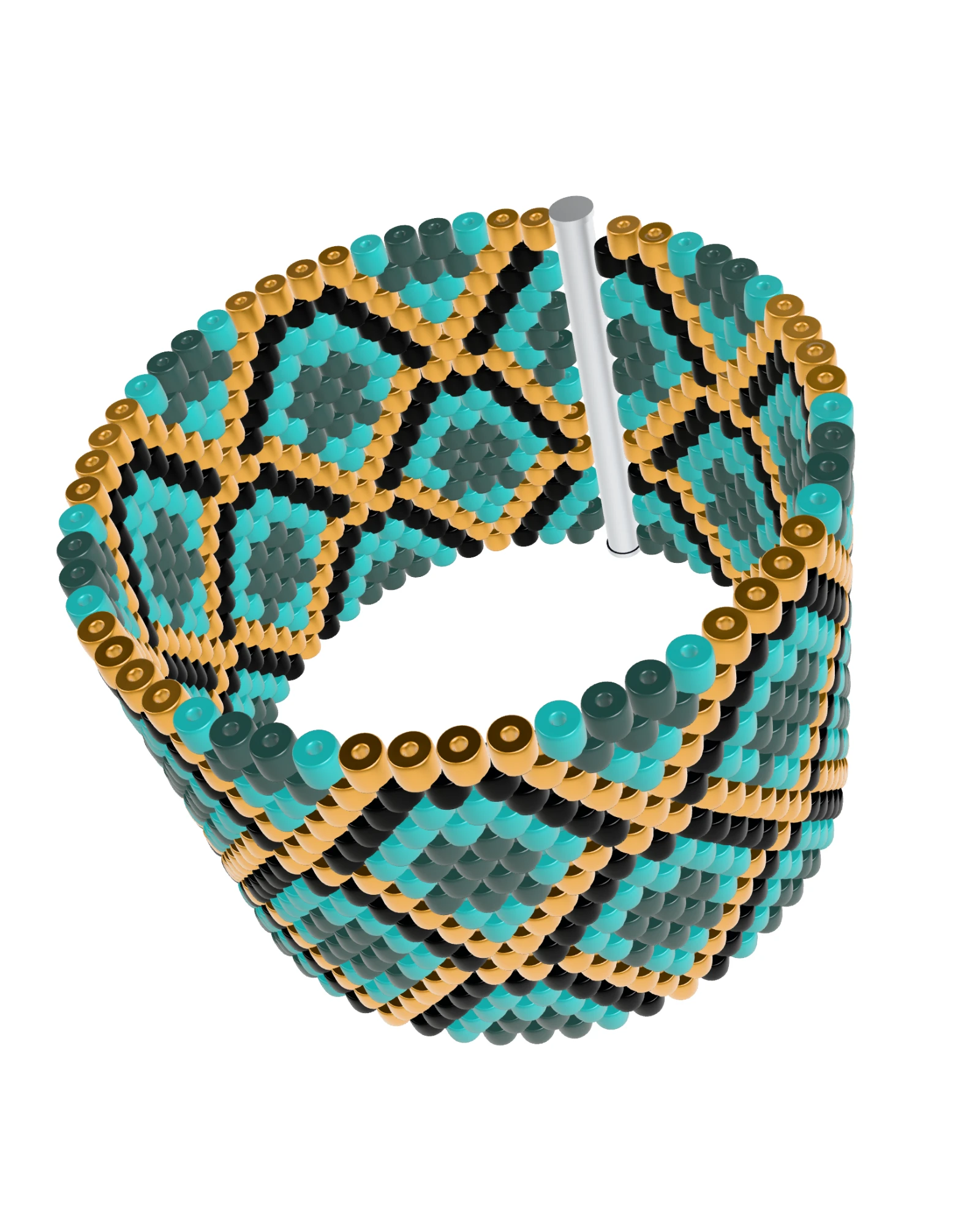
In peyote, also called gourd or mosaic stitch, each new bead sits in the gap between two beads of the previous row, so neighbouring columns shift half a bead. Delica 11/0 cylinders lock together like tiles, which is why so many peyote patterns name them: each offset row adds 1.2 mm, three quarters of the 1.6 mm bead.
Wevy draws flat peyote as a horizontal band and reads it in columns, the way its Make mode works: the first two columns are strung together, then the band grows one column at a time, up and down. The peyote reading guide shows it on a real chart.
Even-count and odd-count peyote
Even count means an even number of beads across the band. Both edges turn the same way, so it is the easier start. Odd count puts a single bead in the middle, which centres a diamond, an arrow or a letter, but one edge needs an extra turn. Wevy's peyote grid is free and works at any size, even or odd.
Two-drop peyote
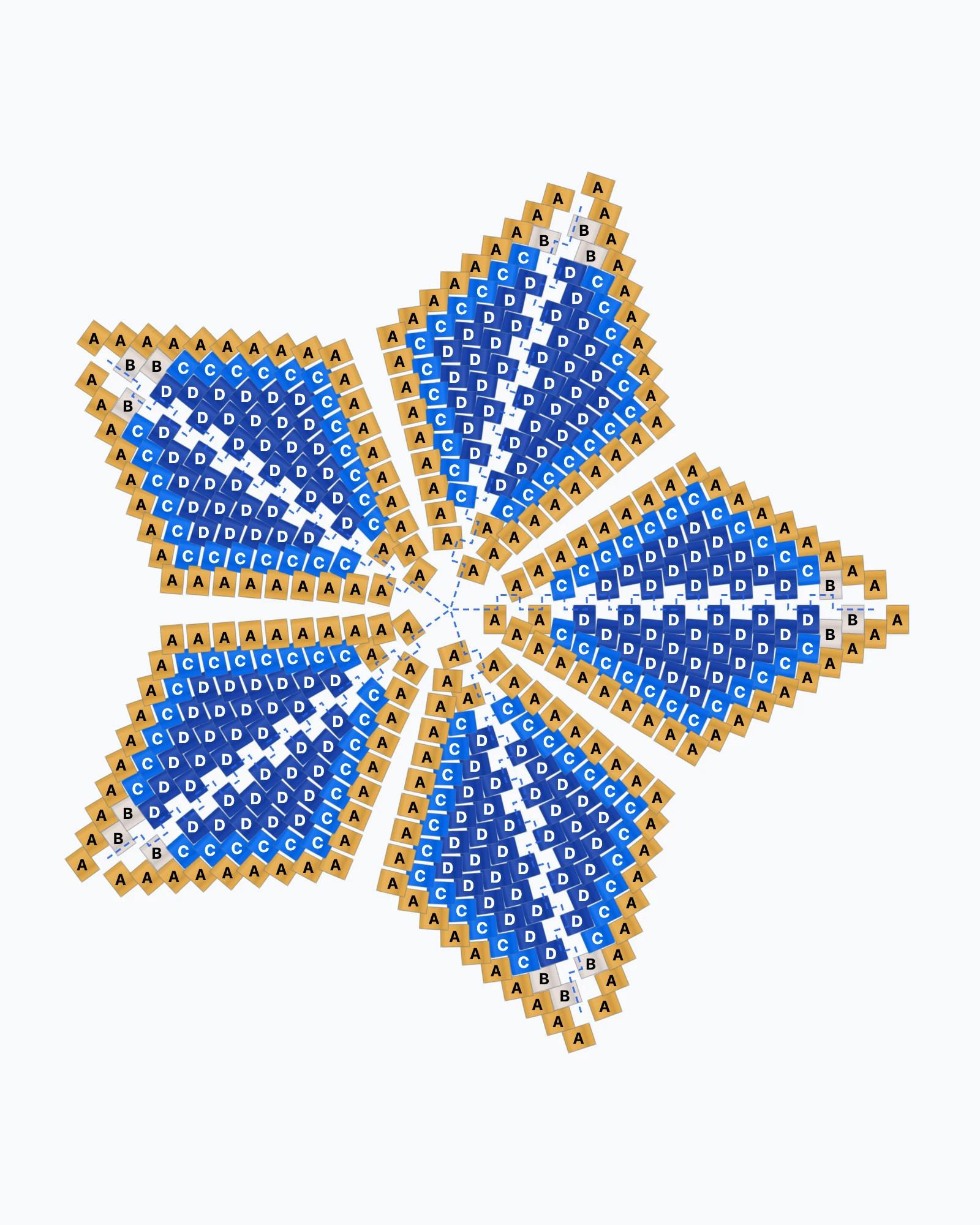
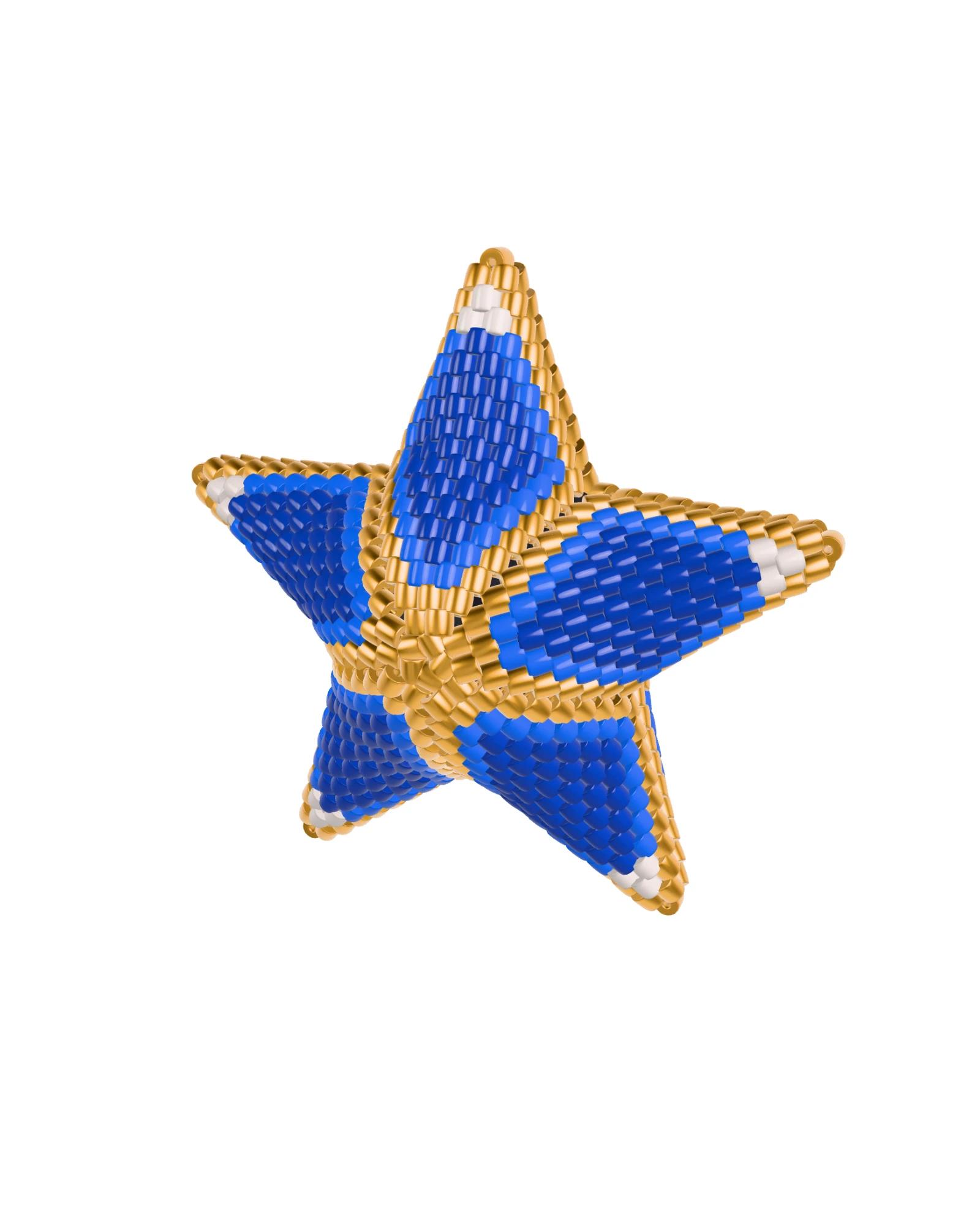
Two-drop peyote treats two beads side by side as one stitch. The piece works up faster and reads the same from a distance, with less fine detail. Wevy's 3D peyote stars with 7 to 10 points are worked in two-drop stitches.
Tubular, circular and 3D peyote
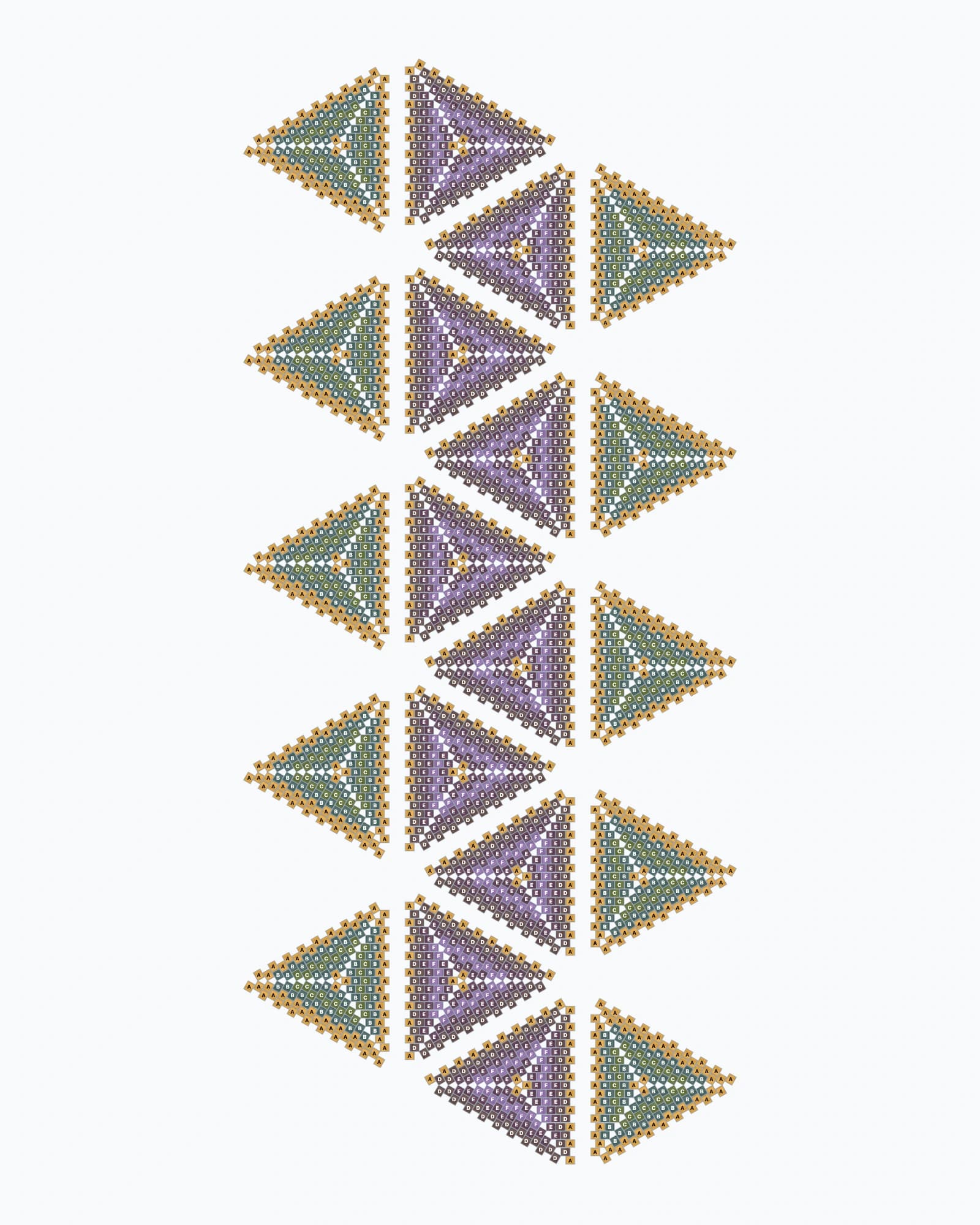
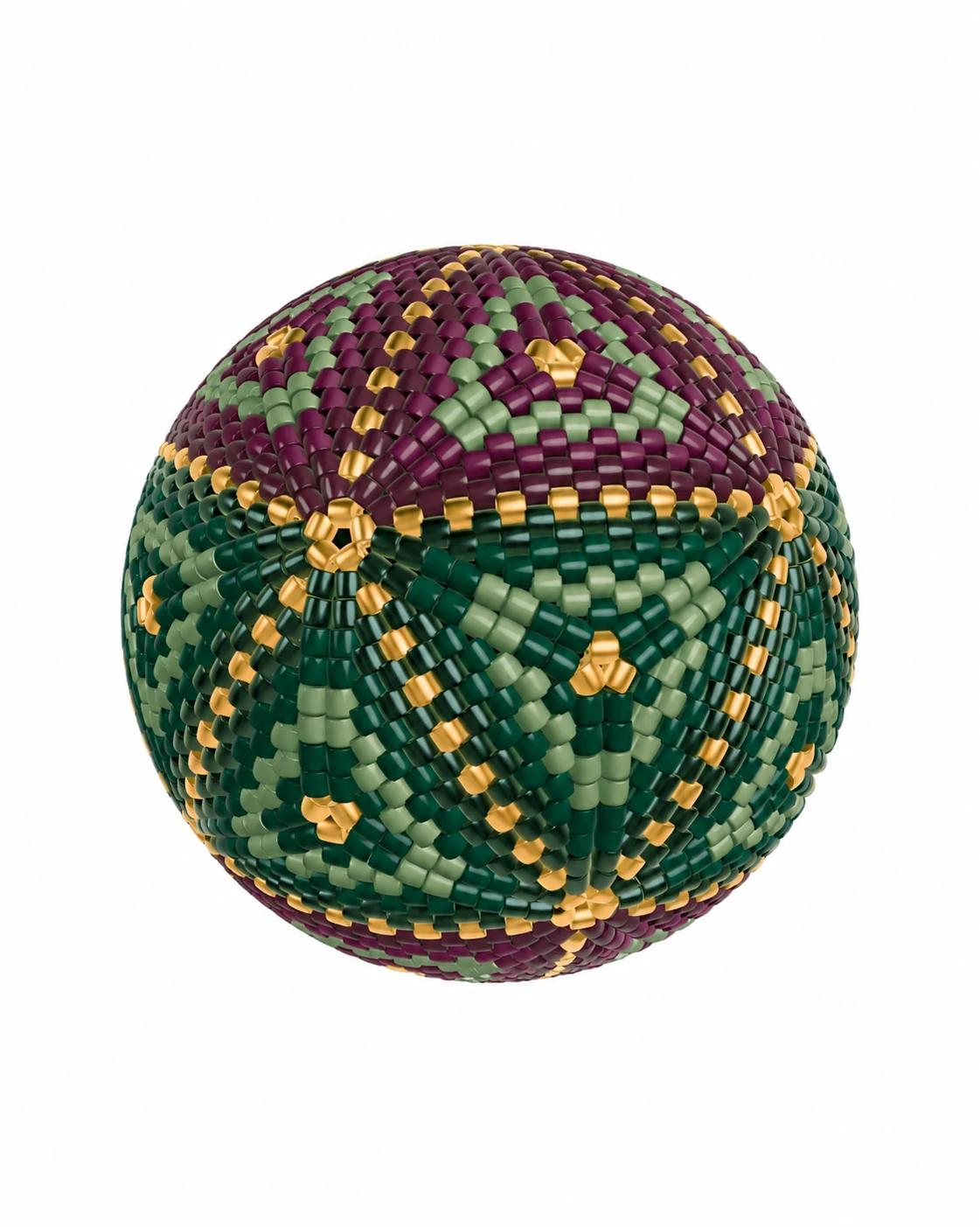
Worked round a tube, peyote makes beaded beads and ropes, usually with a step up at the end of each round. Worked outwards from a ring it makes flat circles. Add pairs of beads at the corners and the circle becomes a shape: a warped square for each ray of a 3D peyote star, 20 triangles from a three-bead ring for a peyote ball, diamond petals zipped into a peyote pod.
These shapes are worked from a word chart, with the graph as a map. In Wevy you draw on the finished star, ball or pod, and the export unfolds it into each piece's chart and word chart. A 10-round star square takes 199 beads; a 10-round ball takes 3,000.
Brick stitch and herringbone: earrings and shaped pieces
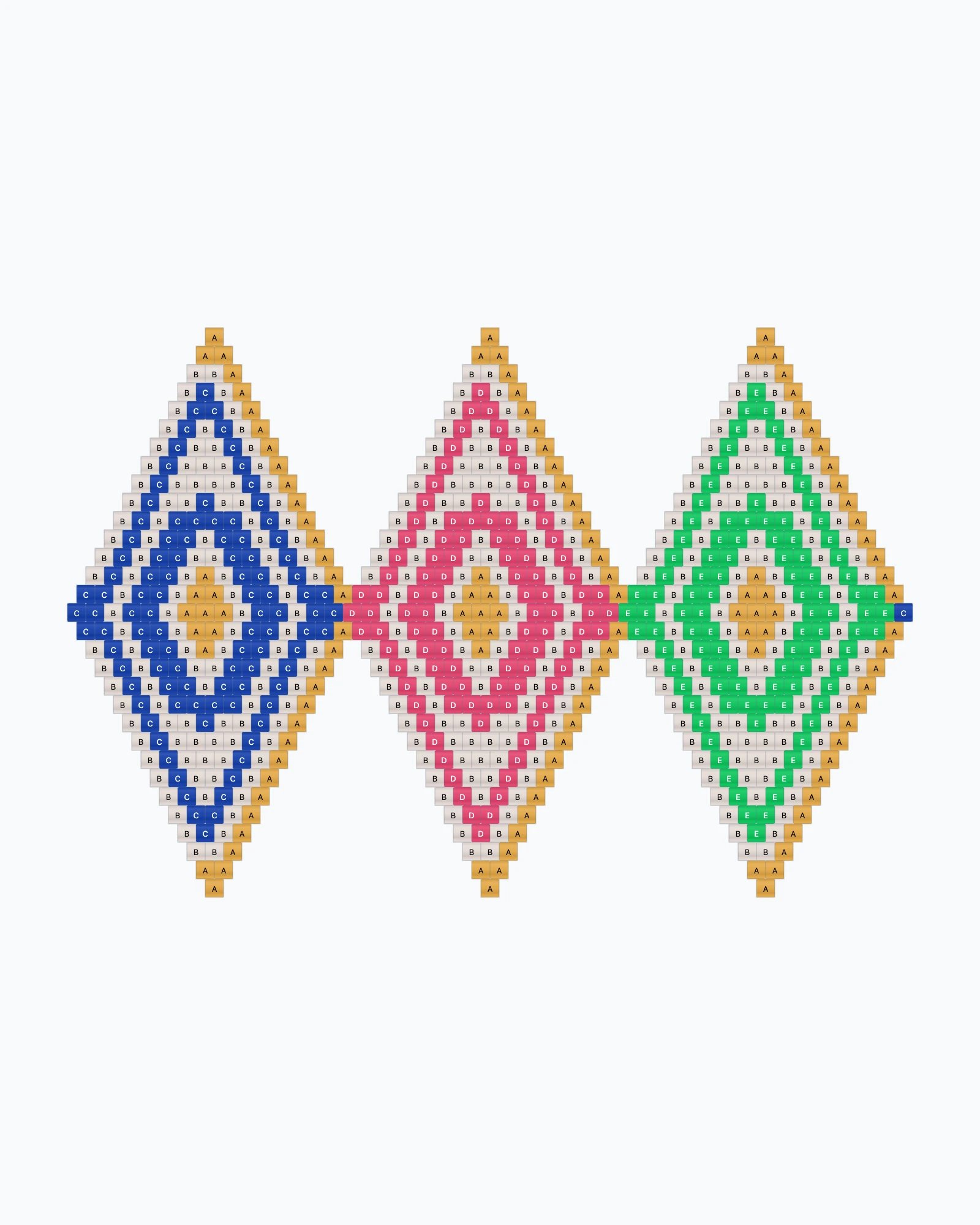
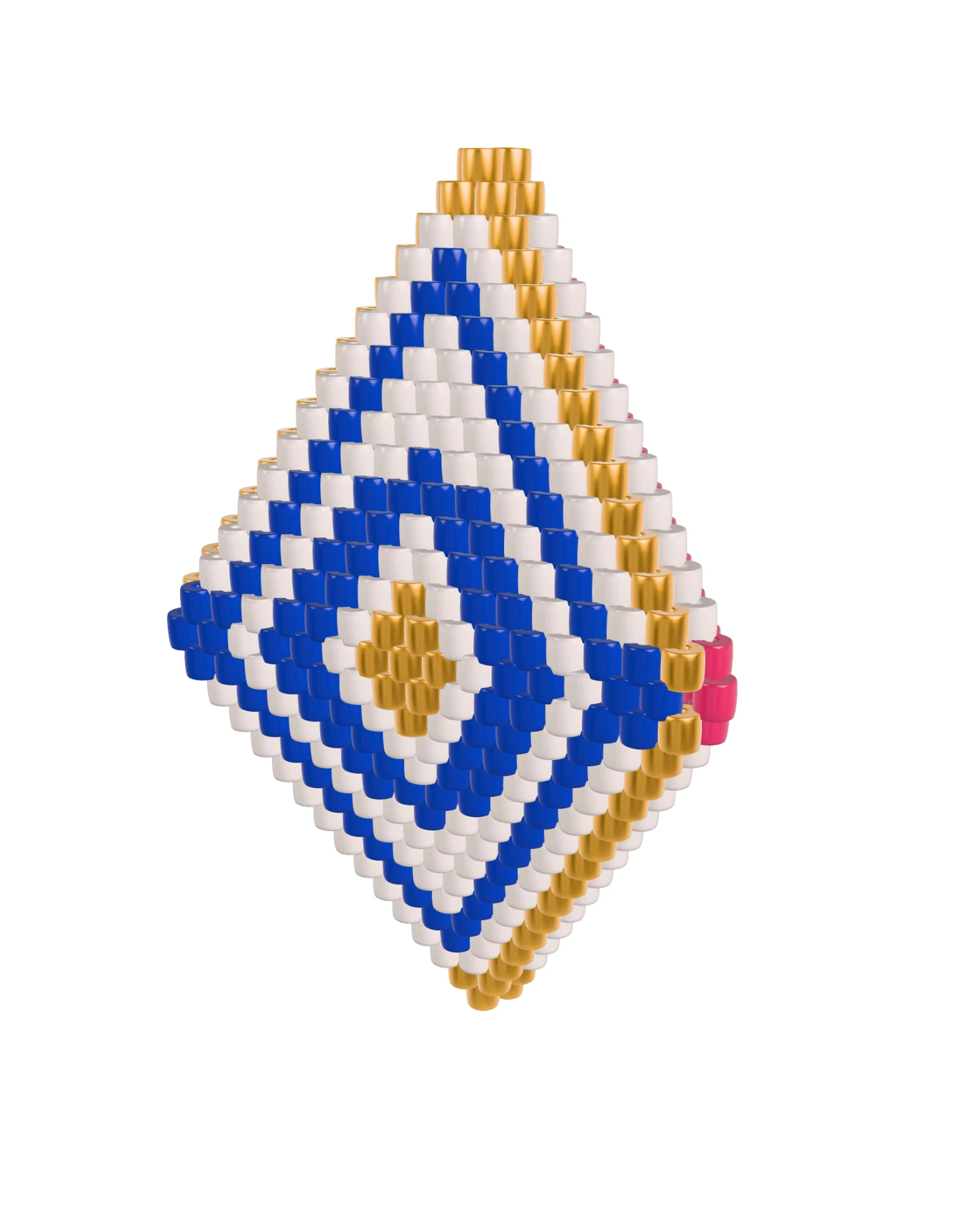
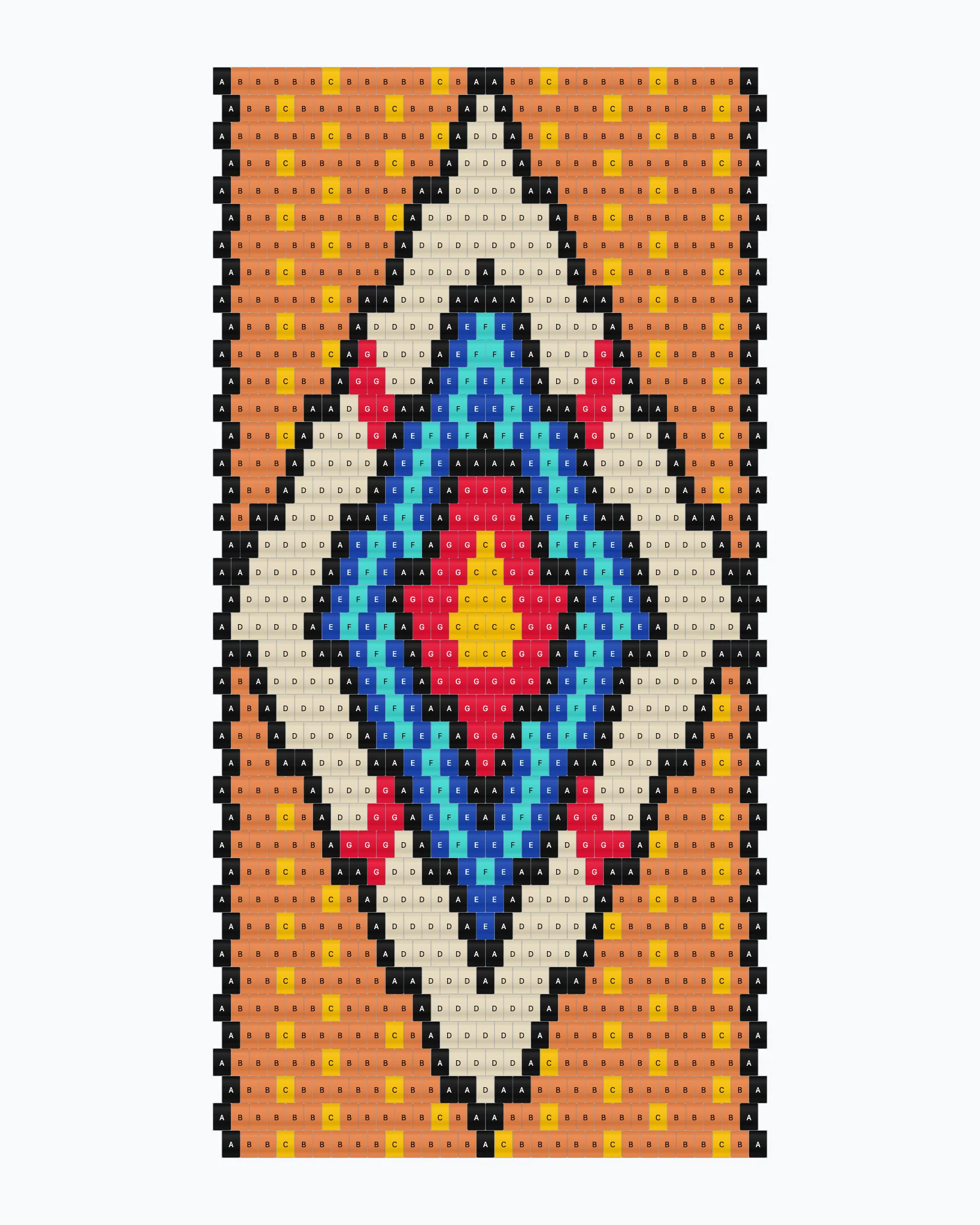
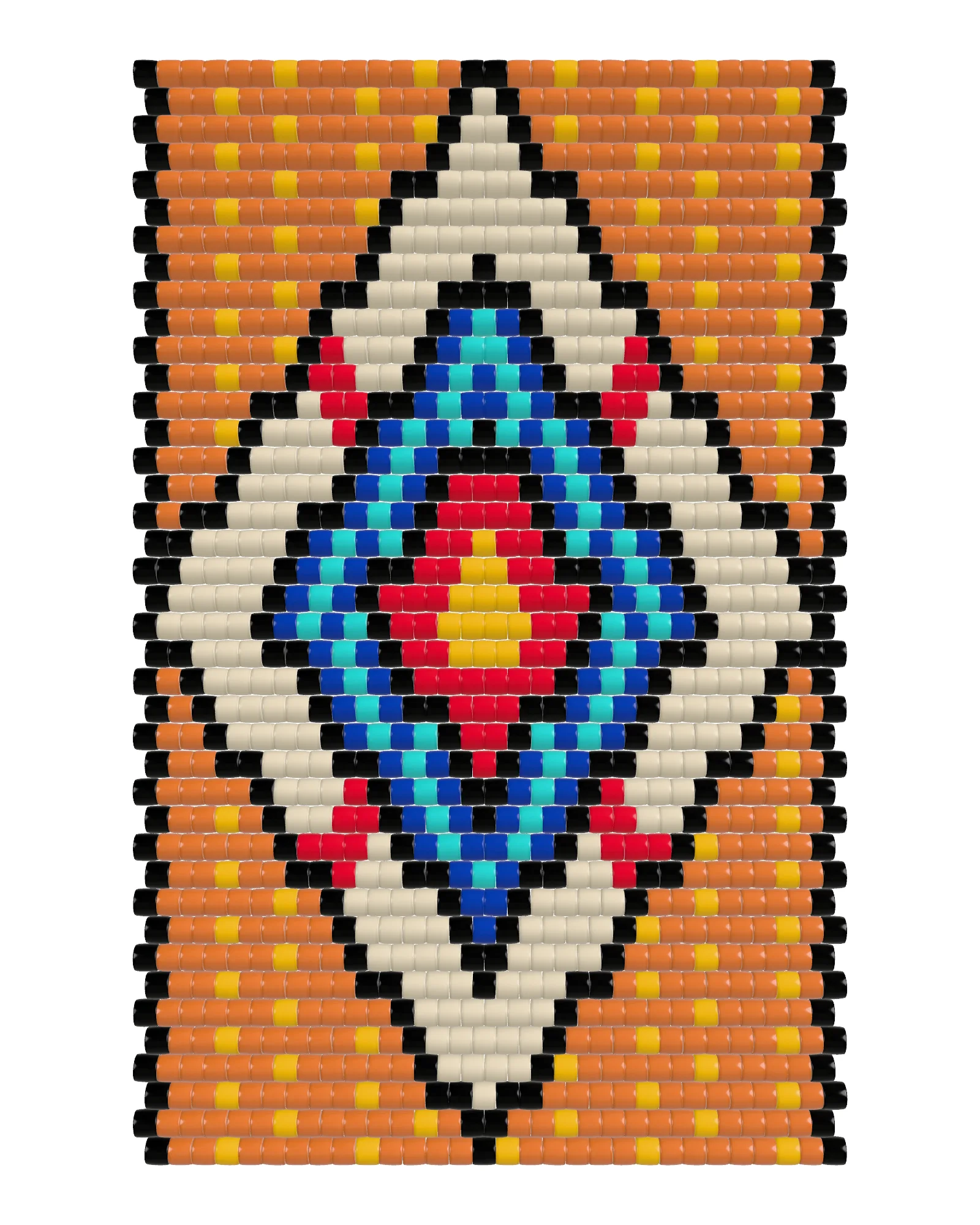
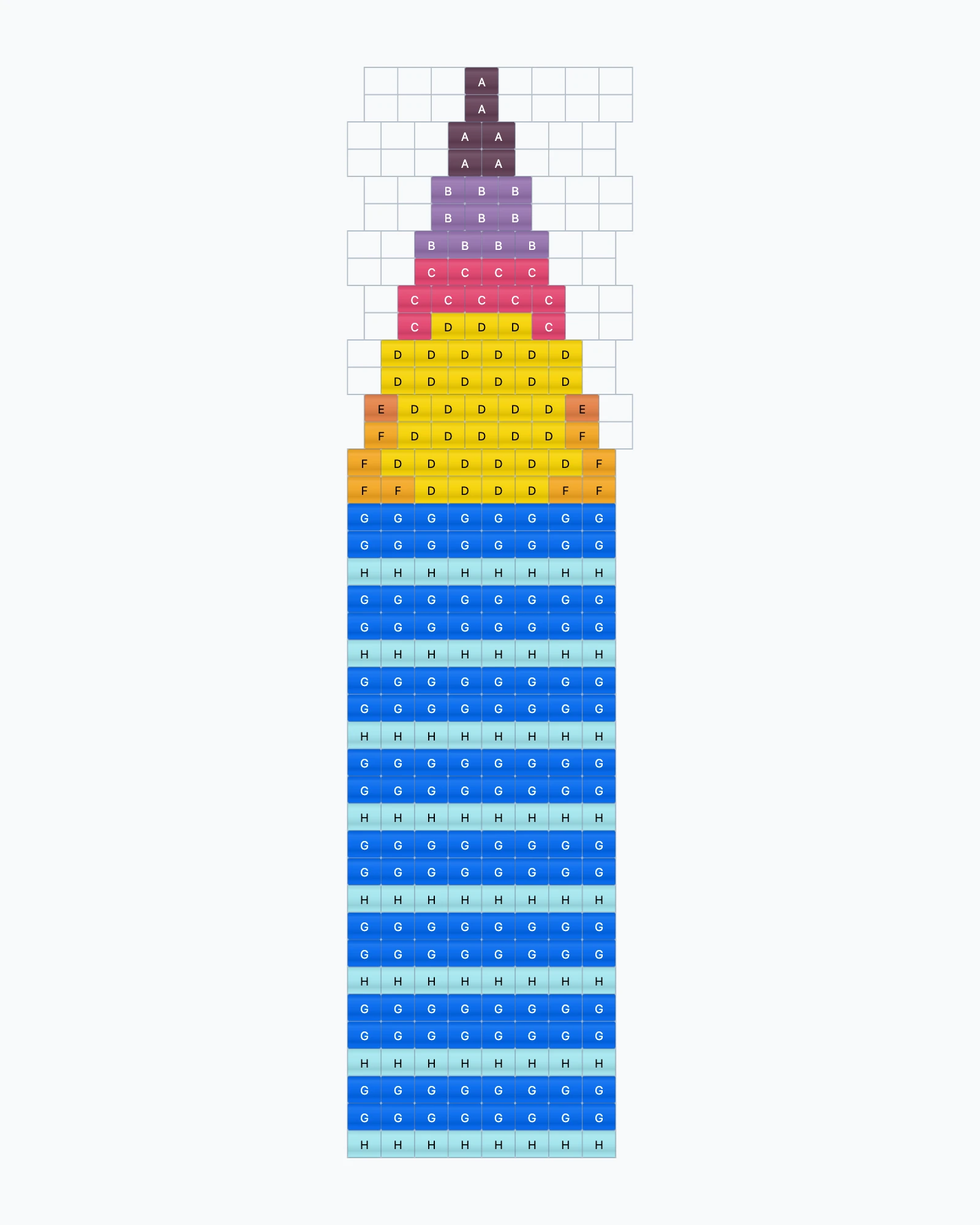
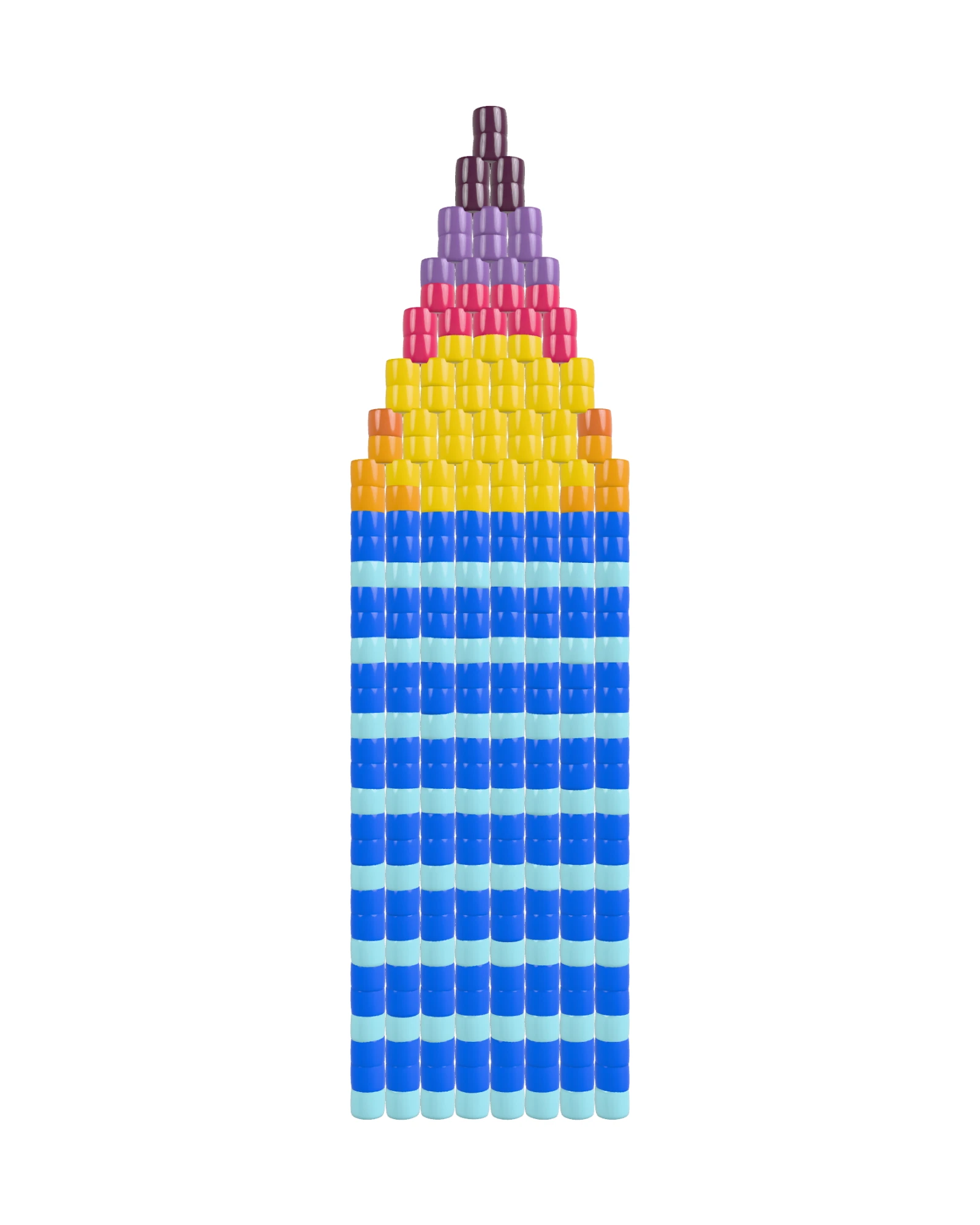
Brick stitch, also called Comanche or Cheyenne stitch, starts from a row of ladder stitch. Each new bead is sewn onto the thread loop between two beads of the row below, so the beads lie on their side like bricks and every other row shifts half a bead. It is the same offset as peyote turned a quarter: a peyote chart turned 90° reads as brick stitch.
Because each row hangs on the loops of the last, adding or dropping a bead at the edge is easy. That makes brick stitch the usual choice for earrings, pendants and triangles, often with fringe. Read the chart row by row, turning at each edge.
Wevy's brick stitch grid is free. For the classic earring, the beaded earring grids lay out a stepped top that widens by one bead every row, every two rows or every three, over a straight body. The beaded earrings guide covers sizes, pairs and fringe.
Herringbone (Ndebele) stitch
Herringbone is also called Ndebele stitch, a name linked to the beadwork of the Ndebele people of southern Africa. Each stitch adds two beads: down through one bead of the row below and up through the next. The pairs lean towards each other into a V, and the columns of V's look like herringbone cloth. Flat herringbone starts from a ladder; tubular herringbone makes supple ropes.
Wevy has no herringbone grid yet; the nearest is a Pro custom grid, where you place and turn every bead yourself. Herringbone pairs do work inside Wevy's 3D peyote shapes: the ridges of a star and the corners of a ball and a pod are Ndebele pairs.
Netting: the sylianka and open collars
Netting strings beads in groups and joins each group to the work by passing through a bead already in place. That shared bead becomes the corner of two diamonds, and the piece grows into an open mesh that drapes like lace. Round beads sit best in the curves of a net; Preciosa 10/0 is the traditional choice.
The best-known netted piece in Ukraine is the sylianka, a necklace of diamond mesh. It is usually woven with one needle, strand by strand: the thread zig-zags down one side of a column of diamonds and comes back up the other through the shared beads. Two needles crossing in each shared bead is the alternative.
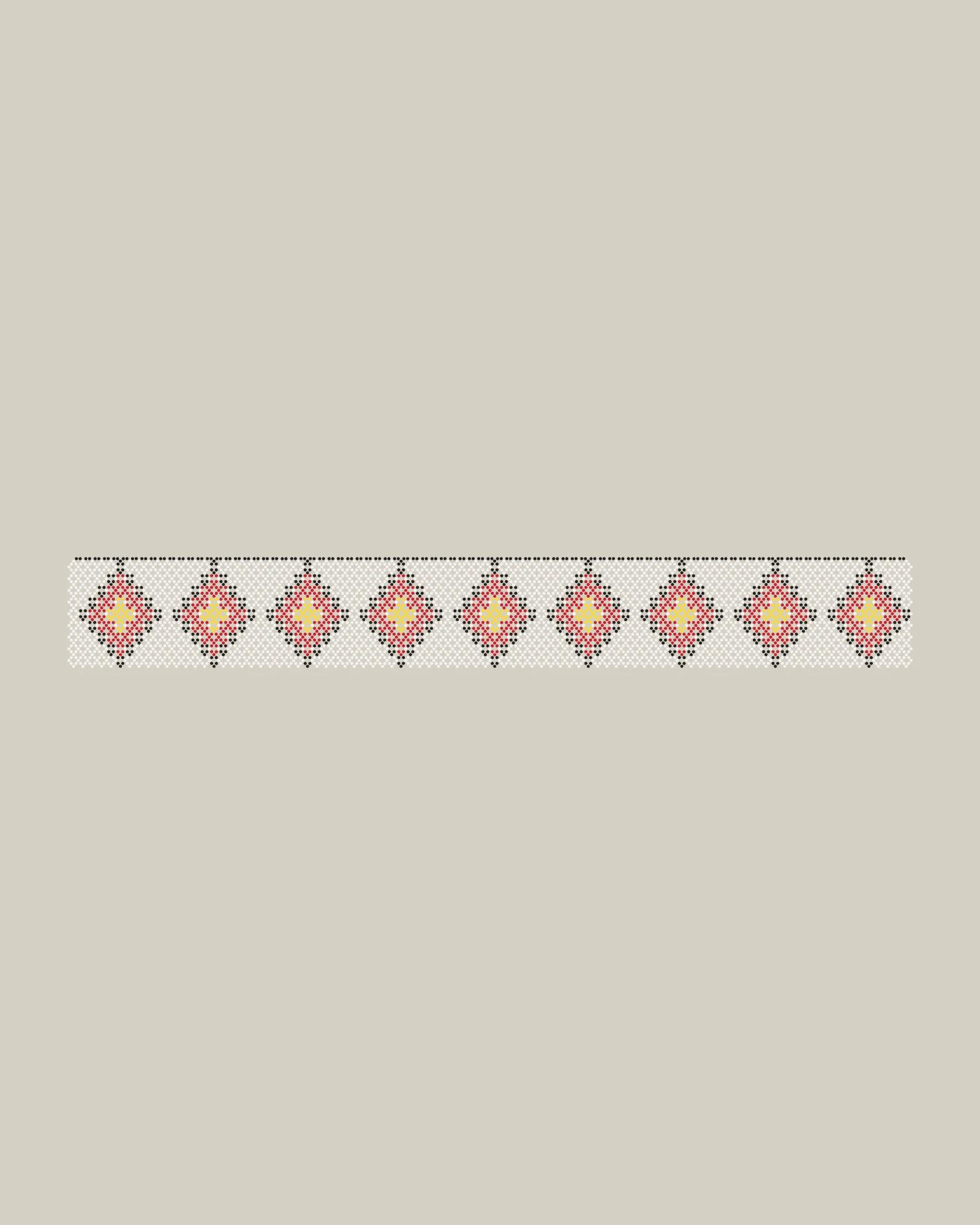
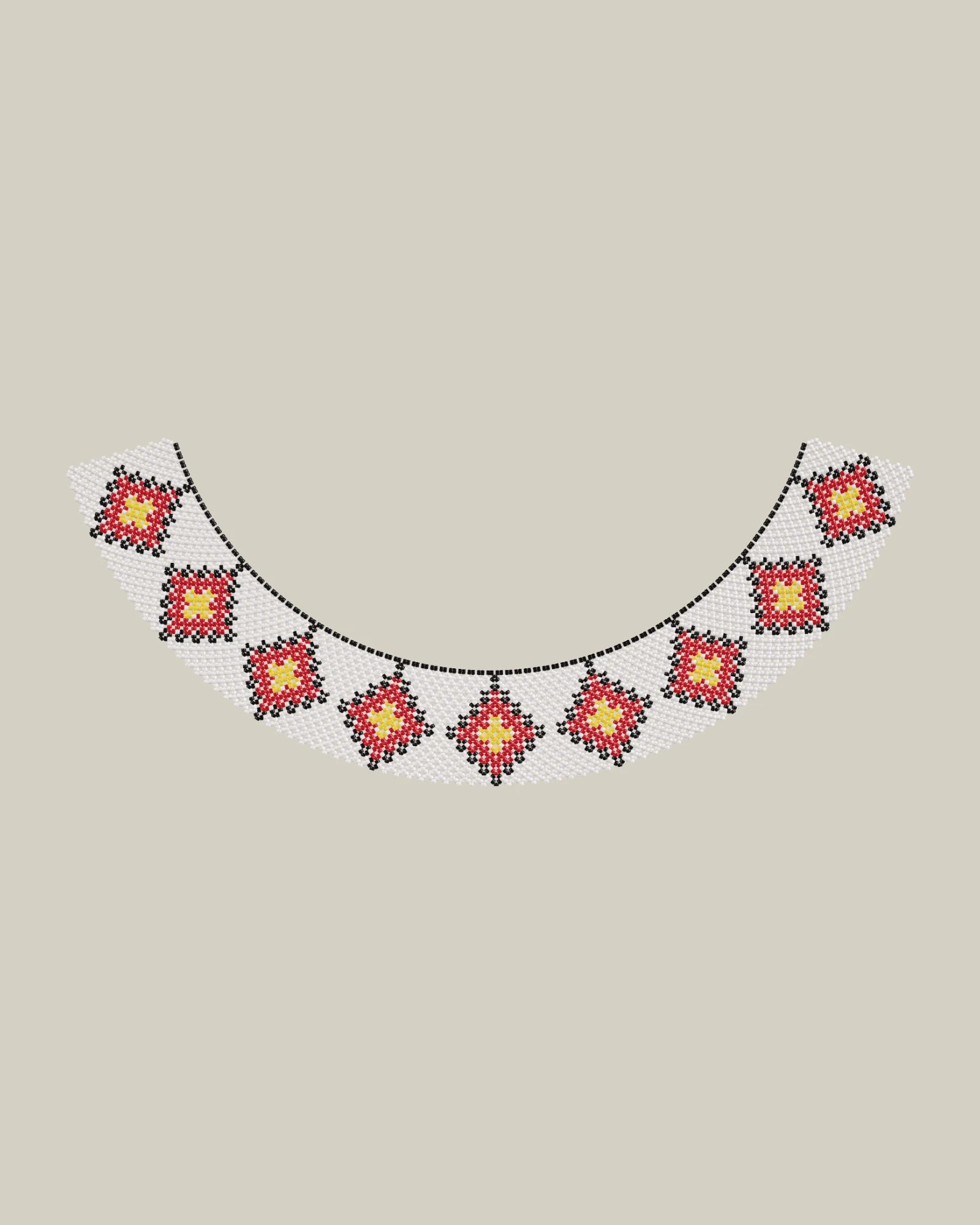
To read a sylianka chart, count the beads on each side of a diamond, usually an odd number, and count the shared bead only once, in the strand that added it. The sylianka reading guide works through the first strands, designing a sylianka covers group sizes, and the sylianka grid draws the real mesh.
Right angle weave and cubic right angle weave
Right angle weave (RAW) builds the fabric from units of four beads closed into a ring. Each bead sits on an edge shared with the next unit, tops and bottoms lying flat and sides standing up, so neighbours always meet at a right angle. The fabric is soft and flexible, with a small hole in every unit.
It is often worked with two needles, one on each end of the thread: each needle picks up the side bead on its own hand, then both cross through one more bead that closes the ring. That is cross weave, called плетіння хрестиком or монастирське плетіння in Ukrainian. Single-needle RAW circles each unit and makes the same fabric.
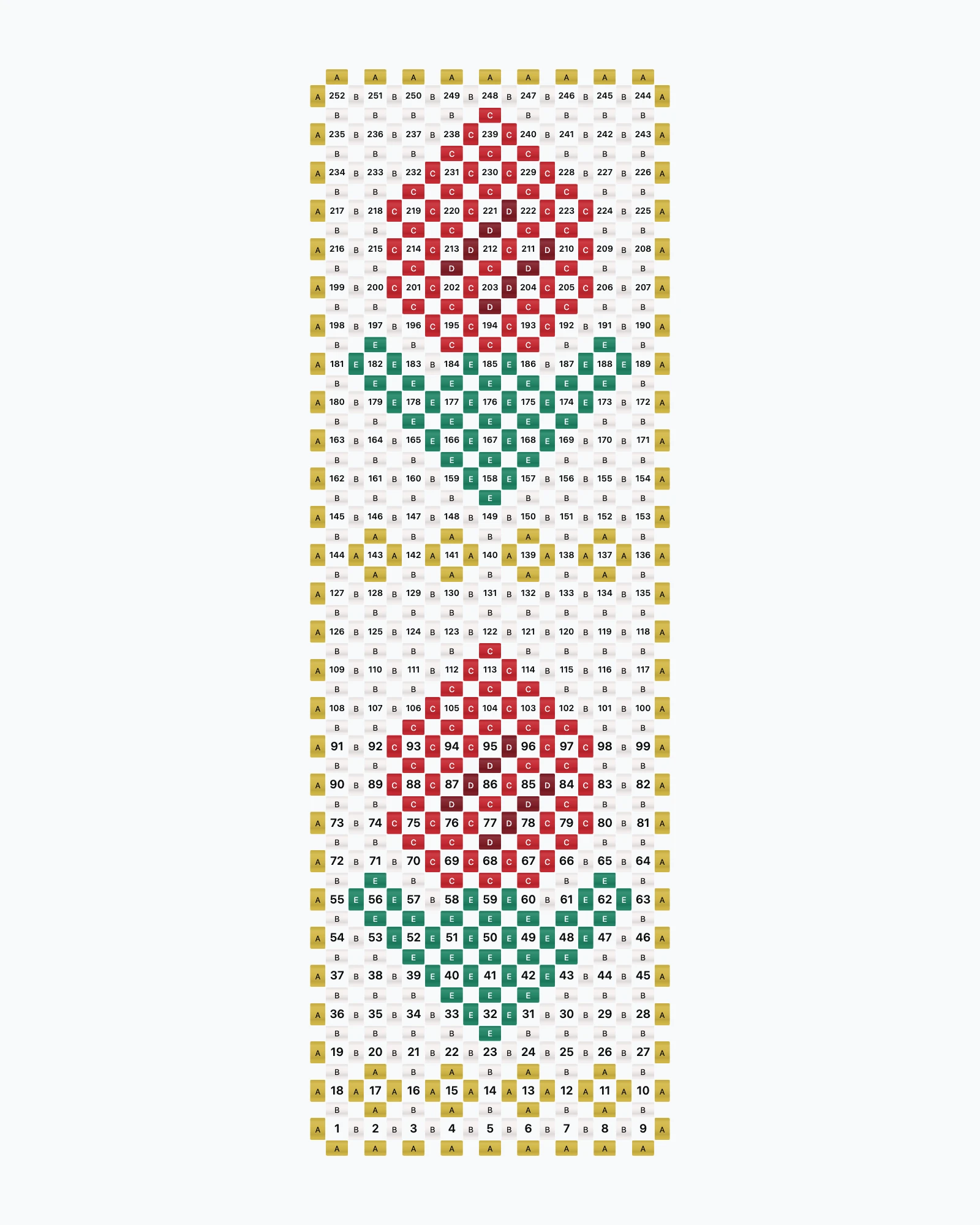
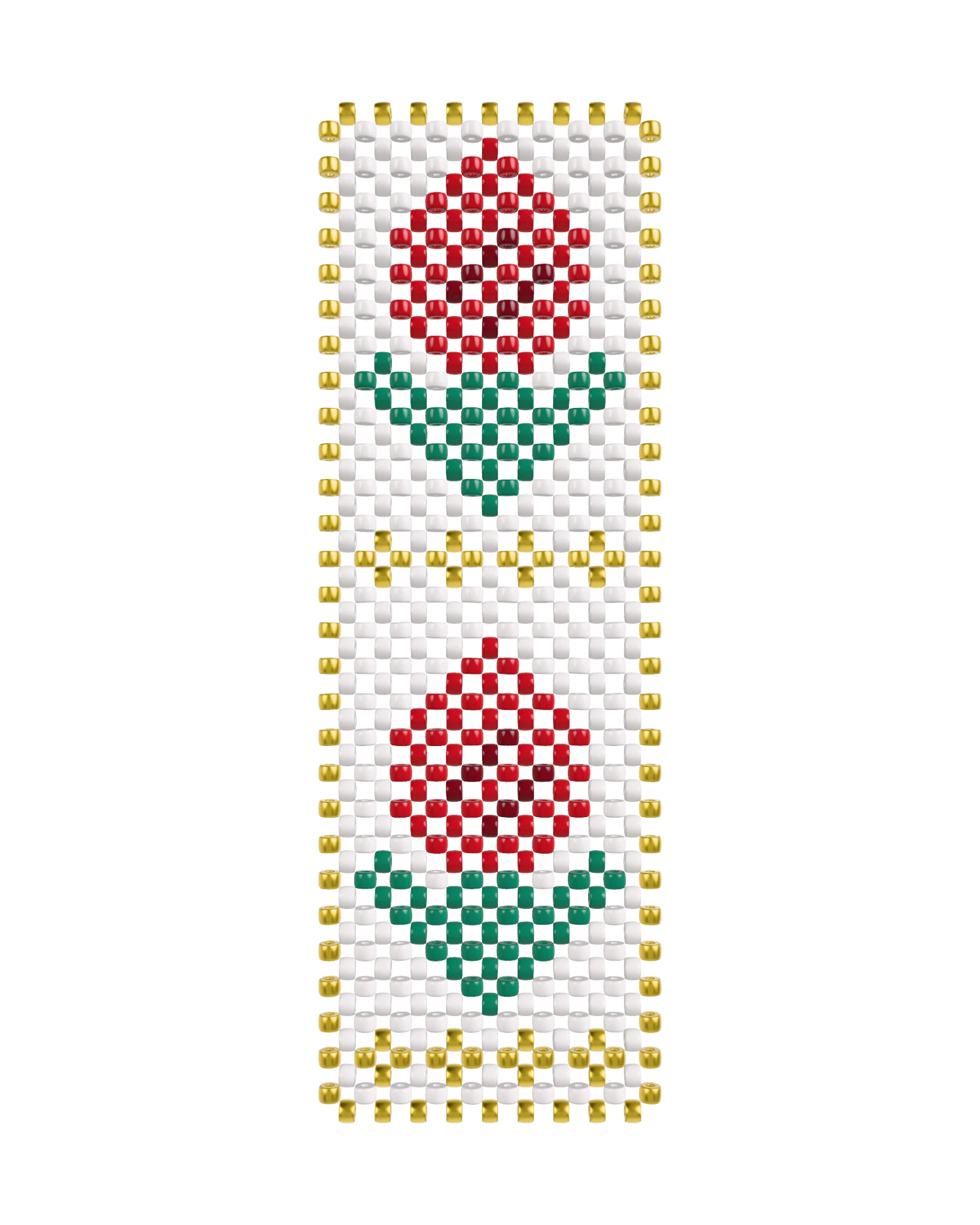
On a RAW chart each ring of four is one numbered unit: a bead drawn across lies flat, a bead drawn down stands upright, and the empty square in the middle is the hole. Wevy's flat right angle weave grid is free, starts at the bottom row and names the bead for the left needle, the right needle and the one they cross through.
Cubic right angle weave (CRAW)
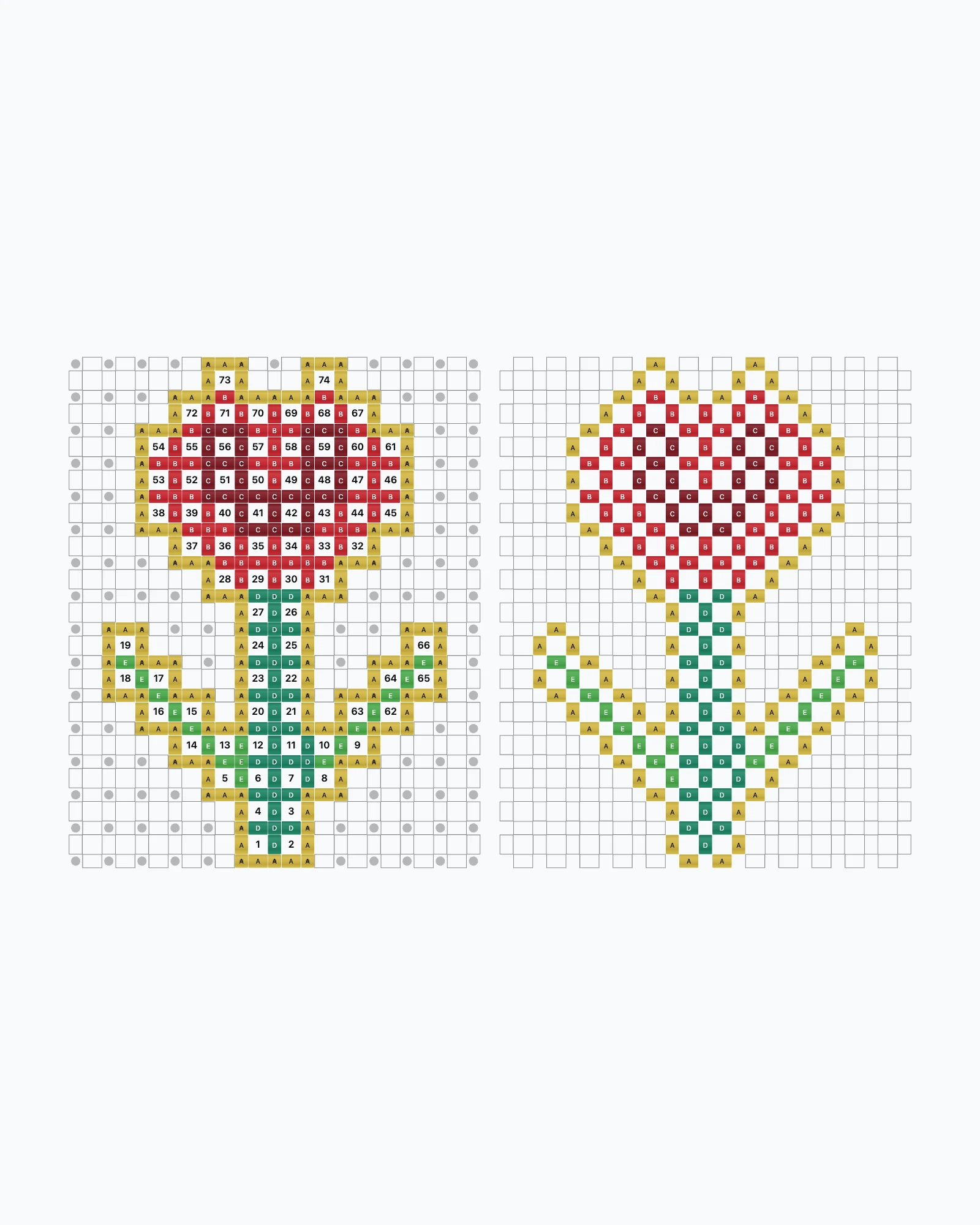
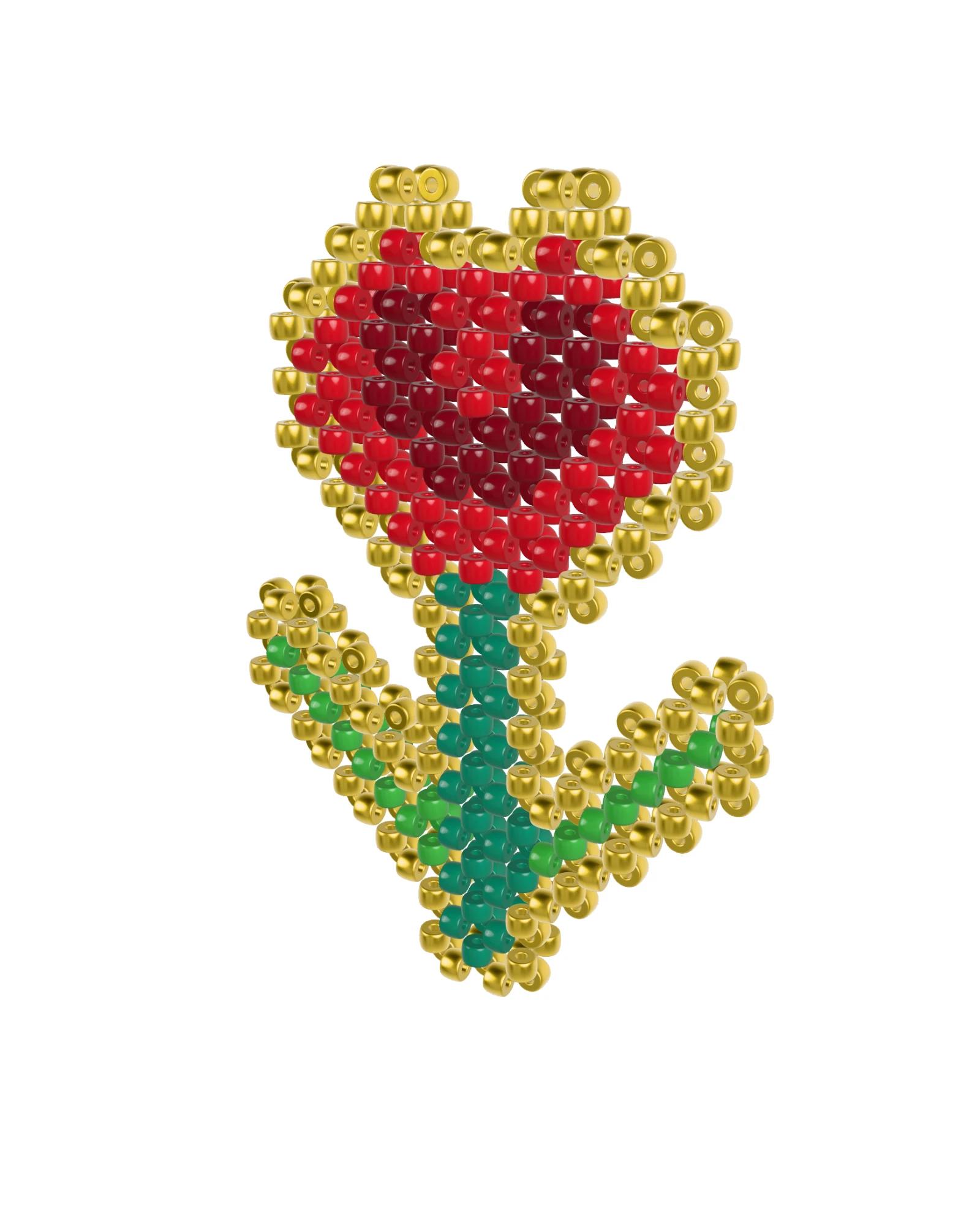
Cubic right angle weave closes six rings into a cube of 12 beads: four on the front, four on the back and four pillars between. Each cube is built on a face that is already there, adding walls of 3, 2, 2 and 1 bead, so the next cube in a chain needs only 8 new beads. One column of cubes is a square rope; stacked cubes make solid shapes. The cubic right angle weave grid draws the front, back and layers side by side.
Bead crochet: ropes, balls and circles
Bead crochet is the one family worked with a hook. Every bead goes onto the thread first, in reverse order, because the last bead strung is the first one crocheted. Then each beaded slip stitch locks one bead in place.
On a rope the beads nest half a bead apart each round, so the rope is one continuous spiral and a turn takes the circumference plus half a bead. A straight column in the draft comes out as a slanted line on the rope, and a chart drawn without that correction comes out sheared. Row 1 of a rope chart is at the bottom.
A rope is usually 6 to 12 beads around. An 18 cm rope 6 around in Preciosa 10/0 takes about 587 beads, 6.5 g, and is about 5.6 mm thick; the bead crochet rope calculator works it out for other sizes. The bead crochet rope grid shows the draft, the rope and the stringing order side by side, and the bead crochet guide explains each view.
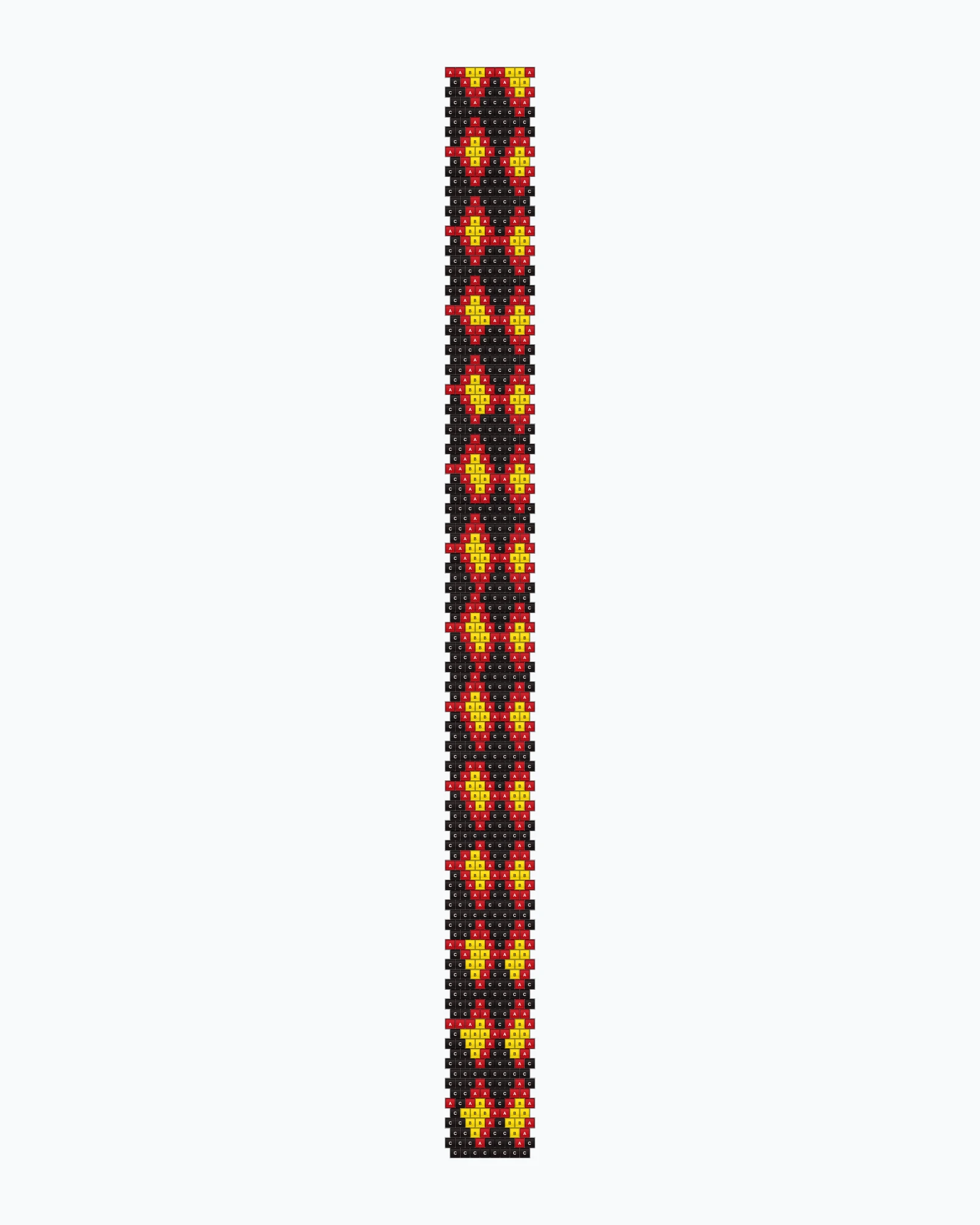
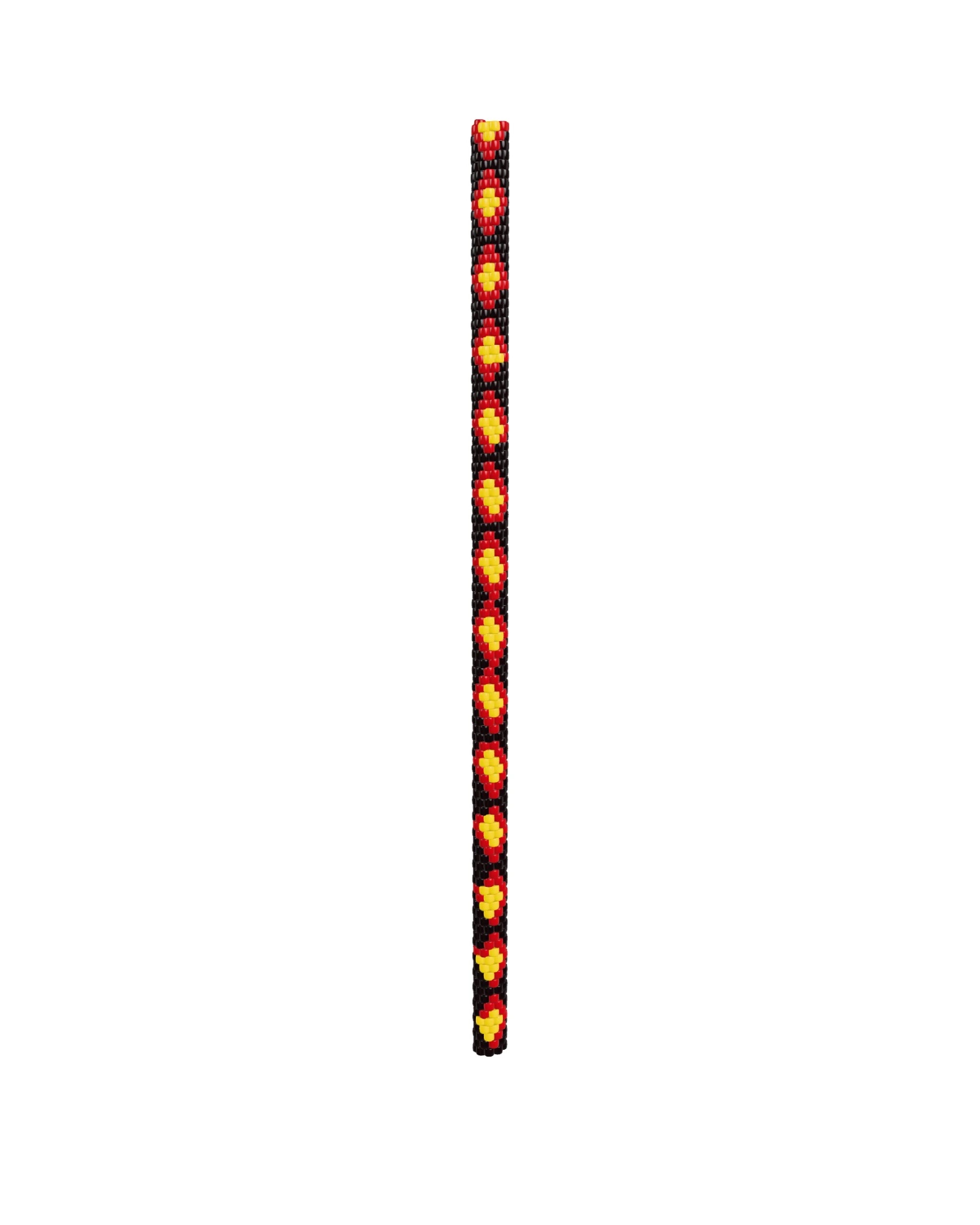
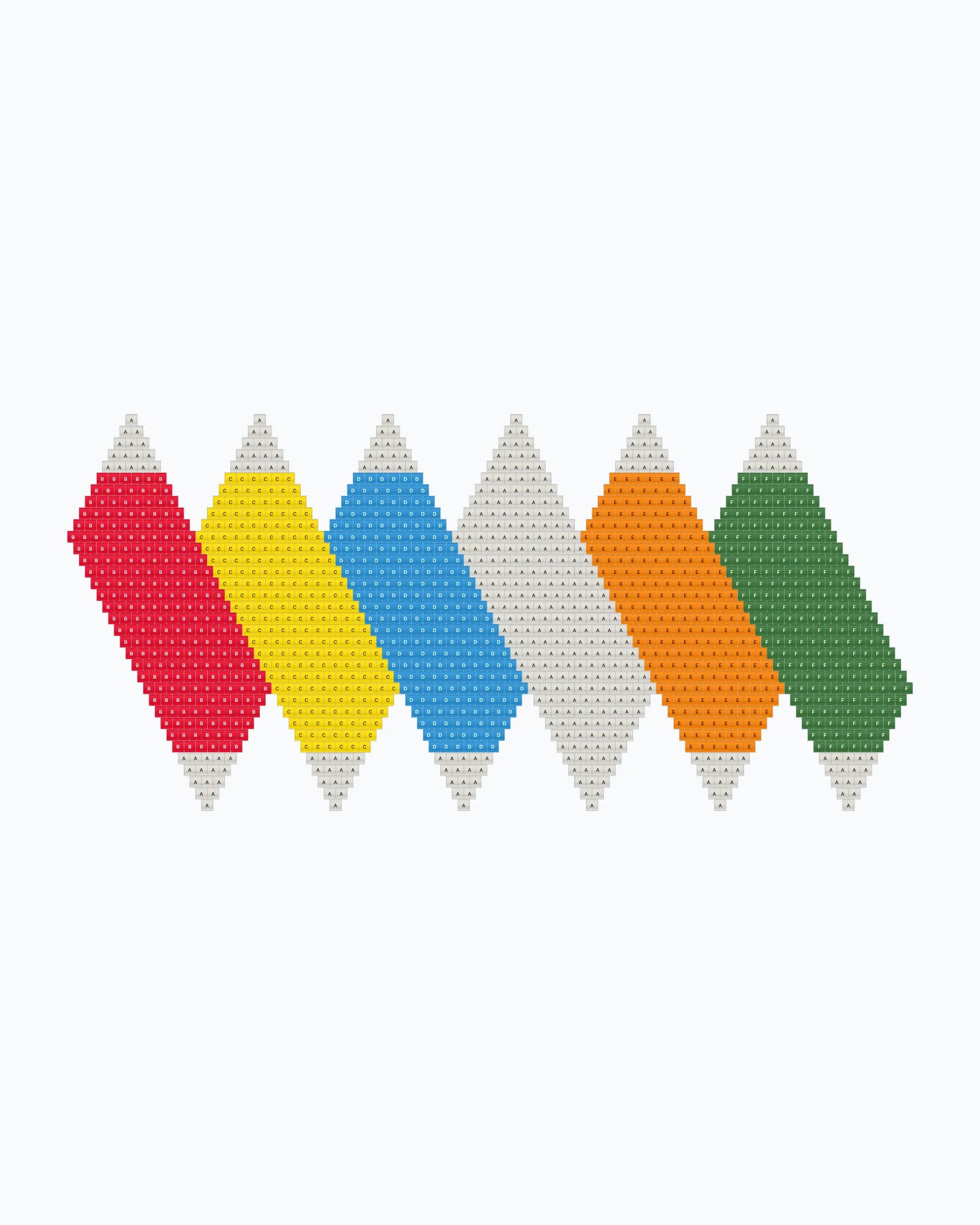
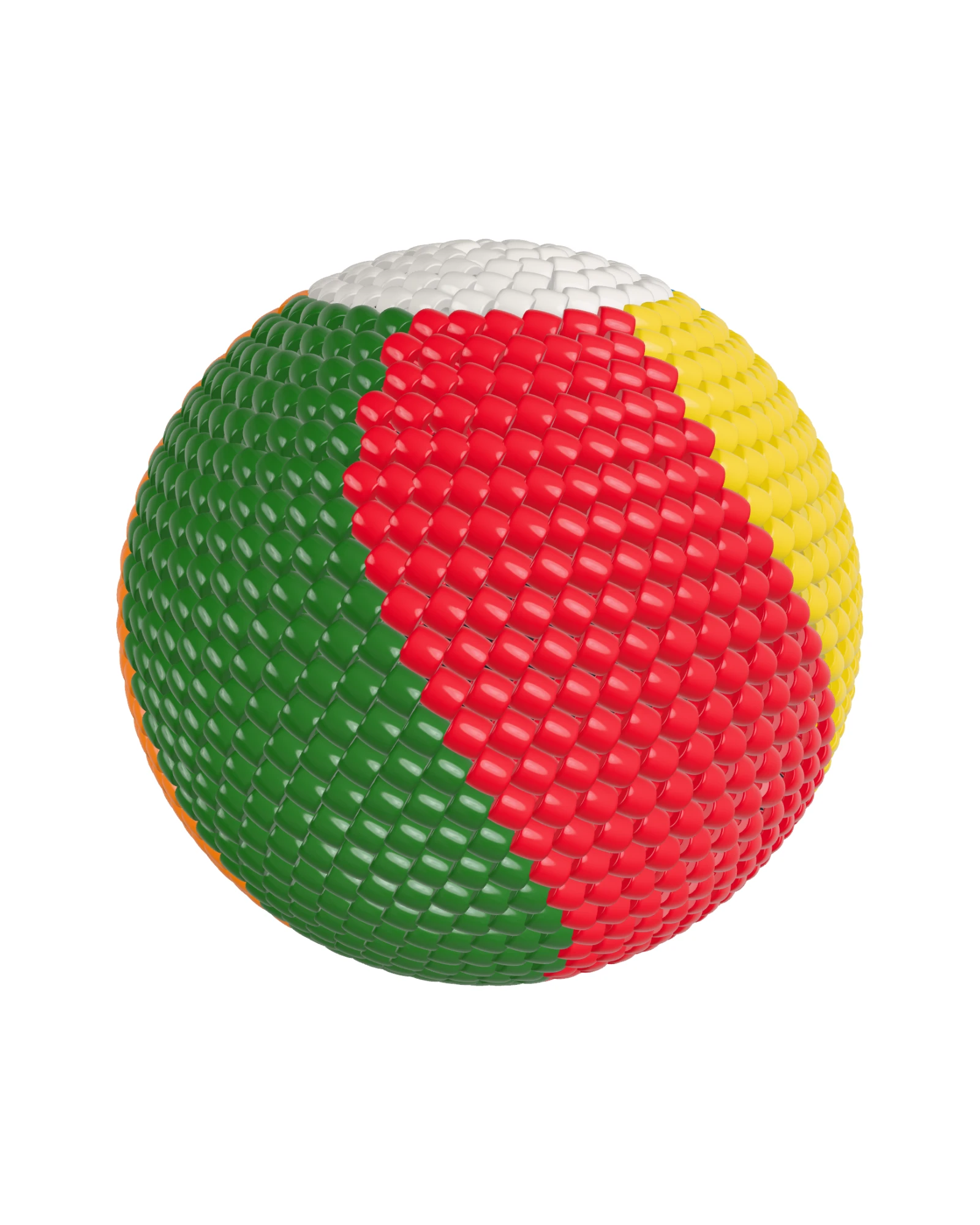
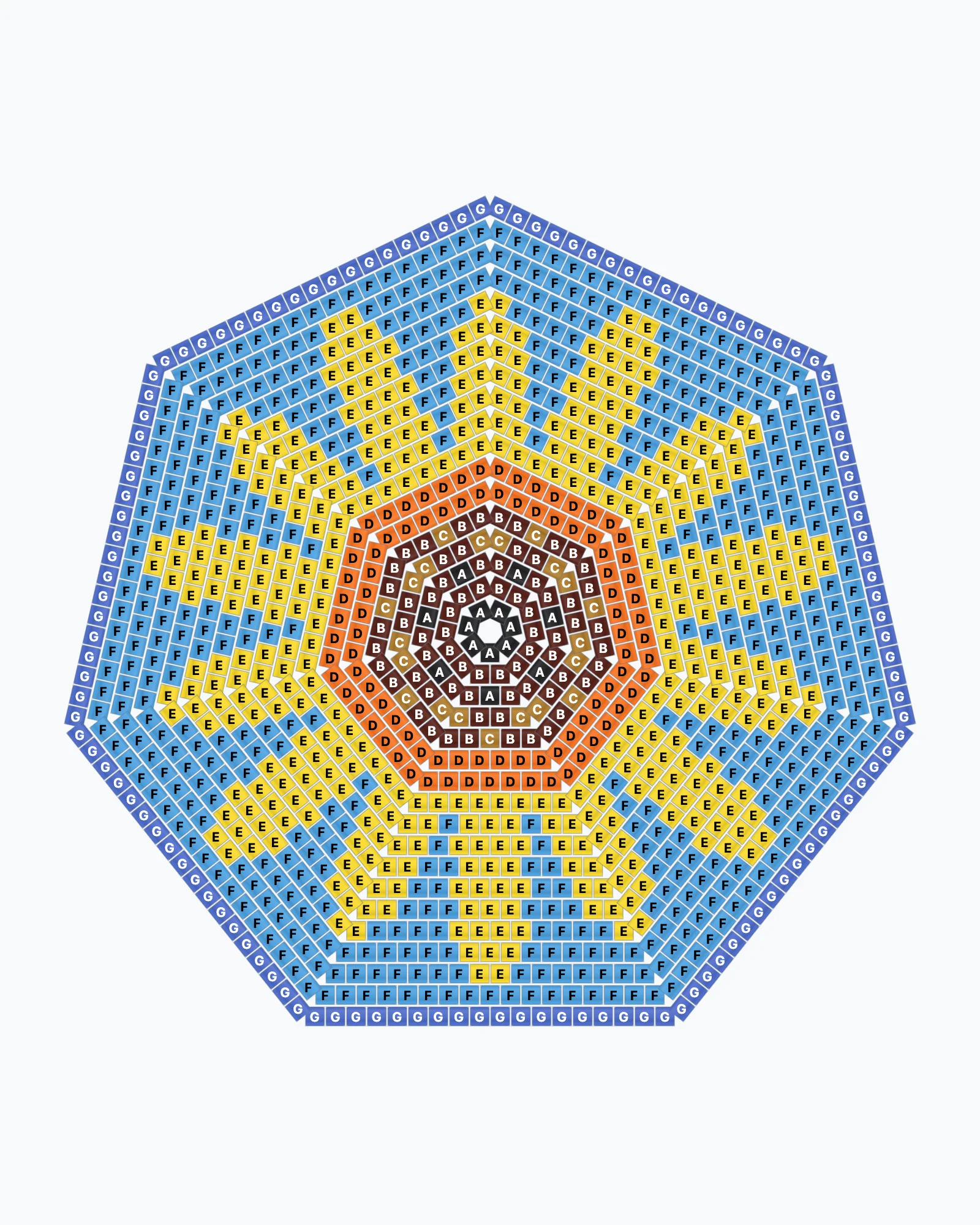
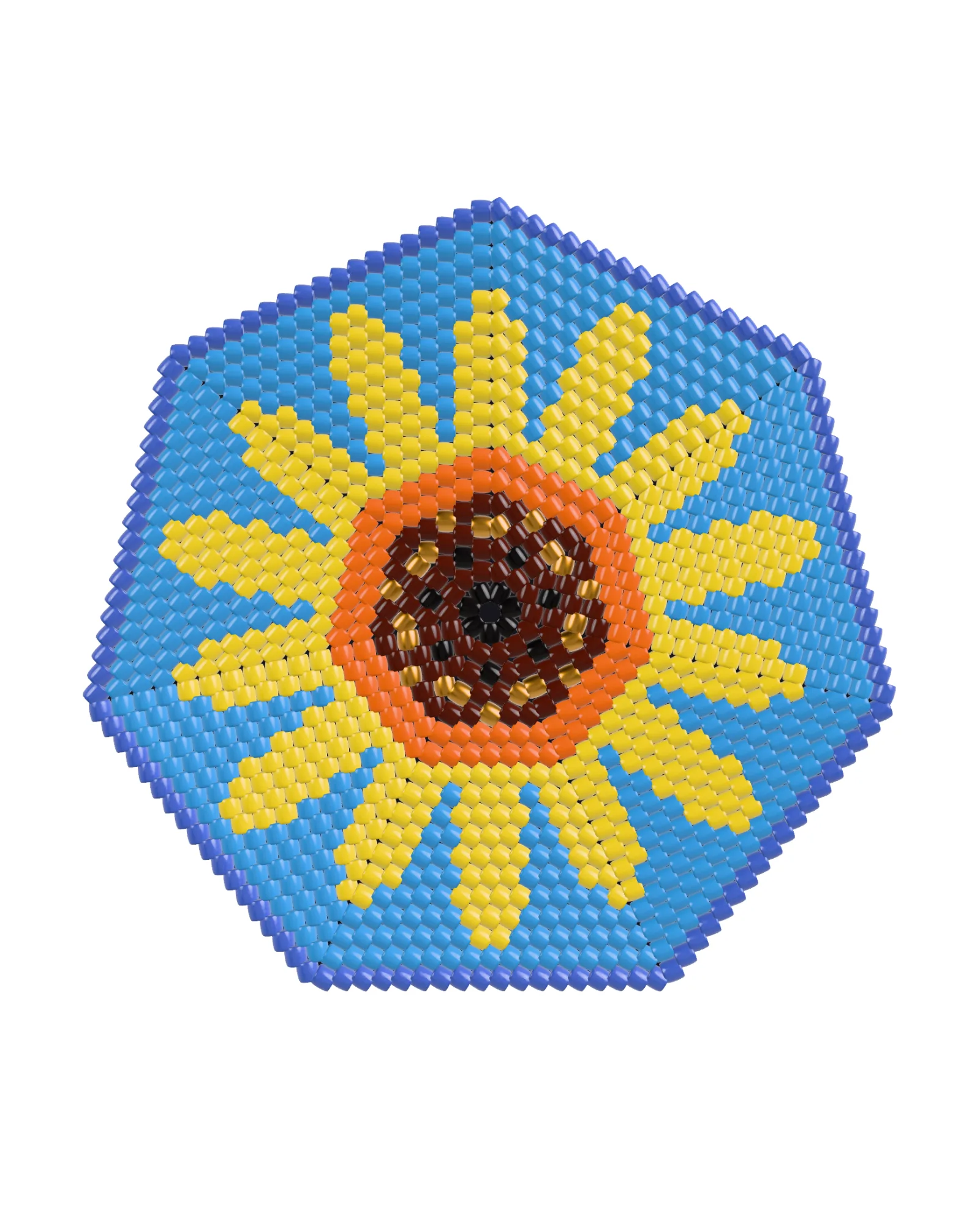
The same stitch makes other shapes. A bead crochet ball is one spiral over a round core, increased in six wedges to the equator and decreased again. A bead crochet circle starts from a ring of seven and adds a bead to every wedge each round, which keeps it flat: 12 rounds is 546 beads, about 5 cm across in 10/0.
3D bead figures: parallel weave, peyote animals and amigurumi
Three techniques make most beaded animals. They look different because they are built differently: rows on wire, sewn peyote parts, or rings of cross weave.
Parallel weave on wire
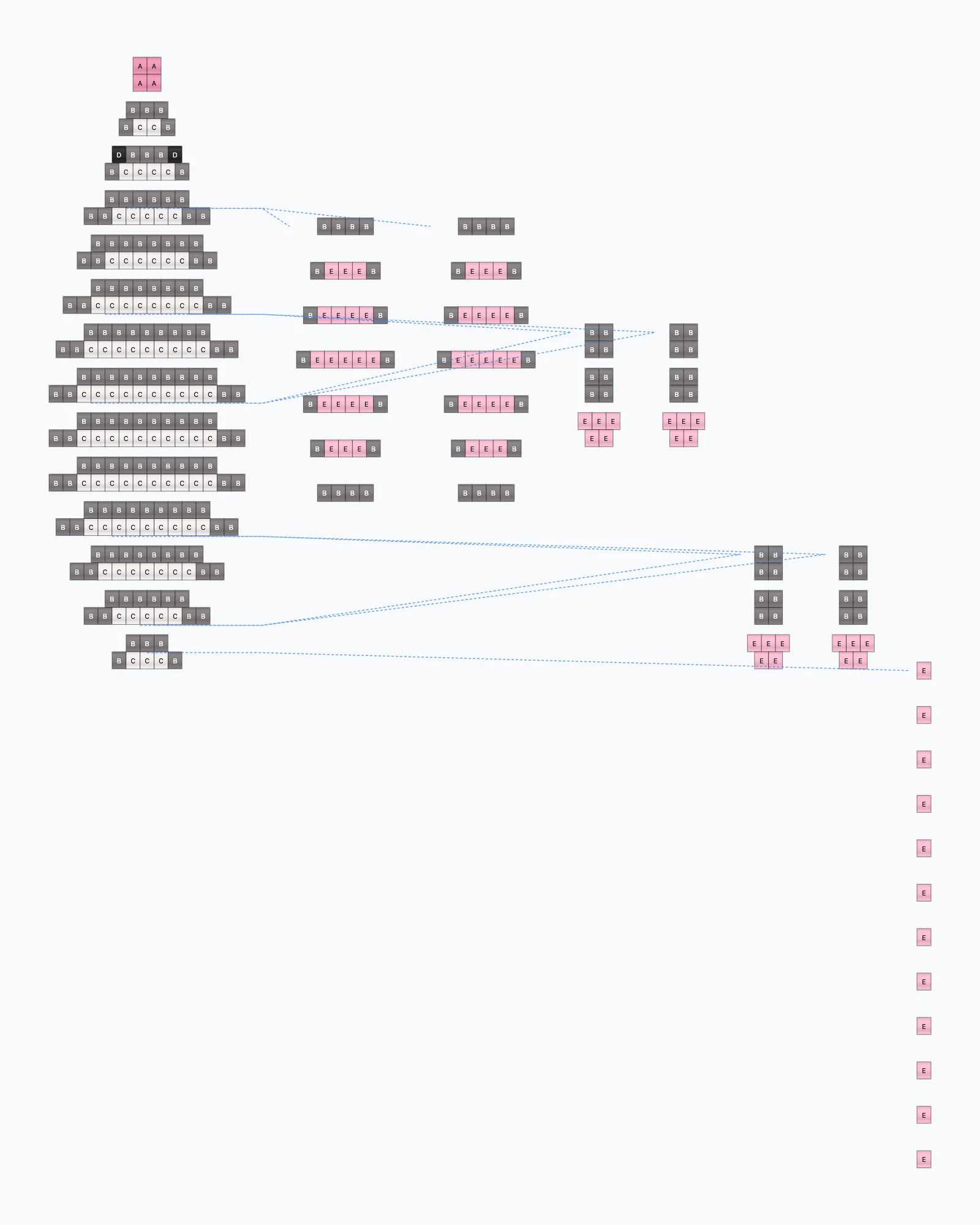
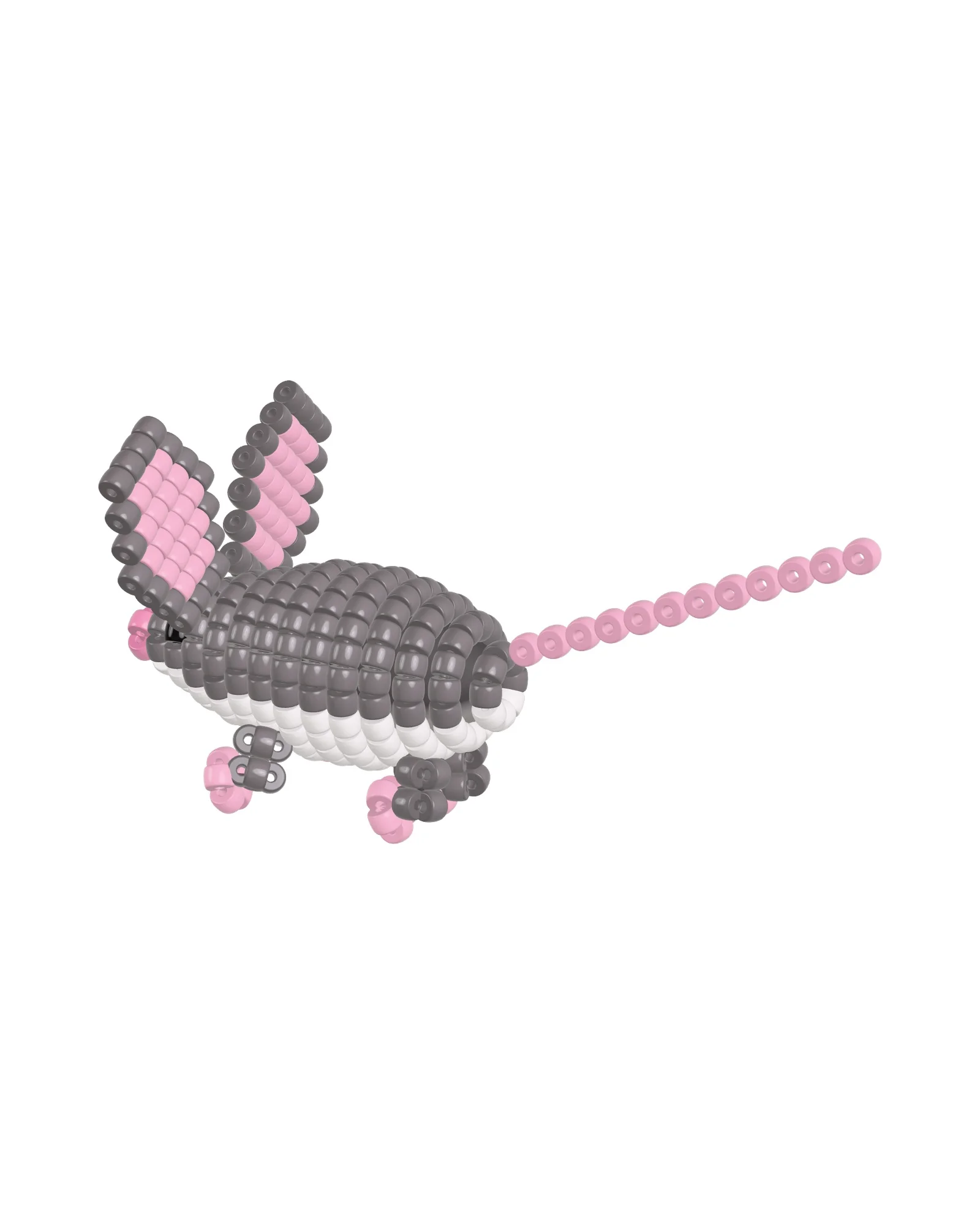
Parallel weave is worked on wire: string a row on one end, pass the other end back through the same beads and pull, and the row settles under the one before. In volumetric parallel weave every row has two tiers, an upper one for the back and a lower one for the belly, and ears, legs and tails go on extra wires. A mouse or a fish is a classic first 3D piece in bead clubs. See 3D parallel weave animals.
3D peyote animals
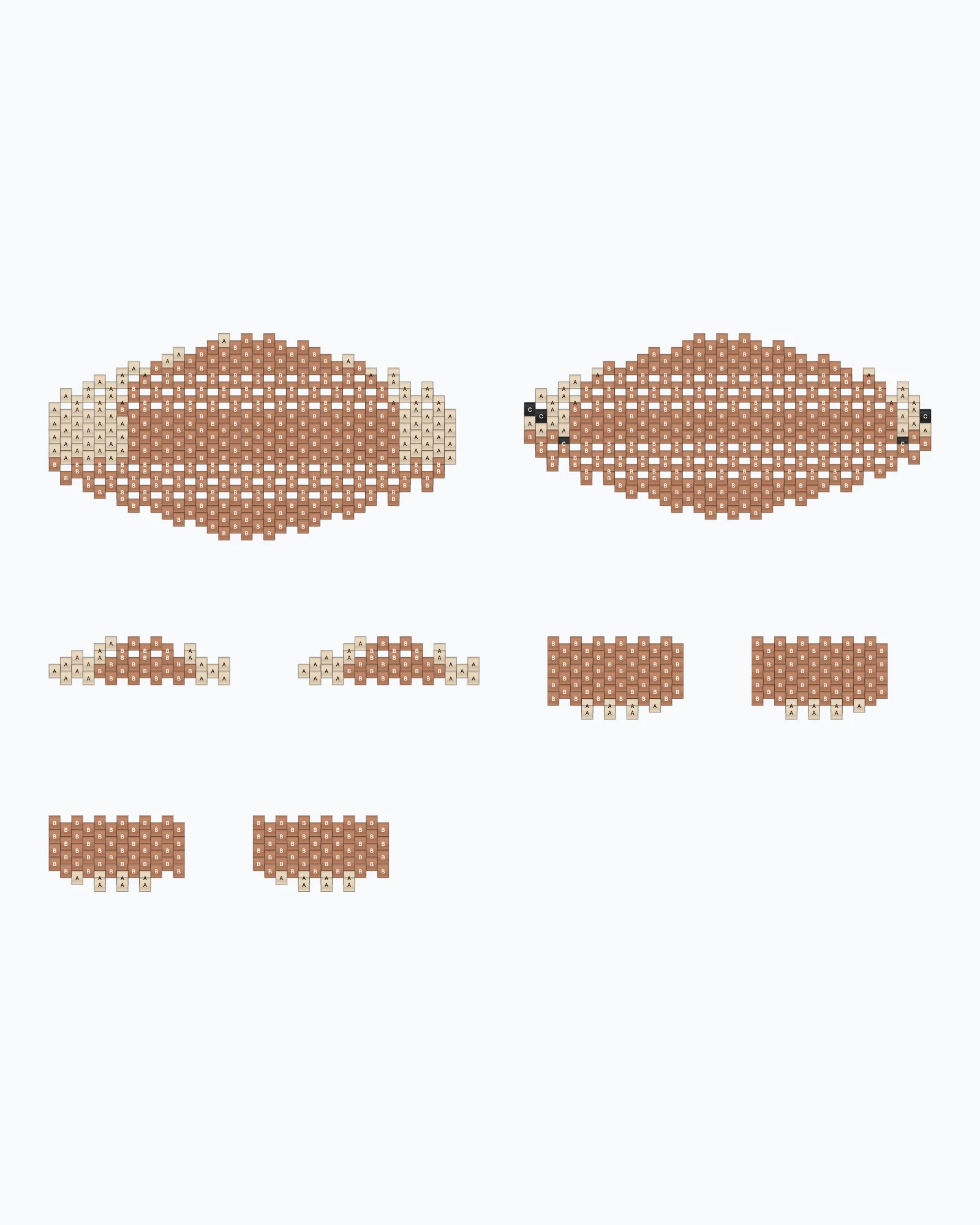
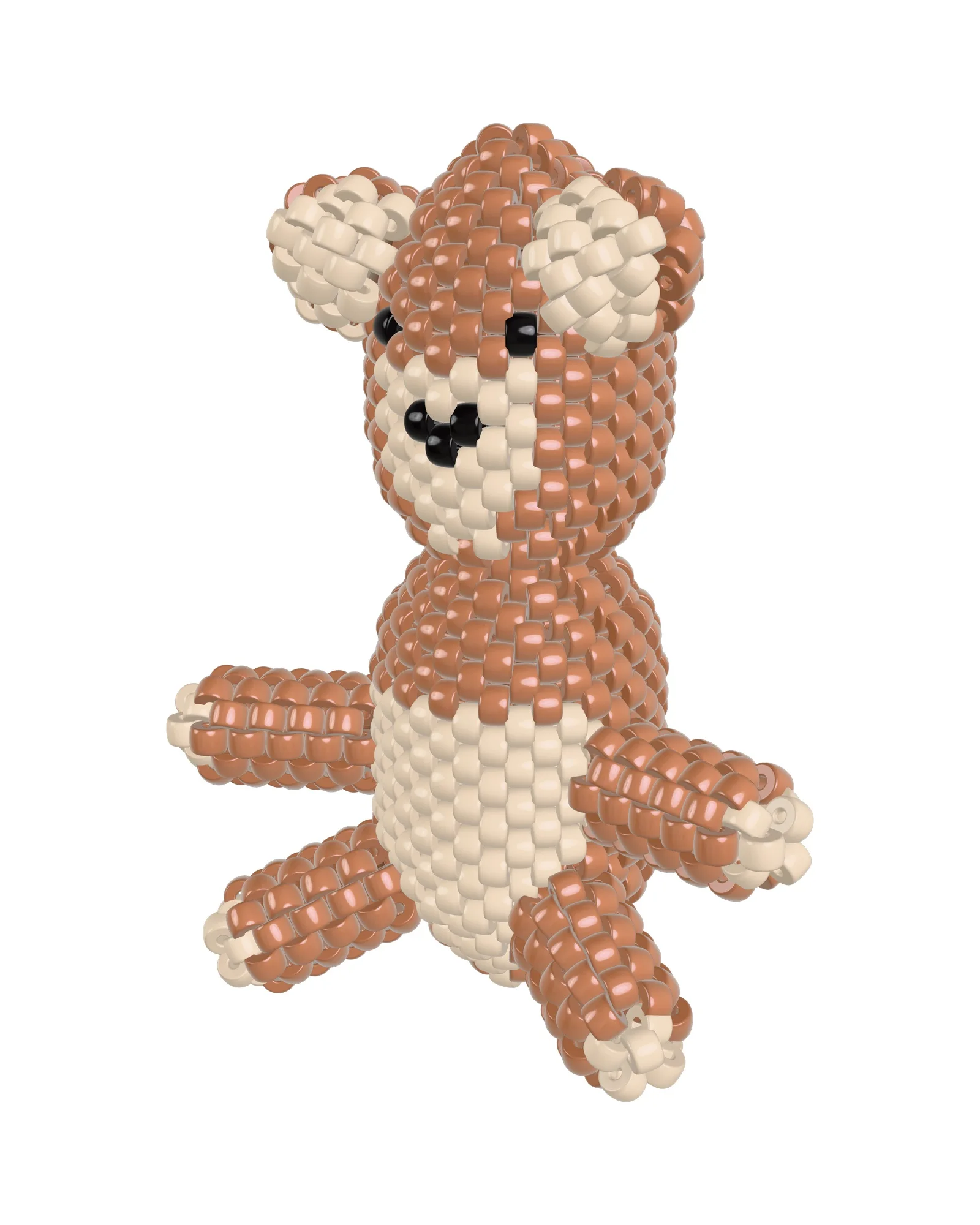
A 3D peyote animal is a set of parts worked in circular and tubular peyote with a needle and thread: balls for the body and head, cups for the ears, tubes for the legs. As in crochet amigurumi, more beads in a round widen a part and fewer close it. Each part is then sewn onto the one it belongs to. See 3D peyote animals.
Bead amigurumi
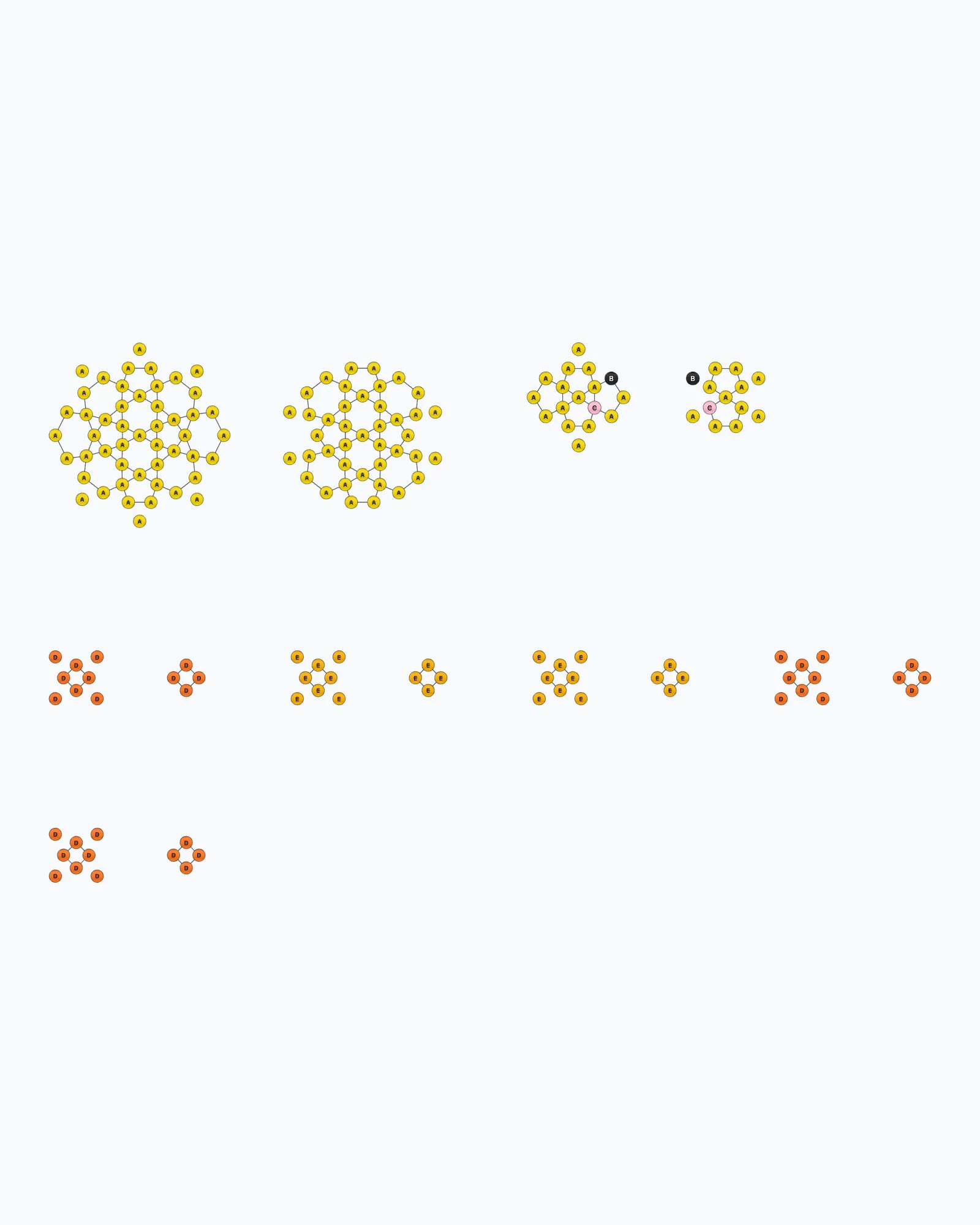
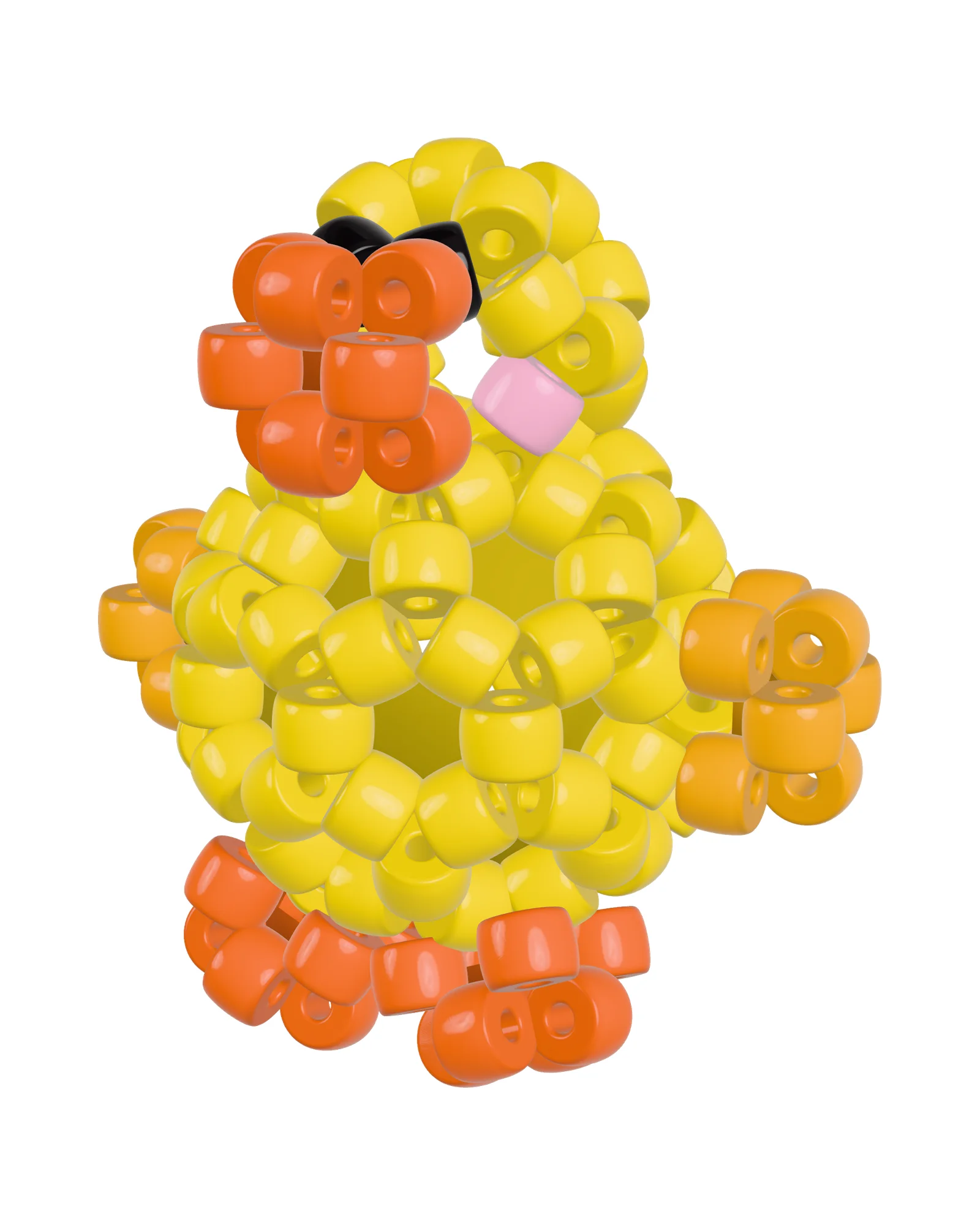
Bead amigurumi is woven in cross weave on fishing line, with a needle on each end. Both needles pass through one bead from opposite sides to close each ring, and every ring shares beads with the ones before, so a part closes into a shell. Parts are joined through beads marked with matching letters. In Japan the craft is known as bead mascots. See bead amigurumi.
Beadwork that is not bead weaving
Some searches for bead weaving are really about other beadwork. These techniques use the same seed beads, but the beads don't form a fabric of their own:
- Bead embroidery: beads sewn onto fabric, leather or felt. The base holds the design, so any shape works. In Ukraine it decorates embroidered shirts and festive clothing.
- Stringing: beads threaded onto a cord or wire in order, as in a simple strand necklace. Nothing is woven, so the only chart is the order of the beads.
- French beading on wire: petals and leaves made from beaded wire, bent into loops or wrapped in rows around a central wire, then assembled into flowers and trees. Ukrainian school lessons call these петельне and дугове плетіння.
Other stitches you will meet
- Ladder stitch: a row of beads sewn side by side, the base for brick stitch and herringbone.
- Spiral rope: a core of beads wrapped in loops of other beads, each new loop passing through the core.
- Cellini spiral: tubular peyote in several bead sizes that twists into a ridged spiral.
- Chevron: a triangular form of netting that makes V-shaped bands.
None of these four has its own grid in Wevy. The pattern types overview lists every grid that does.
Which bead weaving stitch should you use?
Bead weaving techniques are easiest to choose by the piece you want to make; choose the bead after. These rules of thumb cover most projects:
- Bracelet with a picture or a name: loom for long, even bands; peyote in Delica for a smooth, flexible cuff. The name bracelet tool charts lettering for either.
- Earrings: brick stitch for shaped tops and fringe; right angle weave for light, open shapes.
- Necklace or collar: a gerdan on the loom for a solid panel; a sylianka in netting for an open collar.
- Rope or lariat: bead crochet for a round rope, cubic right angle weave for a square one, tubular herringbone for a ribbed one.
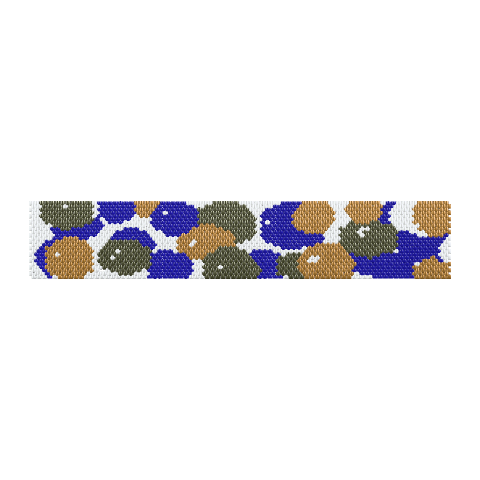
- Picture or panel: loom for anything large; peyote or brick stitch in Delica 11/0 for fine detail. The image to bead pattern tool makes a first chart from a photo.
- 3D figure or ornament: peyote stars, balls and pods; a crochet ball over a core; parallel weave, peyote or amigurumi for animals.
The finder below does the same match for you. Tap what you want to make, and "my first project" if it is one. It lists the stitches that suit, each with a 3D preview, its difficulty and links to its pattern page and guide.
What do you want to make?
- Loom braceletEasy · A narrow loom band sized for a bracelet or cuff.Read the guide
- Square stitchEasy · Aligned rows and columns, woven by hand.
- Peyote / mosaicSome practice · Flat peyote with staggered columns.Read the guide
- Right angle weaveSome practice · Flat RAW units, with an optional back piece sewn at the edge.
- Bead crochet ropeAdvanced · A draft reflowed onto the spiral of a rope.Read the guide
- Cubic right angle weaveAdvanced · CRAW cubes for ropes, bracelets and 3D figures.
In Wevy, the loom (gerdan and bracelet), square stitch, peyote, brick stitch, 1-drop earring and flat right angle weave grids are free. Sylianka, bead crochet, 3D peyote, cubic right angle weave, 2- and 3-drop earrings and parallel weave and peyote animals need Hobby or Pro; bead amigurumi is Pro. Making a pattern you got from the marketplace is free on every plan.
Beading stitches for beginners: which to learn first
Learn the stitches in the order their charts get harder to follow. A straight grid reads like graph paper. An offset grid makes you track columns. Netting, right angle weave and crochet add a thread path or a stringing order on top.
- 1A loom bracelet or a square stitch band. One chart row is one row of beads. A 10-bead band in Preciosa 10/0 is about 1.7 cm wide.
- 2Flat even-count peyote. It is the stitch behind stars, balls, pods and peyote animals, so it pays off twice.
- 3Brick stitch from a ladder. A pair of earrings teaches increases and decreases at the edge.
- 4Netting or right angle weave. A short sylianka strip or a RAW bookmark, where the thread path matters more than the colours.
- 5Bead crochet and 3D work. A 6-around rope, then a star, a ball or an animal.
Wevy's Make mode keeps your place in any of these: it lights the next row, column, diamond or unit and can read the colours aloud. The beading for beginners guide covers tools, thread and a first project.
Common mistakes and fixes
| What you see | Why, and how to fix it |
|---|---|
| A design drawn on square graph paper leans or stretches in peyote or brick stitch | Offset stitches shift half a bead every other row or column. Redraw the design on the stitch's own staggered grid. |
| The finished piece is a third longer or shorter than planned | Loom rows add a full bead diameter; peyote and brick rows add three quarters of one. Work out the rows for the stitch you will use. |
| A loom chart used for brick stitch comes out leaning | Loom charts line beads up in columns; brick stitch offsets every other row. A loom chart works bead for bead only in square stitch. |
| A bead crochet rope shows diagonal stripes instead of the design | The draft was read from the wrong end, or was not reflowed for the spiral. Row 1 of a rope chart is the bottom row. |
| A sylianka net puckers or its diamonds grow too wide | A group has the wrong count, or a shared bead was picked up again. Count only new beads and pass through the shared one. |
| A right angle weave piece is too floppy for its purpose | Flat RAW is soft by nature. For a firm shape, add a back piece or switch to cubic right angle weave. |
Questions beginners ask
What are the basic bead weaving stitches?
Peyote, brick stitch, square stitch, herringbone, netting and right angle weave are the basic off-loom stitches, and loom weaving is the main on-loom method. Ladder stitch is the foundation row for brick stitch and herringbone. Most other stitches, such as spirals and chevrons, are variations of these.
What is the easiest bead weaving stitch for beginners?
Loom weaving and square stitch are the easiest to read, because one chart row is one row of beads. Flat even-count peyote is the easiest off-loom stitch to learn first, and it leads on to 3D shapes. Start in 8/0 or 10/0 beads before moving to Delica 11/0.
What is the difference between peyote and brick stitch?
They give the same offset, turned a quarter. In peyote the beads stand hole-up and the columns are offset; in brick stitch they lie on their side and the rows are offset. Brick stitch hangs each bead on the thread between two below, which makes shaping at the edges easier.
Is loom weaving the same as bead weaving?
Loom weaving is one kind of bead weaving. Off-loom bead weaving uses only a needle and thread, and covers peyote, brick, square stitch, herringbone, netting and right angle weave. Square stitch gives the same straight grid as a loom without the warp threads.
Which stitch is best for beaded earrings?
Brick stitch is the usual choice, because it starts from a ladder and widens or narrows easily at the edges, and fringe hangs well from it. Peyote works for straight shapes, and right angle weave for light, open ones. Delica 11/0 gives the smoothest surface.
Which techniques are used for Ukrainian gerdans and sylianky?
A gerdan is usually woven on a loom as one solid piece, straps and panel together. A sylianka is netting worked by hand, usually with one needle, into open diamond mesh. Both traditionally use round Czech 10/0 beads such as Preciosa.
Which beadwork techniques are not bead weaving?
Bead embroidery sews beads onto fabric or leather, stringing threads them onto a cord, and French beading shapes beaded wire into flowers and leaves. They use seed beads, but the beads don't form their own fabric. One technique can also go by several names: peyote is mosaic stitch, and right angle weave is cross weave.
Can I make a chart for every stitch in Wevy?
For most of them. Wevy has grids for loom, square stitch, peyote and its 3D shapes, brick stitch, netting (sylianka), right angle weave and cubic right angle weave, bead crochet and three kinds of 3D animals. It has no grid for herringbone, spiral rope or chevron; a Pro custom grid lets you place and turn those beads by hand.