Short answer
To make beaded earrings, pick a pattern and weave a ladder of seed beads as the widest row. Build brick stitch rows that shrink by one bead up to a point, add a loop for the ear wire, then hang fringe strands from the ladder. A medium fringe earring in Delica 11/0 takes about 330 beads.
What you need
- Seed beads: Miyuki Delica 11/0 for a flat, crisp look, or round 11/0 or 10/0
- Beading thread, such as FireLine 0.12 mm, KO or One-G, and a size 12 beading needle
- A pair of ear wires, plus two small jump rings if your loop needs them
- Two pairs of flat or chain-nose pliers, sharp scissors and a bead mat
- A chart: your own on a brick stitch grid, or a pattern from the marketplace
Words the chart uses
- Ladder
- The first row: beads joined side by side, the thread passing through each neighbour. It is the earring's widest row, and the fringe hangs from it.
- Thread bridge
- The loop of thread between two beads of the row below. Each brick stitch bead is sewn under one bridge.
- Decrease
- Starting a row under the second bridge instead of the first, so the row is one bead shorter. Rows that decrease make the triangle.
- Drop
- How many beads make one stitch. A 2-drop earring stacks two beads in every stitch, so its top is twice as tall.
- Fringe strand
- A string of beads hanging from one ladder bead. The needle turns on its last bead and climbs back up.
- Turn bead
- The last bead of a strand. The needle skips it on the way back up, and it holds the strand on.
What a beaded earring is made of
Almost every seed bead earring has four parts, from the ear down. The ear wire goes through the ear. The top loop, a few beads or a jump ring, joins the wire to the beadwork. The body is the woven shape that carries the design. The fringe is optional: strands of beads hanging from the body's lowest row.
Each part has its own job. The loop takes all the weight, so it gets two or three passes of thread. The body sets the width and the motif; the fringe sets most of the length and all of the swing. Knowing which part does what makes a chart easier to read and to change.
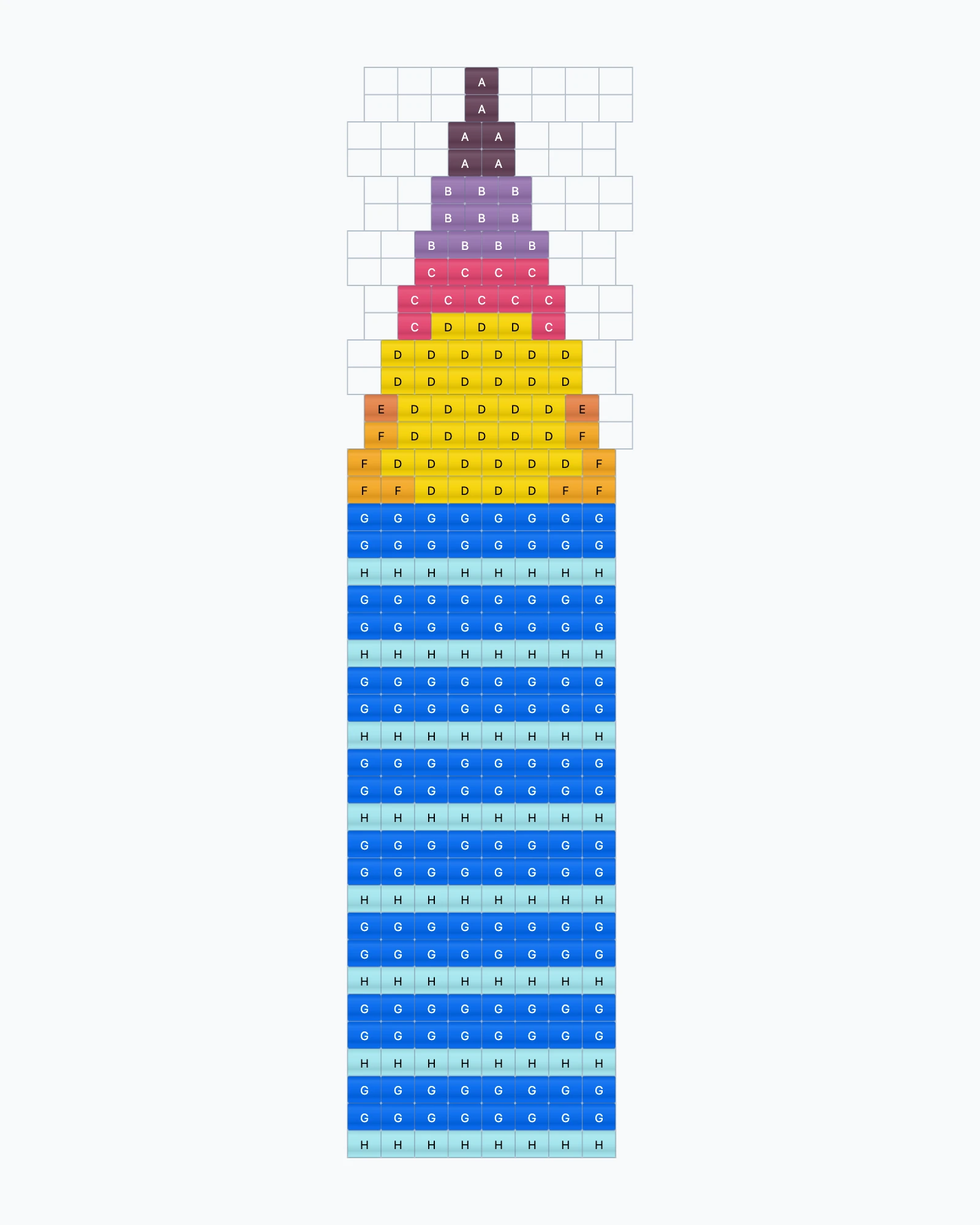
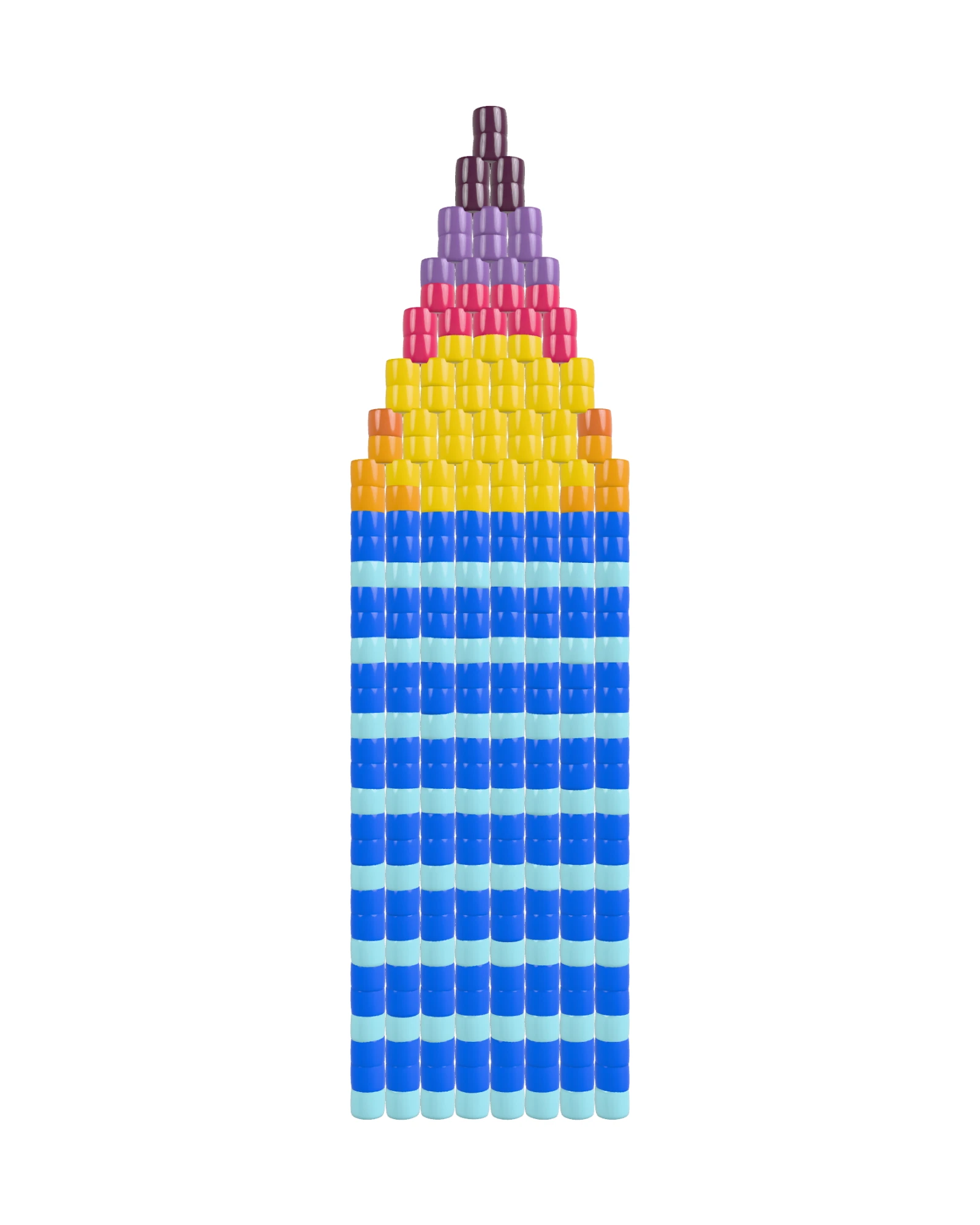
On a chart, the body is drawn bead by bead on a staggered grid and each fringe strand is a column below it. Wevy's beaded earring pattern maker lays out exactly this shape: a brick stitch top in 1, 2 or 3 drops over a straight body that starts 8 beads wide.
Which beading stitches work for earrings
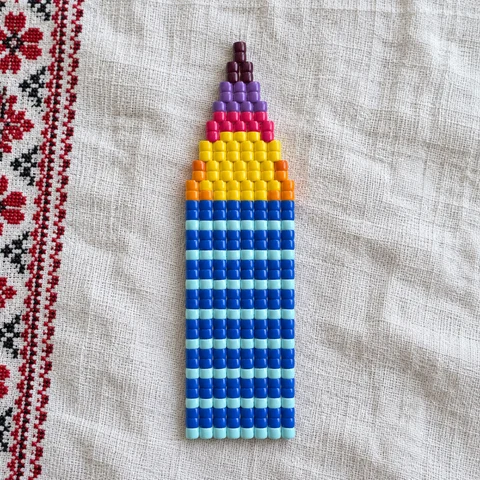
Brick stitch is the classic earring stitch. Each row is built on the thread of the row below, so you can start or end a row a bead early on either side. That is how triangles, diamonds and stepped tops are made without cutting the thread.
The other flat stitches work too, for different outlines. Rectangles are easy in every stitch; anything that narrows is easiest in brick stitch. Choose the stitch by the shape you want, then the bead.
| Stitch | Shapes it does well | Edges and shaping | Grid in Wevy |
|---|---|---|---|
| Brick stitch | Triangles, diamonds, stepped tops over fringe | Add or drop a bead at either end of any row | Brick stitch and 1-drop earrings: Free. 2- and 3-drop: Hobby or Pro |
| Peyote | Rectangles, long drops, triangles | Steps by half a bead; decreases need extra thread turns | Peyote: Free |
| Loom | Rectangles and long panels with pictures | Straight sides only; every warp thread needs finishing | Loom bracelet: Free |
| Square stitch | Rectangles and stepped shapes with a loom look | Whole-bead steps; very sturdy | Square stitch: Free |
| Netting | Light, lacy chandelier shapes | Open diamonds that drape | Sylianka: Hobby or Pro |
| 3D peyote star or ball | One statement drop | Built in the round | Star and ball: Hobby or Pro |
Peyote is brick stitch turned a quarter, so a peyote chart turned 90 degrees reads as brick stitch, but shaping its edges takes more thread work. A loom panel is quick to weave, yet a 10-bead-wide earring leaves 11 warp threads, 22 ends to weave in. Square stitch gives the same square grid with a needle alone and is very strong.
3D drops: stars and balls
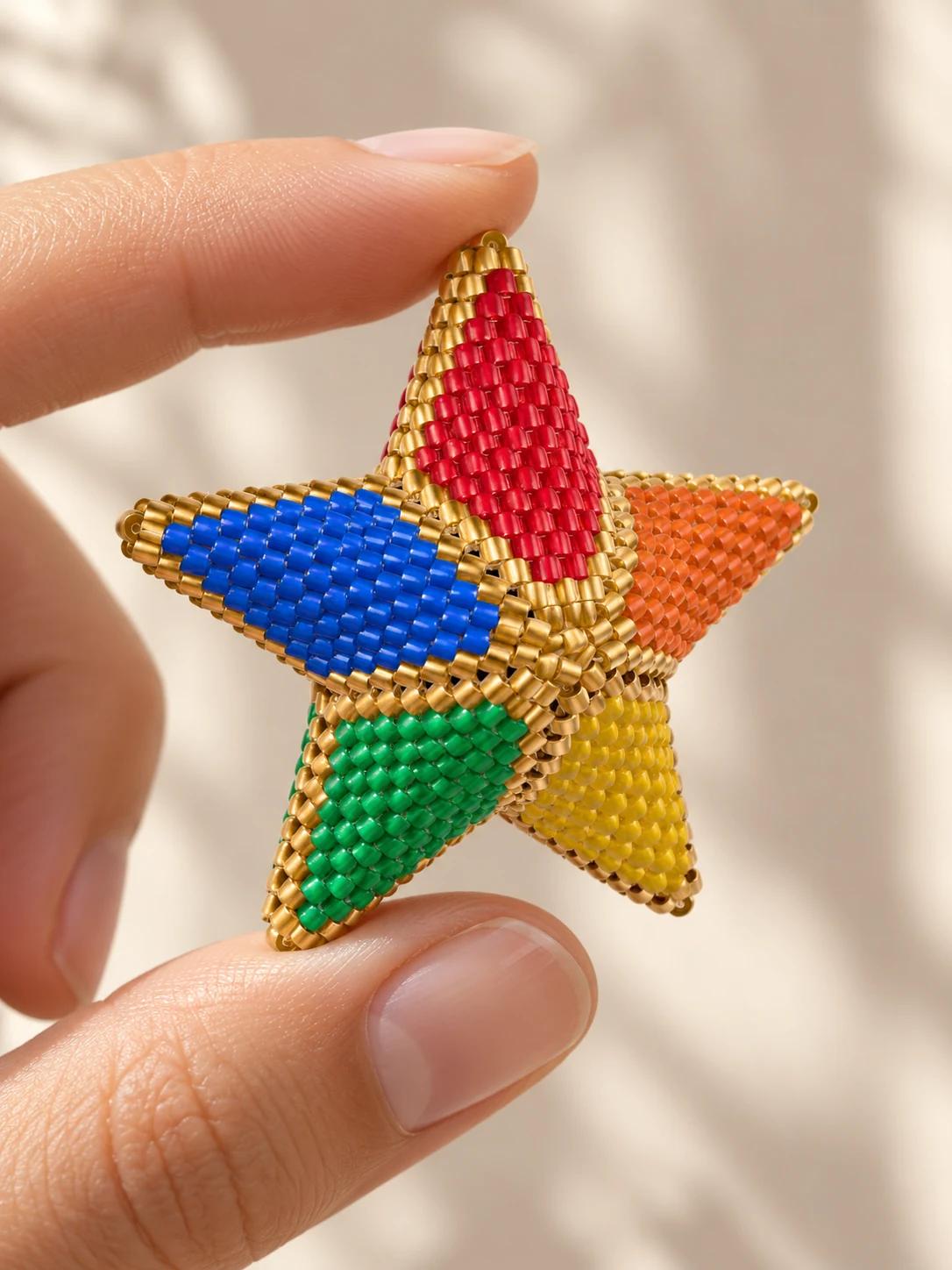
A small 3D peyote star or peyote ball makes a striking drop, as long as it is sized for an ear and not for a tree. Wevy's default 5-point star is 995 beads, about 5 g in Delica 11/0. At 5 rounds the same star is 245 beads, about 1.2 g, and a 4-round ball is 480 beads, about 2.4 g.
Beaded earring shapes: triangles, stepped tops, diamonds and fringe
Most earring patterns use one of five outlines. They differ in how the rows grow and shrink, which decides both the look and where the ear wire attaches.
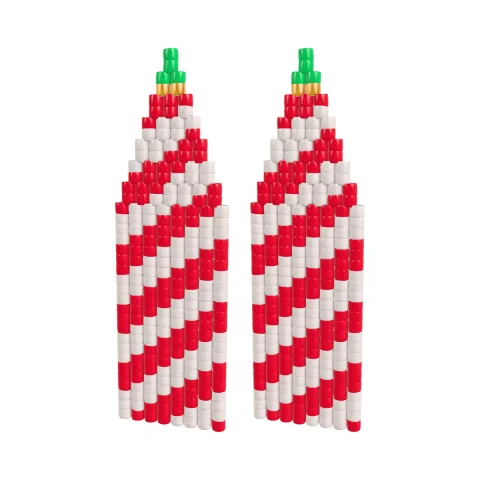
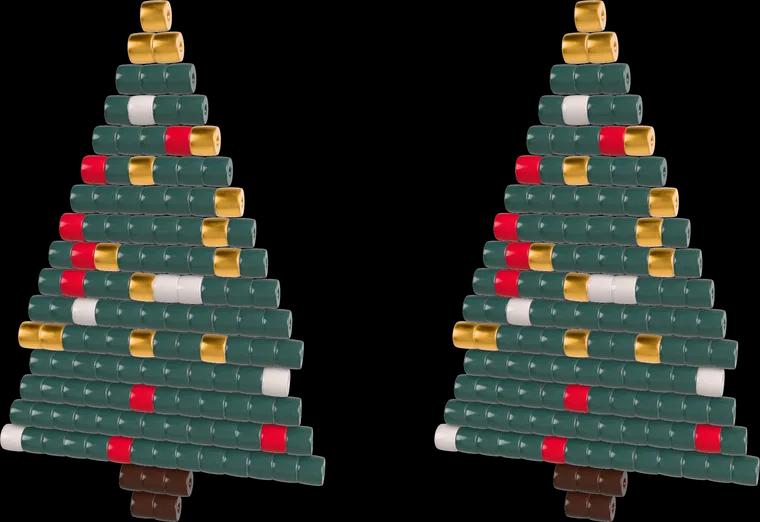
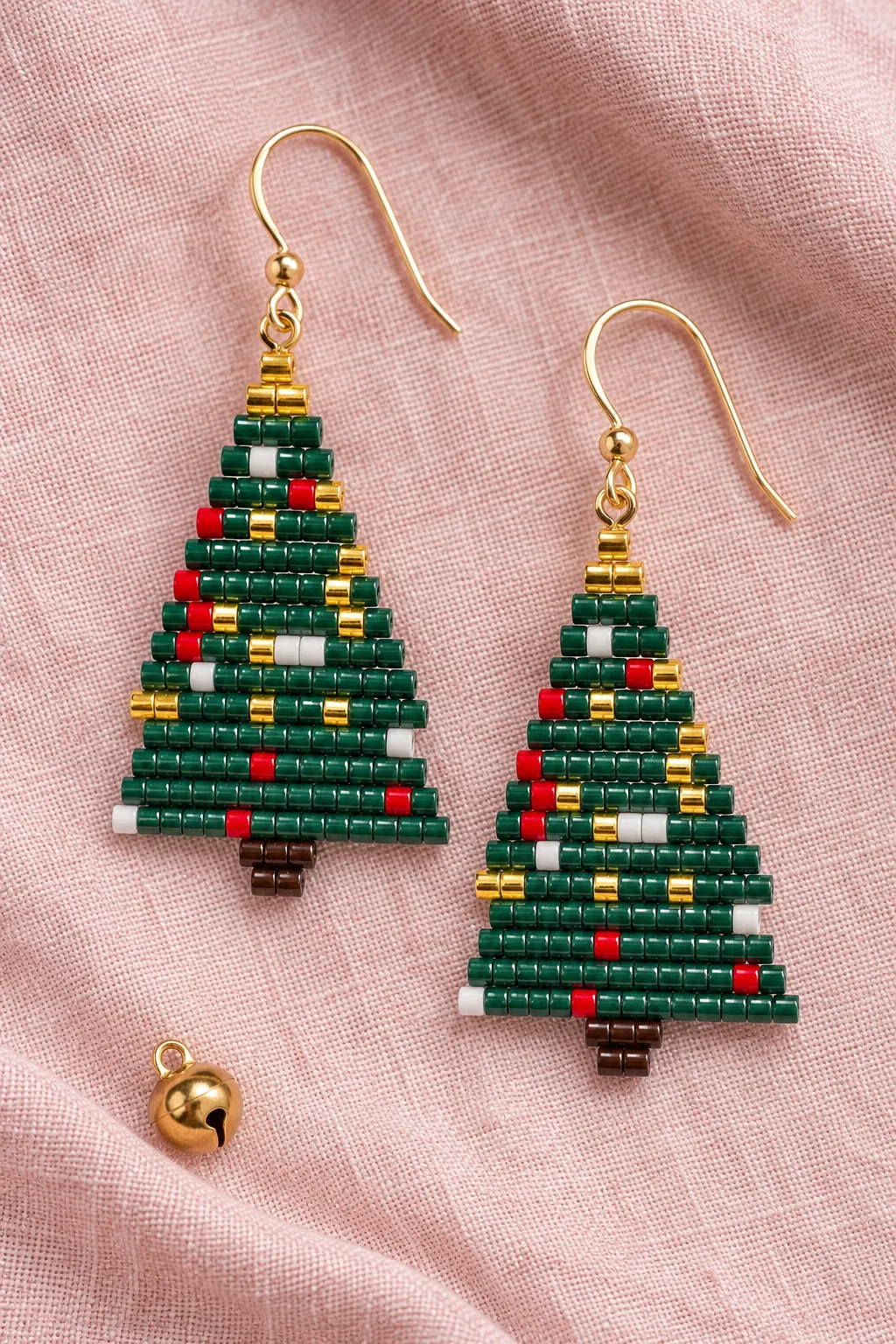
- Triangle. The ladder is the widest row, and brick stitch rows shrink by one bead each up to a point. The Christmas tree earrings below are a triangle 15 beads wide and 19 rows tall.
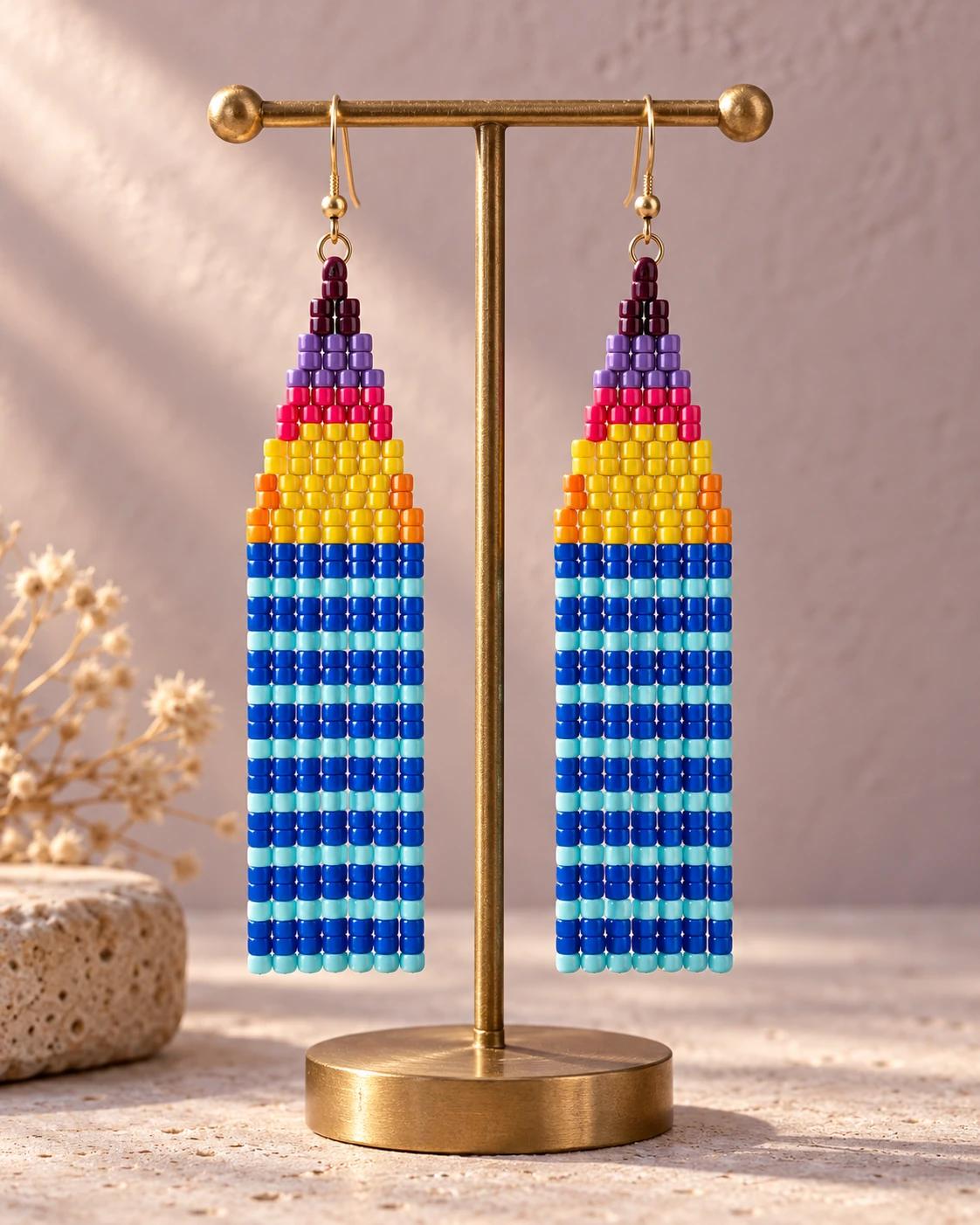
- Stepped top over a straight body. The triangle sits on a straight panel or on fringe. This is the fringe earring most people picture.
- Diamond. Rows grow from a point to the widest row and shrink again. Weave it from the ladder outward, first up, then down.
- Chandelier. A small top with tiers or fans of fringe below, often in netting or with loops between the strands.
- Tassel. A narrow top, two to five beads wide, with long strands that do the talking.
1-drop, 2-drop or 3-drop tops
The drop count is how many beads make one stitch. A 1-drop top adds one bead per row. A 2-drop top stacks two beads in each stitch, so every row is twice as tall and the point comes out longer and narrower. On an 8-bead ladder in Delica 11/0 the top is about 8 mm tall in 1-drop, 17 mm in 2-drop and 25 mm in 3-drop, all on the same 11 mm width.
In Wevy the 1-drop earring grid is free, and the 2- and 3-drop grids come with Hobby or Pro. The brick stitch grid is free too and takes any outline you draw.
How big are beaded earrings? Size and weight per pair
Earring size is simple arithmetic once you know the bead. Width is the beads across, plus half a bead for the brick stitch offset, times the bead's pitch. Each brick stitch row adds three quarters of the bead's diameter, and a fringe strand is its bead count times the pitch.
In Miyuki Delica 11/0 (1.6 mm, pitch 1.3 mm, about 200 beads per gram) that gives about 12 mm of width for 9 beads, 1.2 mm per row and 13 mm of fringe per 10 beads. Weight is the bead count divided by beads per gram, before findings.
| Earring | Chart in beads | Width | Length | Beads per pair | Weight per pair |
|---|---|---|---|---|---|
| Small drop, Delica 11/0 | 9 × 10, no fringe | 12 mm | 12 mm | 180 | 0.9 g |
| Christmas tree, Delica 11/0 | 15 × 19, shaped | 20 mm | 23 mm | 266 | 1.3 g |
| Medium fringe, Delica 11/0 | 9 × 12 + 9 strands of 25 | 12 mm | 47 mm | 666 | 3.3 g |
| Medium fringe, Preciosa 10/0 | 9 × 12 + 9 strands of 25 | 16 mm | 64 mm | 666 | 7.3 g |
| Statement V, Delica 11/0 | 15 × 16 + 15 strands, 45 to 31 | 20 mm | 78 mm | 1,606 | 8.0 g |
The planner below does the same sums for your own chart. Choose the stitch and the bead, set the body and the fringe, and it shows the width, the length and the beads and grams for the pair.
It counts the body as a full rectangle, so a triangle top comes out a little heavier than it is: the tree above fills 133 of its 285 rectangle cells. Treat the result as a ceiling for buying, and add 10 to 15 percent for culls and spills. For any other piece, the bead weight calculator converts counts and grams.
Designing a pair: mirrored or identical
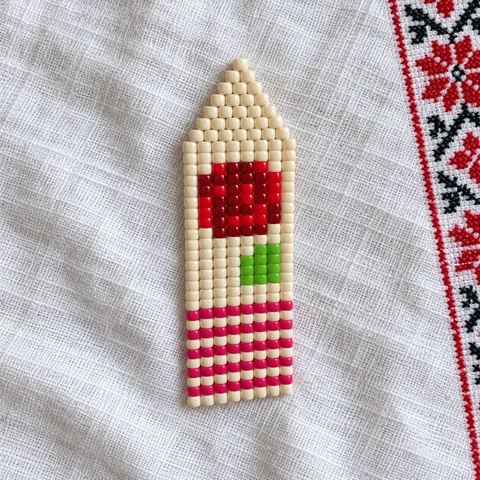
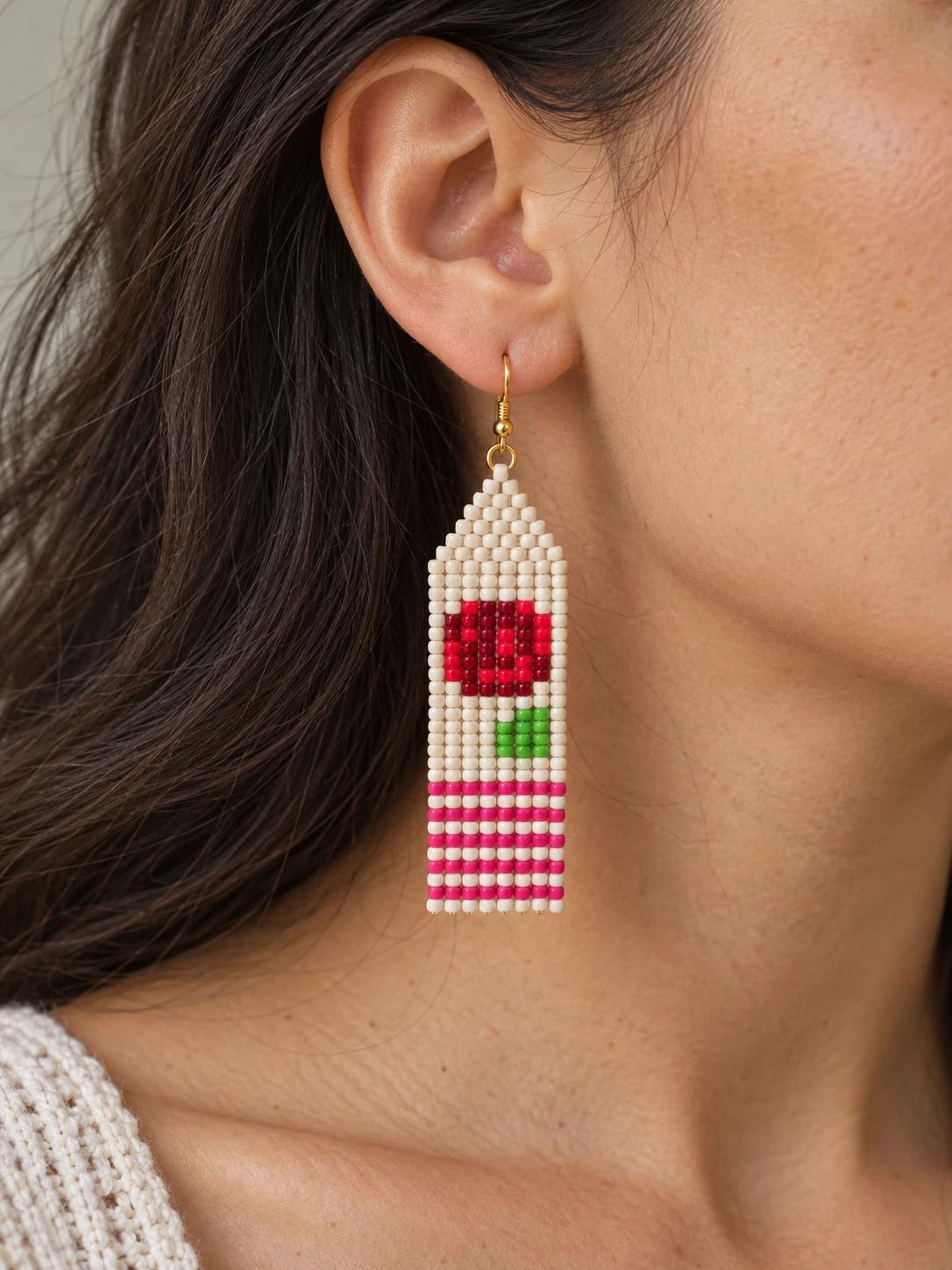
A pair is two earrings, and you decide whether the second repeats the first or mirrors it. Symmetric designs, like a centred rose or a colour gradient, are simply woven twice from the same chart.
Asymmetric designs need a choice. A diagonal stripe, a leaning feather or a bird looks balanced when the two earrings are mirror images, so both motifs point toward the face or both away. Repeated, both lean the same way, which can look deliberate on a stripe and odd on an animal.
- Repeat when the design is symmetric left to right, or when you want two parallel diagonals on purpose.
- Mirror when a motif has a direction: diagonals, birds, leaves, or initials split across the pair.
- Swap colours for a mismatched pair: same shape and bead count, so both still hang at the same length.
- Weave both from one bead mix and at one tension, or one earring may come out a row's height longer.
To mirror a chart on paper, read every row right to left instead of left to right. In an editor, copy the earring and mirror the selection. Wevy's bead count covers the whole file, so the shopping list is already for two.
How to design beaded fringe
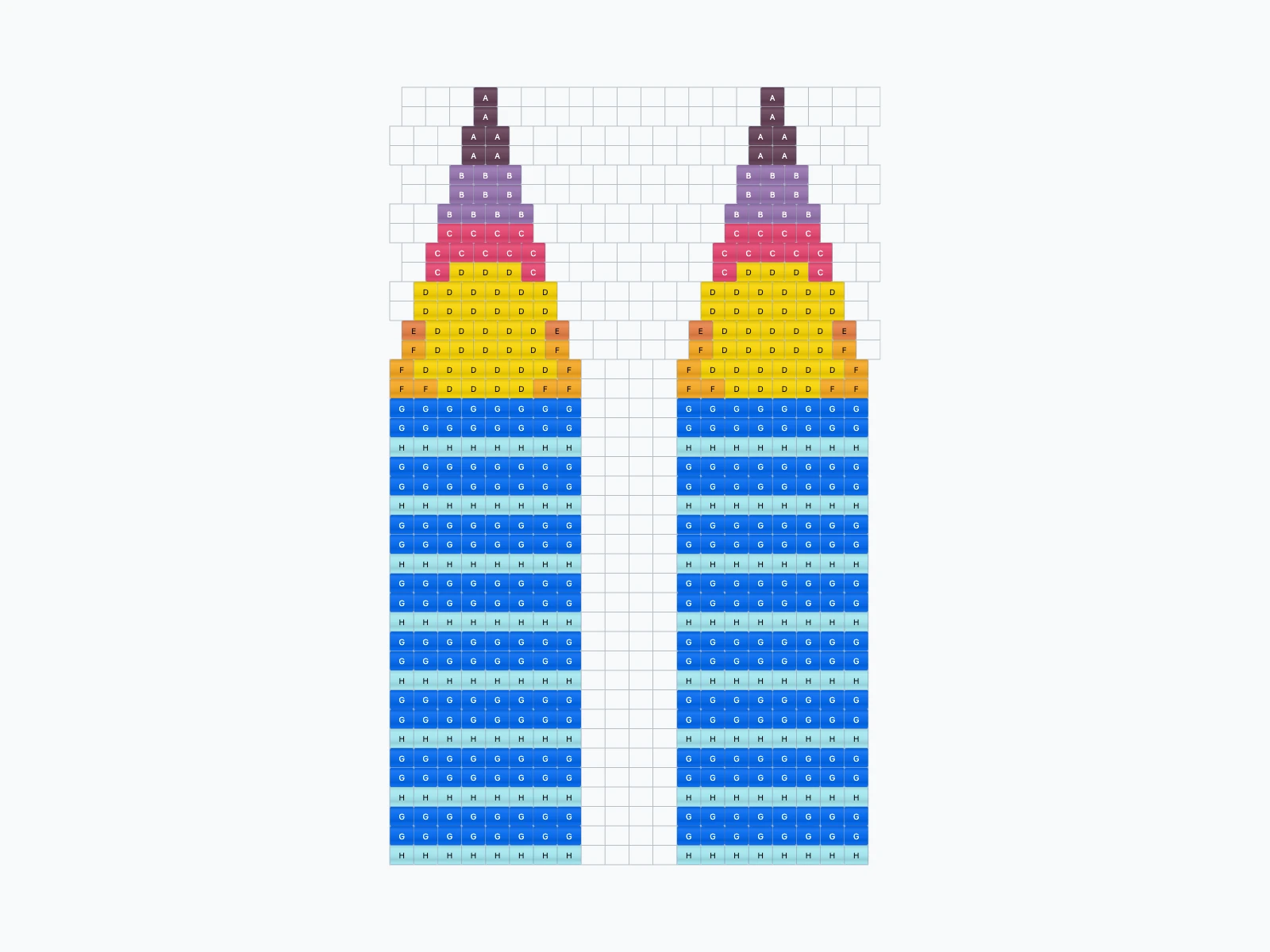
Fringe carries most of an earring's length and all of its movement. Plan it as three numbers: how many strands, how long the longest one is, and how many beads each strand loses toward the edges.
One strand per ladder bead is standard, so a 9-bead ladder carries 9 strands. Shortening every strand by the same number of beads per step gives a clean hemline: 0 for a straight edge, 2 or 3 for a V.
- Straight. Every strand the same length. On 9 strands of 25 Delicas it adds 33 mm and 225 beads per earring.
- V or taper. The centre strand longest, each strand toward the edge 2 beads shorter. On 15 strands from 45 down to 31 beads, the fringe takes 563 beads per earring.
- Inverted V or U. The outer strands longest, which frames the face and widens the silhouette.
- Gradient. Shade the colour down the strands in bands of 3 to 6 rows, so the change reads as a fade, not as stripes.
- Weighted tip. A slightly bigger bead or a bugle near the end helps a long strand hang straight.
Each strand ends with a turn: the needle skips the last bead and goes back up through the rest. Some patterns use a picot of 3 beads instead, which leaves a small knob at the tip. Either way, count the turn beads in the strand's length.
Findings and materials for beaded earrings
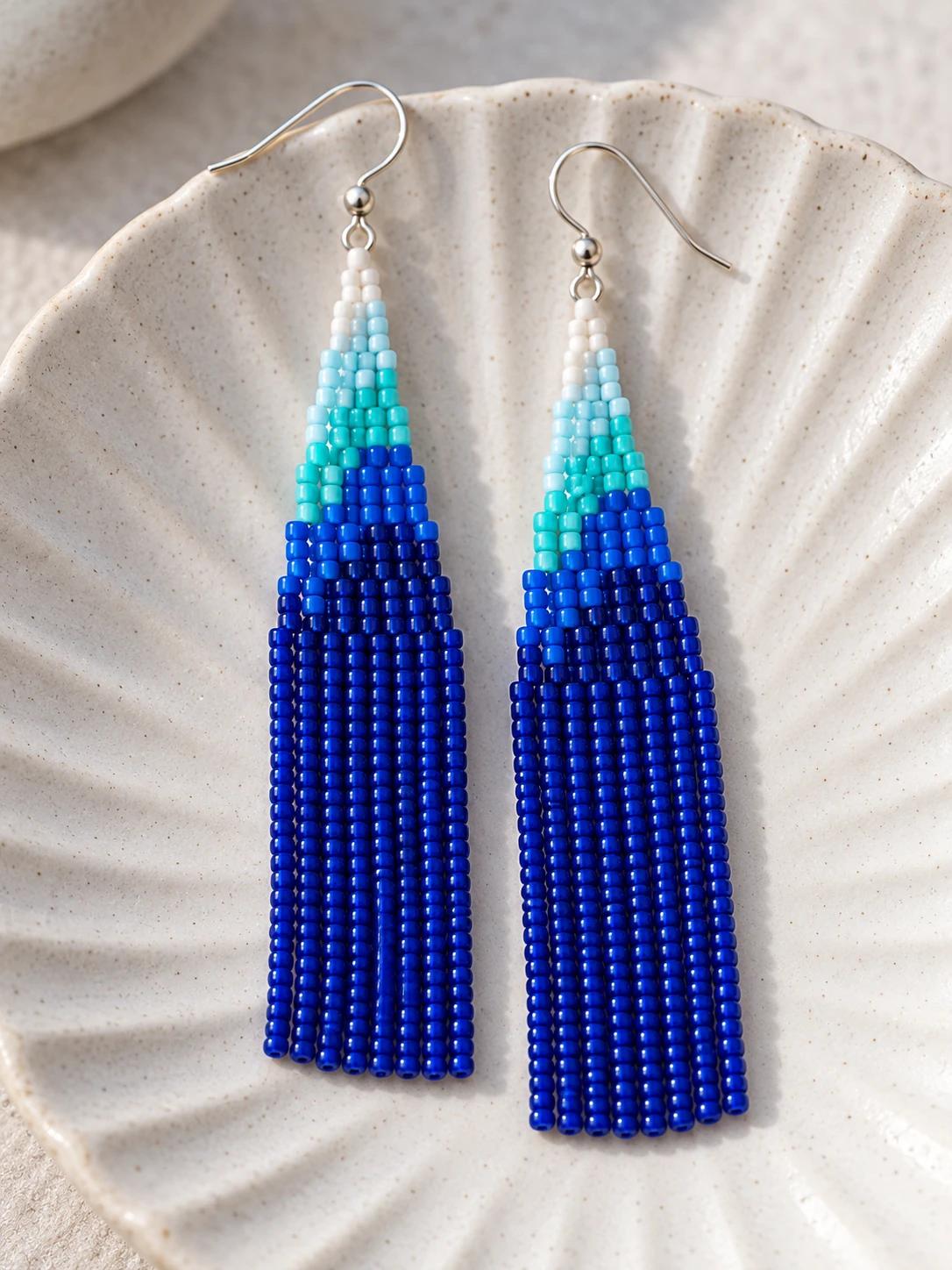
Beaded earrings need very little: beads, thread, a needle and two findings. What matters is that they suit each other, so the needle passes the thread through each bead several times and the loop fits the ear wire.
- Beads. Miyuki Delica 11/0 gives the flat, even surface most earring patterns are charted for. Round 11/0 or Preciosa 10/0 gives a softer, textured look and a bigger earring. Wevy's bead colour charts list real colours by article number, so a chart names beads you can buy.
- Thread. A thin, strong beading thread: FireLine 0.12 mm, KO, One-G or Miyuki thread. Braided FireLine is stiffer and holds a triangle's shape; nylon threads drape more softly in fringe.
- Needle. A size 12 beading needle for 11/0 beads. A size 10 is easier to thread and fine for 10/0; go down to 13 if the thread passes through one bead many times.
- Ear wires. French hooks are the usual choice; lever-backs and posts with a loop stay on more securely. Pick nickel-free wires for sensitive ears.
- Jump rings and pliers. A small jump ring joins a bead loop to the ear wire. Open it sideways with two pliers, never by pulling the ends apart, so it closes round again.
How to make brick stitch earrings, step by step
This is the classic brick stitch fringe earring: a ladder, a triangle above it, a loop for the ear wire and fringe below. The steps work for any width; the example ladder is 9 beads.
Cut an arm span of thread, about 1.5 m, and work with it single, leaving a 15 cm tail to weave in at the end.
- 1Ladder. Pick up 2 beads, pass through the first again and then the second, so they sit side by side. Add one bead at a time: pick it up, go back through the bead before it, then through the new one. Stop at the chart's widest row, here 9 beads. In a 2-drop earring each ladder stitch is 2 beads stacked.
- 2Start the first row. Come out of the top of the last ladder bead. Pick up 2 beads, pass under the second thread bridge from back to front, and go up through the second bead. Starting at the second bridge makes the row one bead shorter.
- 3Finish the row. Pick up 1 bead, pass under the next bridge, and go back up through the bead. Repeat to the end; the row has 8 beads on a 9-bead ladder.
- 4Shrink to the top. Work each row the same way, one bead shorter each time, until 2 beads remain. Check every row against the chart's colours before you start the next.
- 5Top loop. Come out of one top bead, pick up 6 to 8 small beads, and go down through the other top bead. Retrace the loop twice, because it carries the whole earring.
- 6Back to the ladder. Weave down through the edge beads to the ladder and come out of the bottom of its first bead.
- 7Fringe. Pick up one strand's beads from the chart, top to bottom. Skip the last bead and pass back up through all the others and the ladder bead, then down through the next ladder bead to start the next strand.
- 8Finish. Weave each tail through several beads, changing direction two or three times, tie a small knot between beads and trim. Open the ear wire's loop sideways, hook on the bead loop and close it.
- 9Second earring. Weave it from the same chart, or the mirrored one, in the same sitting, so both hang at the same length.
Some beaders add the strands before the triangle, because the strands stop a wide ladder from bending while they work. Wevy's Make mode follows either order: ladder, strands, then the triangle, or the triangle first with Fringe after the triangle switched on. It marks off every bead as you go and can read the colours aloud.
Free beaded earring patterns and Ukrainian-style motifs
The quickest start is a pattern someone has already charted. The Wevy marketplace lists free and paid earring patterns from creators, and making a pattern you got there is free on every plan. The Christmas patterns include four pairs of earrings, from a 125-bead bauble to a candy cane fringe.
For your own design, pick a motif that reads at small size. A 9-bead ladder has room for one clear shape, not a scene, and two or three colours read better than six.
Earrings in a Ukrainian style
Ukrainian-style earrings borrow from embroidery and gerdans: rhombuses, zigzags, eight-point stars and stepped crosses, in red and black on white or in blue and yellow. Rhombuses are the easiest to chart, since a diamond in brick stitch is just rows that grow by one bead and shrink again. A sunflower on sky blue is another favourite.
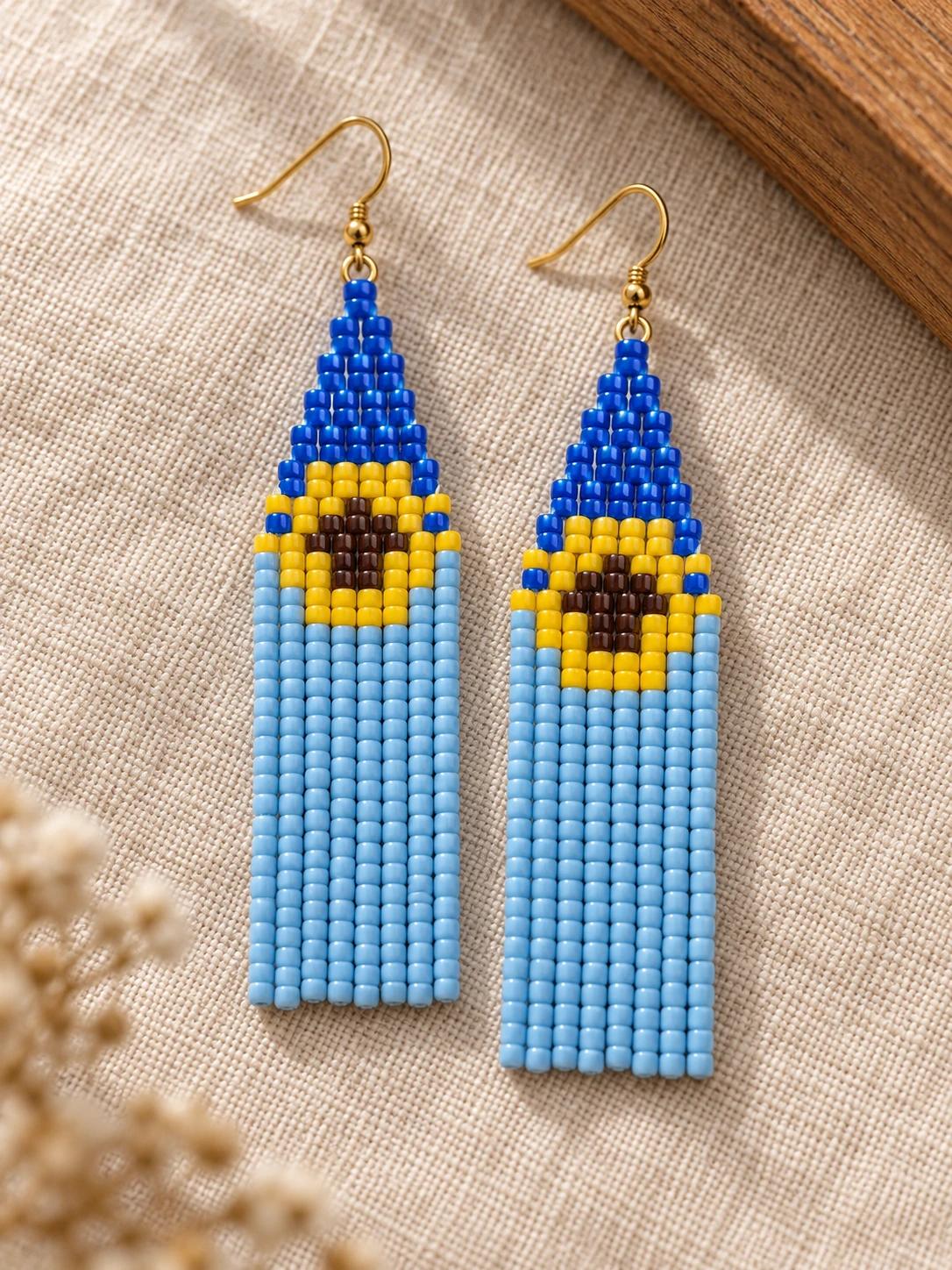
To start from a picture, the image to bead pattern converter makes brick stitch charts; keep earrings under 15 beads wide so the motif stays readable. If you prefer pencil, the bead graph paper tool prints blank brick and earring grids.
Common mistakes and fixes
| What you see | Why, and how to fix it |
|---|---|
| A new row is as long as the one below | It was started under the first thread bridge. Start each shrinking row under the second bridge, so it is one bead shorter. |
| The triangle curls or cups | Uneven or very tight tension, or thread too thick for the beads. Keep a firm, even pull, use 0.12 mm thread with 11/0 beads, and flatten the piece as you go. |
| Fringe strands kink and stand stiff | They were pulled tight before hanging. Let the earring hang, then draw the thread only until the turn bead sits snug. |
| The two earrings are different lengths | Different tension, or beads from two batches. Weave both in one sitting from one bead mix, and count each strand against the chart. |
| The earring came out far bigger than planned | The chart was planned for Delica 11/0 and woven in round 10/0. Compare in mm: the same chart is about a third longer and twice as heavy in Preciosa 10/0. |
| The top loop stretched or broke | The loop held the weight on one pass of thread, or a jump ring was pulled open. Retrace the loop two or three times and open rings sideways. |
Questions beginners ask
How do you make beaded earrings for beginners?
Start with a small brick stitch triangle in Delica 11/0: a 7 to 9-bead ladder, rows that shrink to a point, a bead loop and a short straight fringe. It uses one stitch, two or three colours and under 400 beads per earring, so mistakes are quick to undo. Follow a chart for the first pair rather than improvising.
What is the best stitch for beaded earrings?
Brick stitch, for most shapes. Each row can start or end a bead early on either side, so triangles, diamonds and stepped tops come naturally, and fringe hangs neatly from the ladder. Peyote, loom and square stitch suit rectangular earrings.
How many beads do I need for a pair of beaded earrings?
It depends on the size and the fringe. In Delica 11/0 a small 9 by 10 drop takes 180 beads per pair, a medium fringe pair about 670 and a long V fringe about 1,600. Add 10 to 15 percent spare for culls.
What size seed beads are best for earrings?
Miyuki Delica 11/0 is the usual choice: the cylinders sit flat and even, and a pair stays light. Round 11/0 or 10/0 beads work too but make a softer, bigger and heavier earring; the same chart is about a third longer in Preciosa 10/0.
How long should beaded fringe earrings be?
There is no fixed rule; length is a style choice. As a guide in Delica 11/0, a 12-row top with 25-bead strands is about 47 mm long, and with 45-bead strands about 78 mm. Hold a ruler at your earlobe to see where each length ends.
How do you keep beaded earrings stiff?
Keep a firm, even tension in the triangle, and pass the thread through each row a second time if it still flops. FireLine holds its shape better than nylon thread, and Delica cylinders lock together more tightly than round beads. Leave the fringe relaxed so it can swing.
What is the difference between 1-drop and 2-drop brick stitch?
It is the number of beads in each stitch. In 2-drop brick stitch every stitch is two beads stacked, so each row is twice as tall and the top comes out longer and narrower: about 17 mm instead of 8 mm on an 8-bead ladder in Delica 11/0.
Are Wevy's earring patterns free?
The brick stitch grid and the 1-drop earring grid are on the Free plan; 2- and 3-drop earring grids come with Hobby or Pro. Making any pattern you got from the marketplace, including the Christmas earrings, is free on every plan.