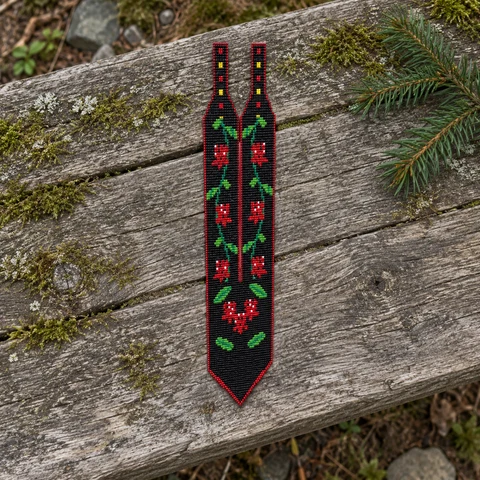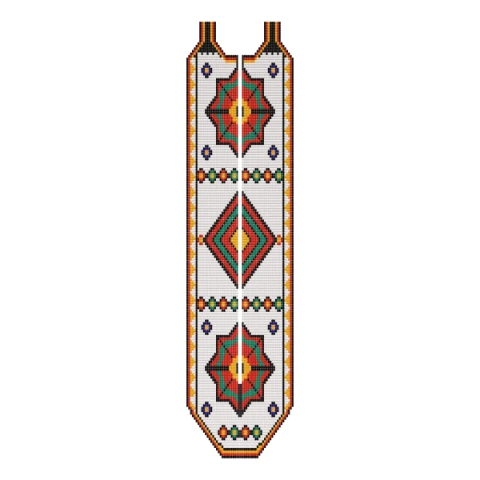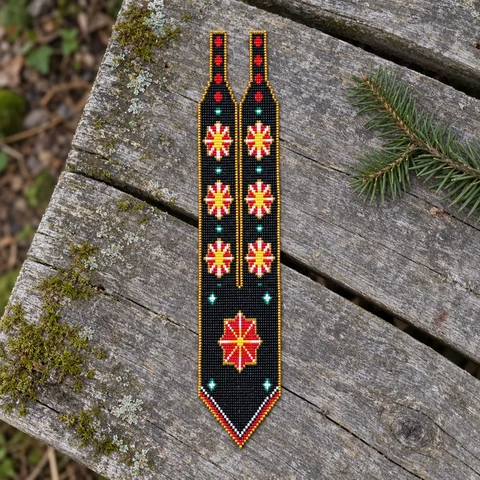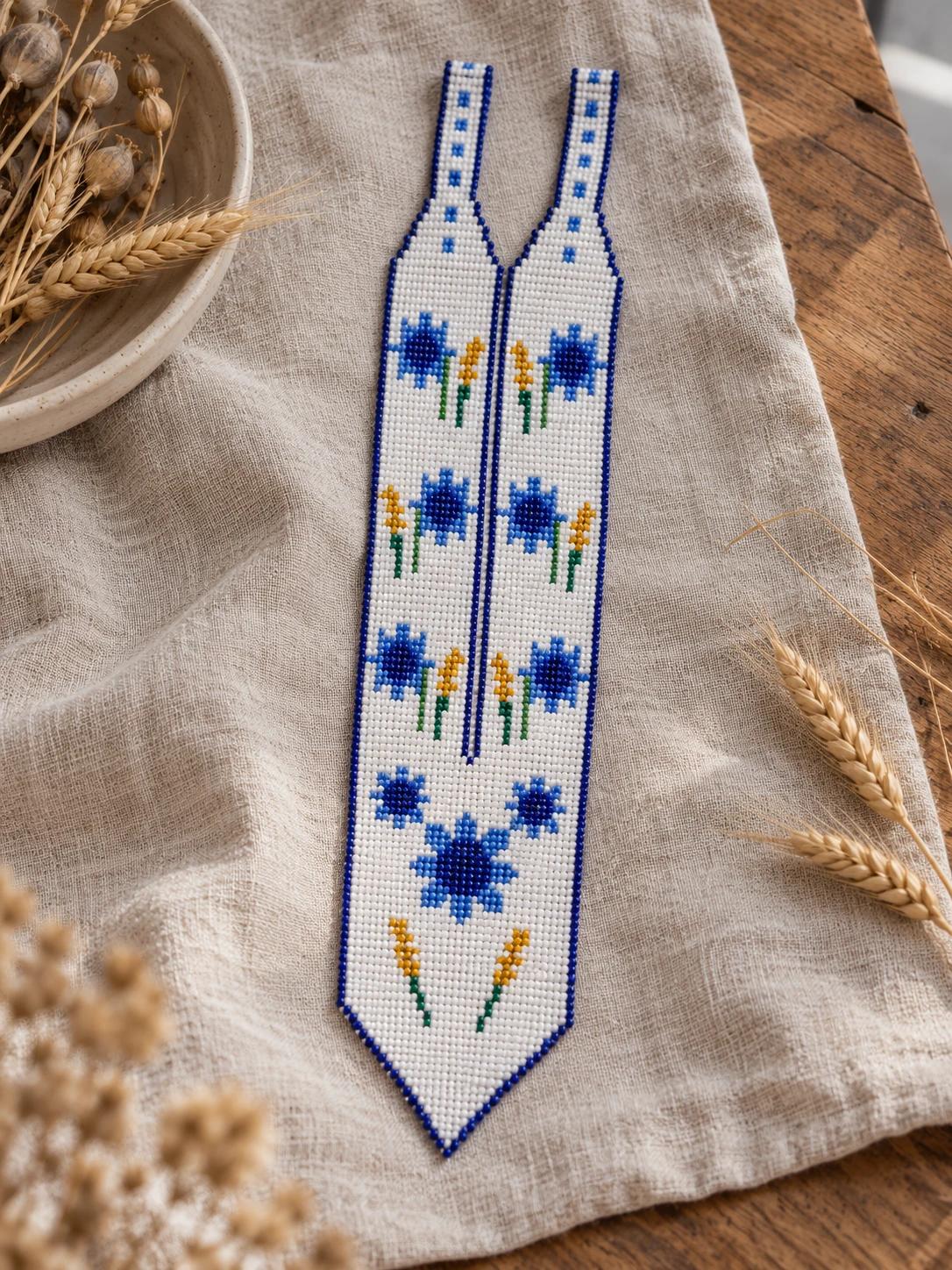
Short answer
To sell bead patterns, turn each design into a complete pattern: chart, colour key with brand and article numbers, bead counts, finished size and instructions. Sell it as a PDF or a make-only link on Etsy, your own shop, social media or a pattern marketplace, and price it from your design time and comparable listings, after each channel's fees.
What you need
- A finished design you have beaded or checked in 3D
- The chart with a colour key: brand, size, article numbers and counts
- Photos of the finished piece or 3D previews
- A delivery format: PDF, make-only link or source file
- A way to take payment that your buyers already use
Words the chart uses
- Colour key
- The table that turns each letter or symbol on the chart into a real bead: brand, size, article number and how many you need.
- Make-only link
- A link that opens the pattern in Make mode: the buyer follows it step by step but doesn't get an editable file.
- Transaction fee
- The share of each sale a marketplace keeps. On Etsy it is 6.5% of the order total.
- Payment processing fee
- What the card or payment service takes from each payment, usually a percentage plus a fixed amount.
- Terms of use
- A line in the pattern saying what buyers may do: sell the pieces they make or keep them for personal use, and never share the pattern itself.
What a bead pattern needs before you sell it
Buyers judge a pattern by one thing: can they finish the piece without messaging you? Every gap - an unnamed bead, a missing size, an unclear start - turns into a question, a refund request or a bad review. Before you list anything, check the pattern against this list.
- Chart with numbered rows (and columns where they matter), a start marker and the working direction.
- Colour key: a letter or symbol per colour with the brand, size and article number, for example Preciosa 10/0 38020 or Miyuki Delica DB0010. Wevy's bead charts list every article.
- Bead counts and grams per colour, plus 10 to 15 percent spare, so the buyer can order in one go (how to count them).
- Finished size in centimetres for the bead you name, and in beads (width × rows).
- Materials: thread, needle, loom or hook, clasp and findings.
- Instructions: the stitch, the start, the thread path or stringing order, the finish and the clasp.
- Skill level and the stitches the buyer must already know.
- Pictures: a photo of the finished piece or a 3D preview, plus a close-up.
- Your name, the © sign and your terms of use on every page.
Work the numbers out rather than guessing them. A loom bracelet 12 beads wide and 80 rows long in Preciosa 10/0 is about 2.1 × 18.4 cm and takes 960 beads, about 10.5 g. In Miyuki Delica 11/0 the same chart shrinks to about 1.6 × 12.8 cm, so say which bead the size is for. The bead pattern size calculator and the bead weight calculator do this for any chart.
PDF, make-only link or source file: what to sell
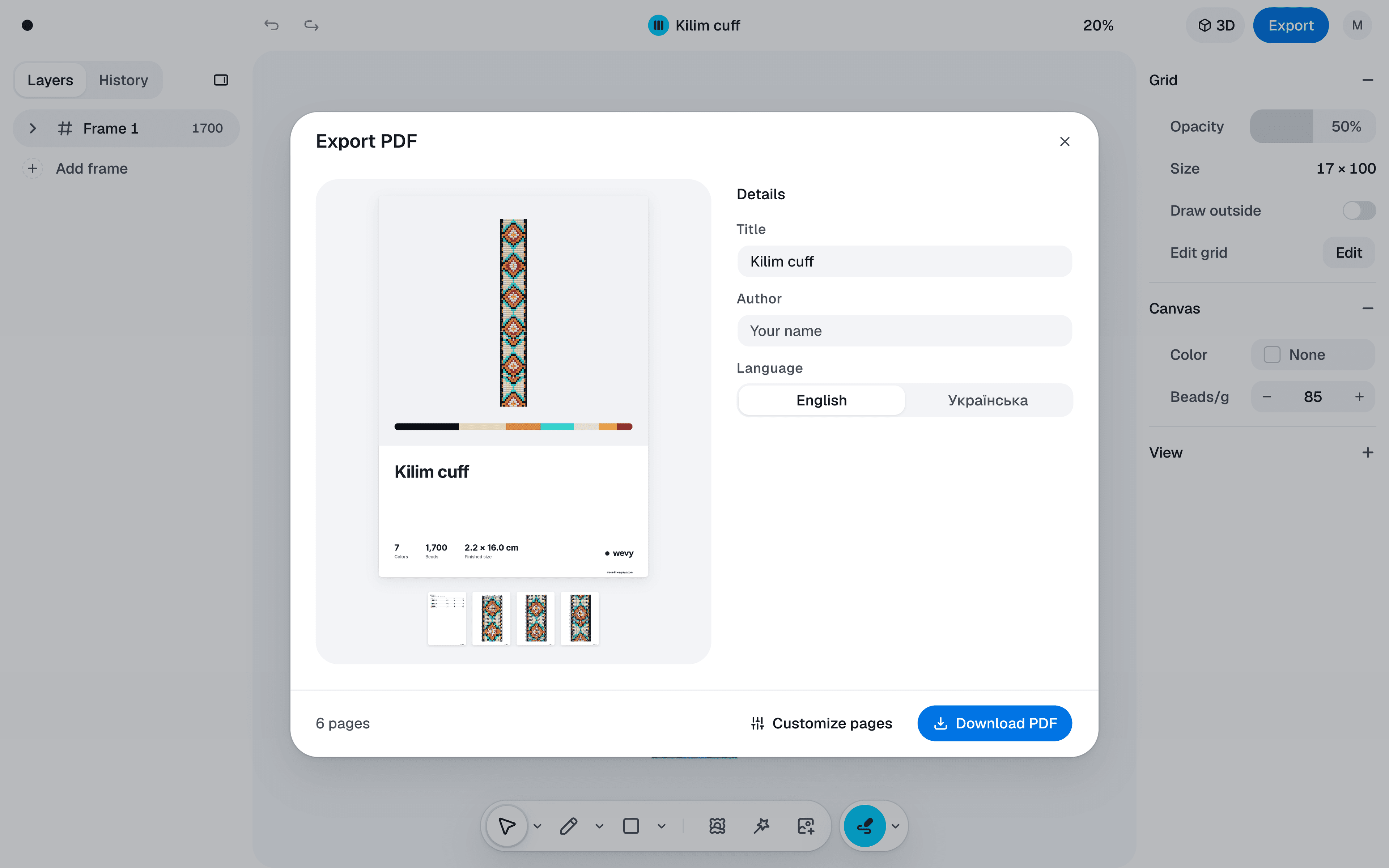
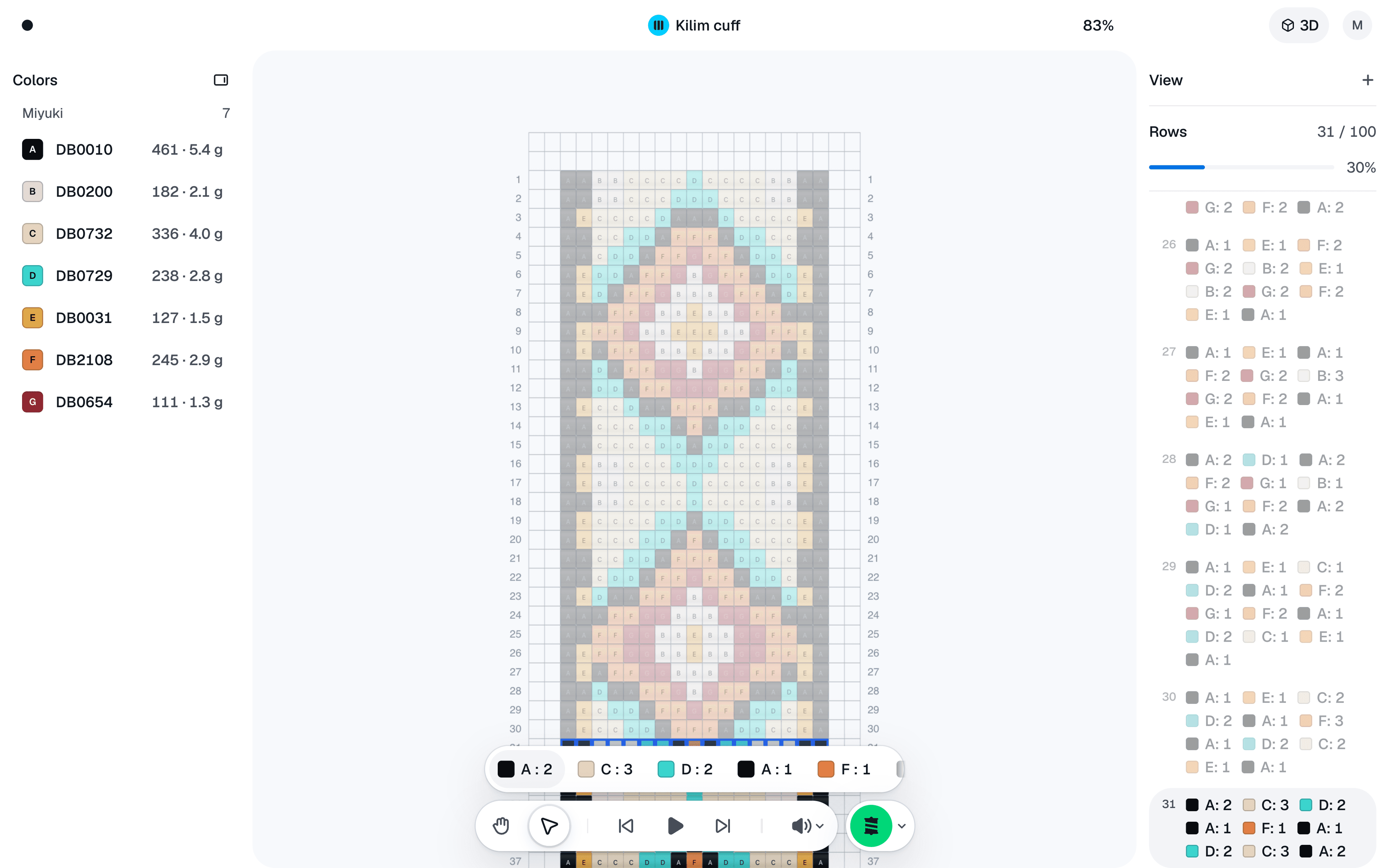
Most patterns sell as a PDF, and buyers expect one. Wevy adds a second option: a make-only link that opens the pattern in Make mode, where the buyer follows it bead by bead or row by row, with a progress tracker and optional spoken callouts, but never gets the editable chart. The third, the source file, is for buyers who want to change the design.
| Format | What the buyer gets | Best for | Watch out for |
|---|---|---|---|
| A printable cover, key, counts, chart pages and instructions | Everyone; Etsy digital downloads; buyers who print | Easy to forward; check the chart is readable on A4 or Letter | |
| Make-only link | The pattern in Make mode: one step at a time, progress saved, no editing | Beginners, beading from a phone, long ropes and sylianky | Anyone with the link can open it, so treat it like a file you hand over |
| Source file | An editable copy of the pattern | Classes, other designers, colourway licences | The buyer can change and re-export it; charge more and state what they may do |
Many sellers send two: the PDF for the worktable and a make-only link for the phone. In Wevy both come from one pattern: the PDF export builds the cover, the bead key with counts and weights, the chart pages and any working order you set in Order mode, in any of Wevy's eight languages, and a read-only Make link works on every plan. Free plan exports carry a Wevy watermark; Hobby and Pro export clean PDFs. You export once per pattern, not once per sale.
Where to sell beading patterns, and what each place takes
Patterns sell in four kinds of places: a big marketplace, your own shop, direct sales in social media and messengers, and pattern marketplaces for beaders. They differ less in fees than in who brings the buyers.
| Where | What it costs you | Who brings buyers | Delivery |
|---|---|---|---|
| Etsy | $0.20 per listing and per sale, 6.5% transaction fee, payment processing by country (see below), 15% on sales from Offsite Ads | Etsy search and Etsy's ads | Automatic download, up to 5 files of 20 MB |
| Your own shop (e.g. Payhip) | Payhip: 5% per sale on its free plan, 2% or 0% on monthly plans, plus PayPal or Stripe fees | You: social media, Pinterest, email | Automatic download |
| Instagram, Telegram, Facebook (direct) | No platform fee; only your payment method's fees | You and your followers | You send the PDF or link by hand |
| Wevy marketplace | No commission; only your payment method's fees. Live listings: Free 1, Hobby 10, Pro unlimited | Public marketplace pages and people who bead in Wevy | Free: one tap into the buyer's files; paid: you send a PDF, a Make link or the file |
Etsy brings its own buyers, and the fees pay for that traffic: someone who has never heard of you can find you in search. Your own shop keeps more of each sale but only sells what you promote. Direct sales cost nothing but time: every sale is a chat, a payment check and a manual delivery.
Selling on the Wevy marketplace
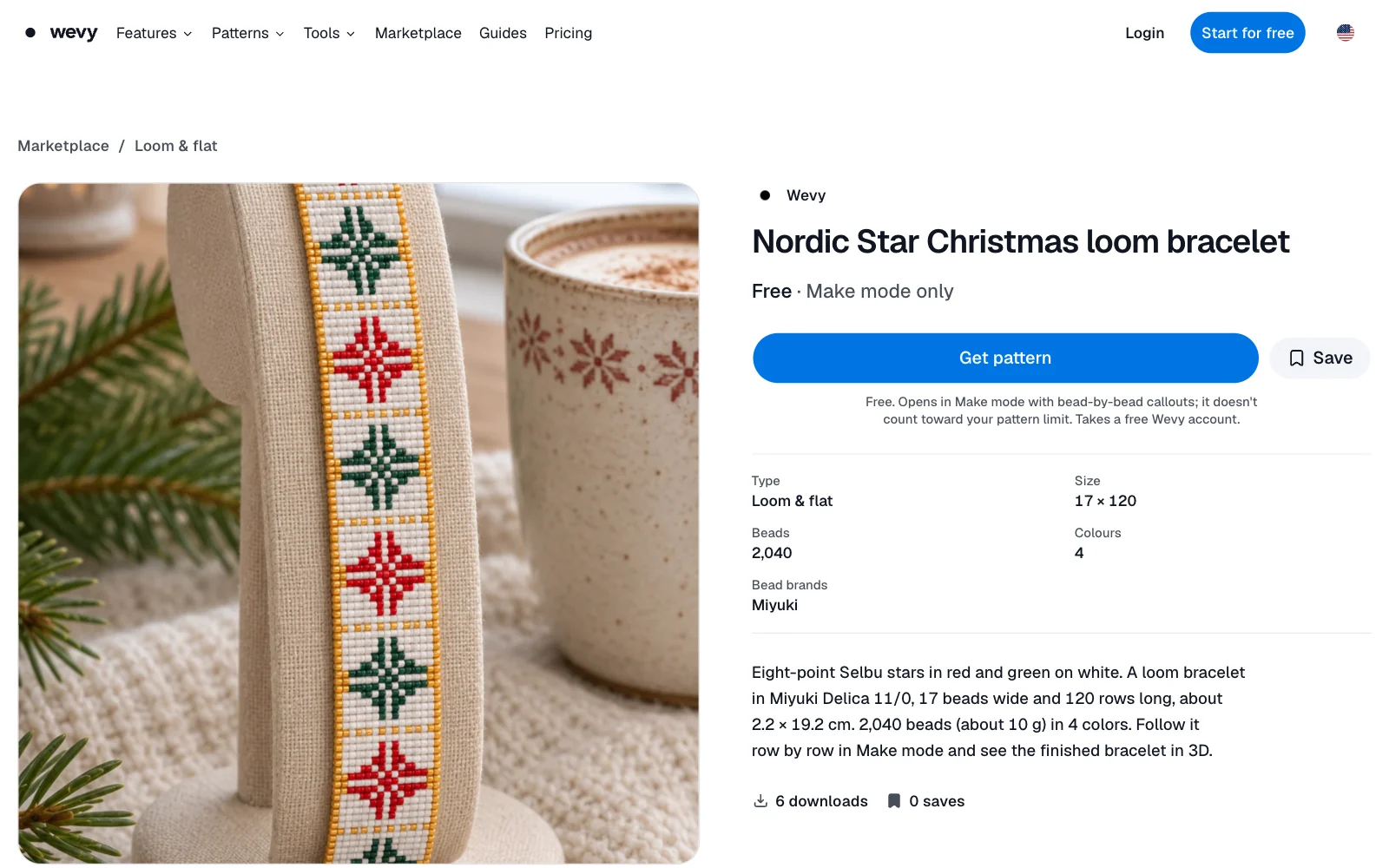
On the Wevy marketplace you open a public profile with your contacts (Telegram, Instagram, Facebook, WhatsApp, Viber, email and up to four links of your own, such as your Etsy shop) and list patterns for free or at your price in UAH, USD or EUR. A paid listing shows a Contact button: the buyer messages you, pays you as you agree, and you send the pattern. Wevy takes no commission and isn't part of the payment.
- 1Open your marketplace profile and add the contacts buyers should use.
- 2Pick a finished pattern and write its title and description in your language; you can add a translation too.
- 3Choose Free or a price, and the access: Full pattern (editable) or Make only.
- 4Check the pictures: Wevy makes 3D previews from several angles and a blurred chart, and you can edit the square cover, then publish.
A listing is a snapshot: edits to your file reach it only when you press Update listing. Each listing shows its views, contacts, downloads and saves. Live listings depend on the plan: 1 on Free, 10 on Hobby, unlimited on Pro (compare plans).
Etsy fees for selling bead patterns, as of November 2026
A digital pattern on Etsy pays the same fees as any other item, minus shipping. These are Etsy's published fees, checked in Etsy's Help Center in November 2026; they change, so check again before you set prices.
- Listing fee: $0.20 for 4 months. A digital pattern is listed with a quantity, and each sale renews it for another $0.20, so count $0.20 per sale.
- Transaction fee: 6.5% of the order total.
- Payment processing depends on where your bank account is: US 3% + $0.25, UK 4% + £0.20, Germany, France, Spain or Poland 4% + €0.30, Ukraine 6% + $0.30.
- Offsite Ads: 15% of an order that came from an Etsy ad on Google, Instagram, Pinterest or another site, or 12% once your shop has made $10,000 in 365 days; never more than $100 per order. Under $10,000 you can opt out; after that the ads are mandatory.
- Other charges: 2.5% currency conversion if your listing and bank currencies differ, a regulatory operating fee in some countries (0.48% in the UK, 1.14% in France), a one-time set-up fee that varies by location, and VAT on fees where it applies.
- Files: up to 5 files per listing, 20 MB each, with PDF among the accepted types.
For an $8 pattern from a US shop: $0.52 transaction fee, $0.49 processing and $0.20 listing leave $6.79, about 85% of the price. If the sale came through an Offsite Ad, another $1.20 goes, leaving $5.59. The same sale from a shop with a Ukrainian bank account pays $0.78 for processing and keeps $6.50 before any currency conversion.
How much to charge for a beading pattern
There is no list price for patterns: sellers set their own, and prices in one technique vary with size, difficulty and how well the pattern is written. Instead of copying someone's number, build your price from four parts.
- 1Your design time. The hours to design, test-bead and write the pattern, times the hourly rate you want, divided by the copies you expect to sell in a year: 16 hours at $15 is $240, or $6 a copy over 40 sales.
- 2Size and difficulty. More colours, more beads and harder stitches mean more work for the buyer and more value in clear instructions. A 3D star, a sylianka or a gerdan 60 beads wide is worth more than a 10-bead loom band.
- 3The market. Search where you will sell for your technique plus "pattern", note 10 to 15 comparable listings (similar size, difficulty and format) with their prices and review counts, and price in the middle of that range until you have reviews of your own.
- 4Fees. Subtract what the channel takes, then check the price still covers your time.
The calculator shows what a price leaves you on each channel. The Etsy preset uses the US fees above; for another country or your own shop, choose Custom and type the fees in.
Two rules of thumb follow from the fees. Fixed charges hurt cheap patterns most: on Etsy, $0.45 of every sale ($0.25 processing plus $0.20 listing) is 15% of a $3 pattern but under 4% of a $12 one. And a bundle - three colourways, or a bracelet with matching earrings - raises the order value without three times the design work.
Bead pattern copyright: what is protected and what isn't
In plain words, copyright protects your expression - the chart you drew, your instructions in your own words, your photos - and not the technique or the idea. Nobody owns loom weaving, peyote or "a bracelet with sunflowers". Your particular sunflower chart is yours.
Protection is automatic. In the US, the EU and Ukraine copyright exists from the moment the work is created, with no registration, and lasts 70 years after the author's death. Buying a printed or downloaded copy does not give the buyer the copyright.
| Usually protected | Usually not protected |
|---|---|
| Your original chart: the arrangement of colours you drew | The technique: loom, peyote, brick stitch, bead crochet, netting |
| Instructions in your own words | Ideas and themes: "sunflowers", "a Christmas star" |
| Your photos, thread-path diagrams and 3D renders | Common shapes and patterns: hearts, stars, plain chevrons, polka dots, checkerboards |
| The pattern as a document: layout, cover, notes | Traditional folk ornament as such (Ukrainian law calls it folklore) |
- United States: the Copyright Office won't register ideas, methods or systems, or "common patterns, such as standard chevron, polka dot, checkerboard". Registration is optional, but you need it before you can sue over a US work.
- European Union: original works are protected automatically until 70 years after the author's death. Registering with a private service only helps prove a date.
- Ukraine: the 2022 law On Copyright and Related Rights (No. 2811-IX) protects works of applied art, jewellery among them, and illustrations; it excludes ideas, methods and processes (Article 7) and folklore (Article 8), and needs no registration (Article 9).
Two things follow for sellers. A traditional ornament copied as it is belongs to no one, so it isn't yours either: say the pattern is based on a traditional piece, and sell your adaptation, colours and instructions. And a pattern of someone else's photo, a cartoon character or a logo usually needs the owner's permission, however much you changed the colours. A pattern you made from your own photo with the image to bead pattern converter is yours.
Whether buyers may sell what they make from your pattern is your decision, so write it down, for example: "Pattern for personal use. You may sell pieces you make from it by hand; you may not share, resell or publish the pattern." This is a general overview, not legal advice: for a real dispute, talk to a copyright lawyer in your country.
Protect your files in practice
- Put your name, the © sign, the year and your terms on every PDF page, not only the cover.
- Show the finished piece and a blurred or watermarked chart in listing pictures, never the full readable chart. Wevy's export can blur the drawing and tile your own watermark text over the pages.
- Sell a make-only link where it suits the buyer: they can make the piece but never receive the editable chart.
- Keep your dated source files and early sketches: they are your best evidence of who drew the pattern first.
When you find a copy
- 1Save the evidence: screenshots with the page address and date, and your dated source file.
- 2Message the seller. Many copies come from people who don't know the rules, and a polite request often ends it.
- 3Report it to the platform: Etsy through its Reporting Portal for rights owners; on the Wevy marketplace, sign in, press Report on the listing and choose Copied from someone else, or send a request under Wevy's copyright notice.
- 4Send a formal notice if you need to: a DMCA notice for US platforms. In Ukraine, Article 56 of the copyright law lets you require a website owner to block a copy through a lawyer or patent attorney, and the site must act within 48 hours unless it proves it has the rights.
How to get your first pattern sales
A listing has a few seconds to answer two questions: what will I make, and can I make it? The picture answers the first. The first lines of the description answer the second: technique, finished size, bead brand and skill level.
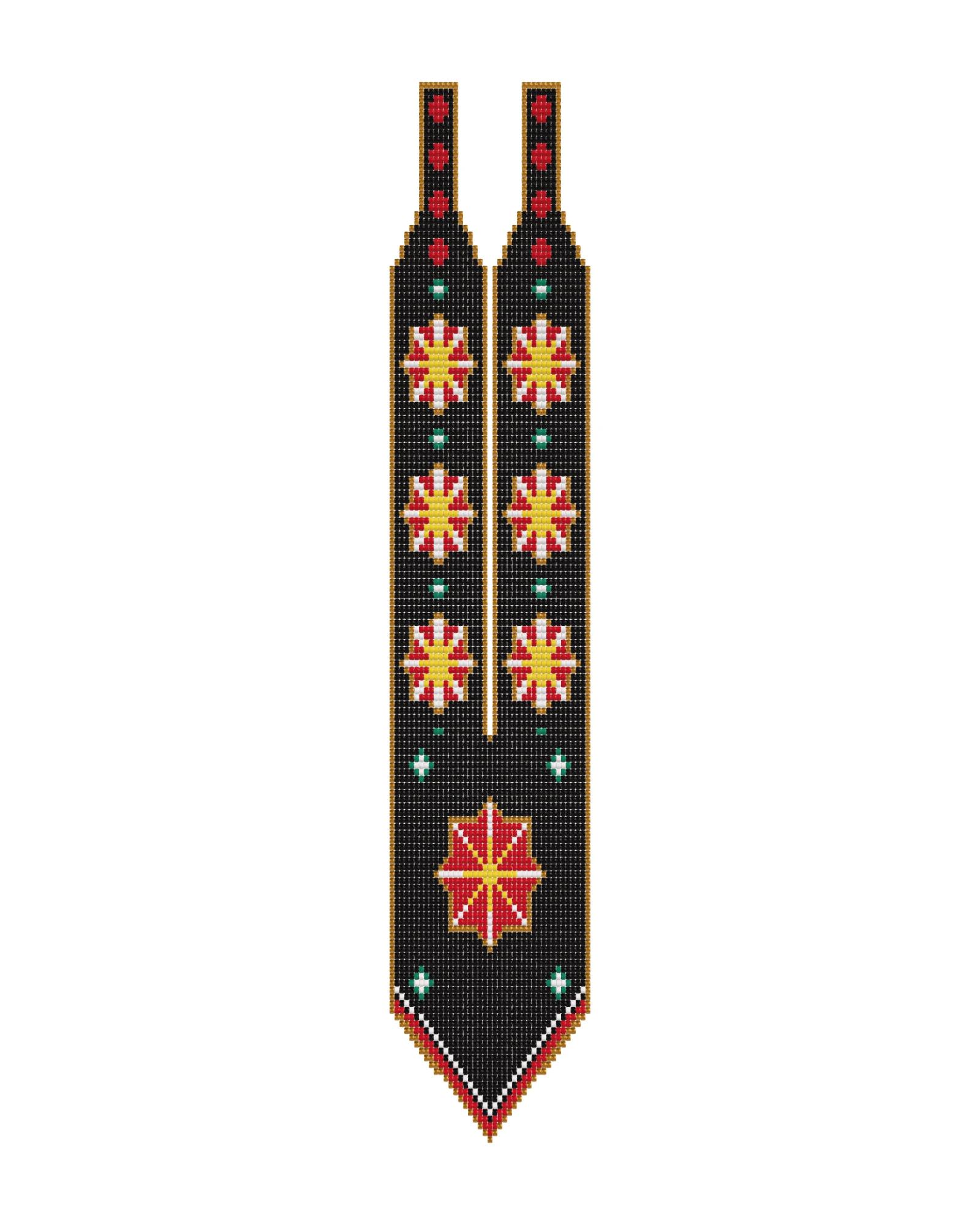
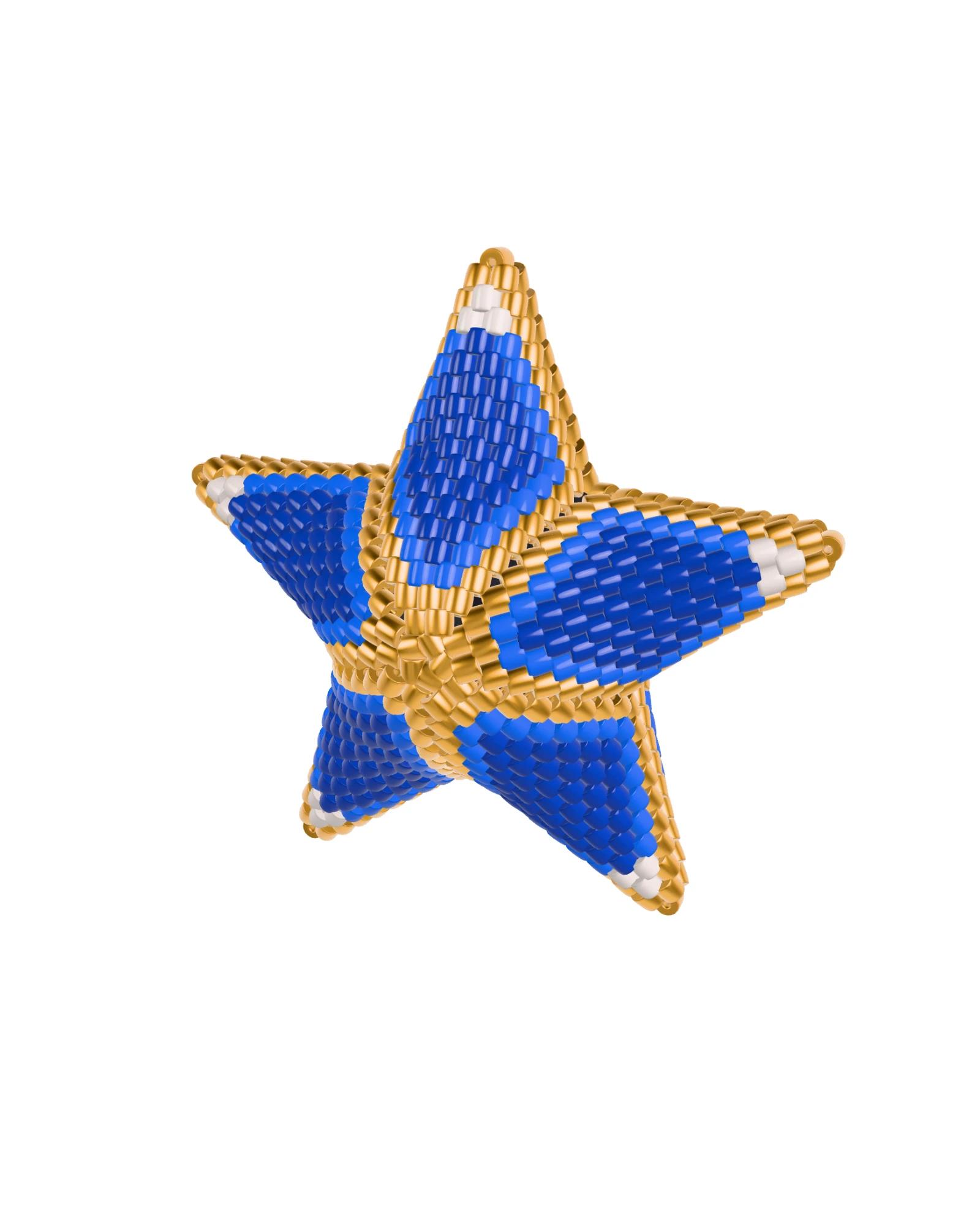
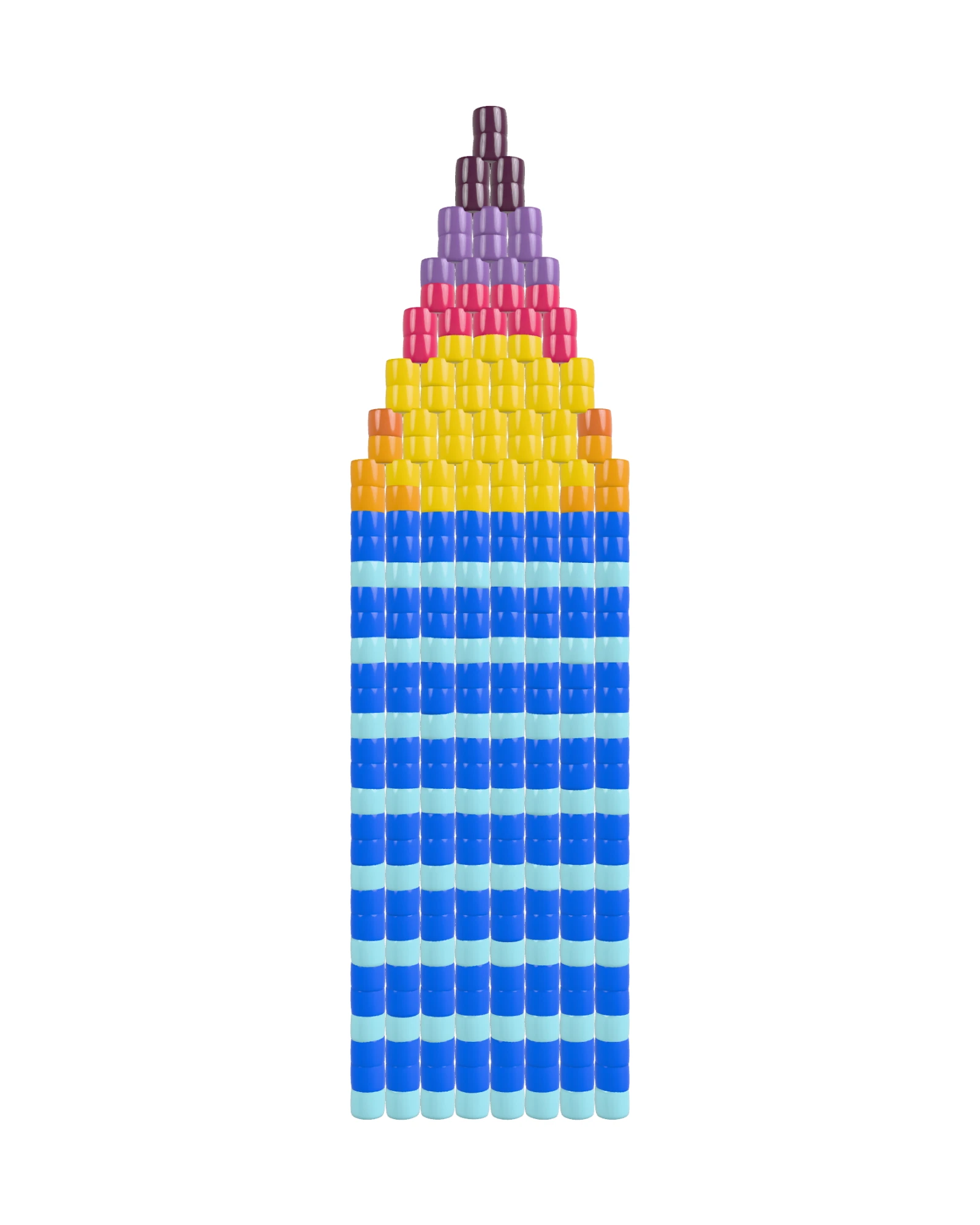
Before you have a finished piece, a 3D preview shows the shape and colours on real Preciosa, Miyuki or TOHO beads. Once it's made, add photos: worn, in daylight, with something for scale. Photos from people who made your pattern are the best proof it works.
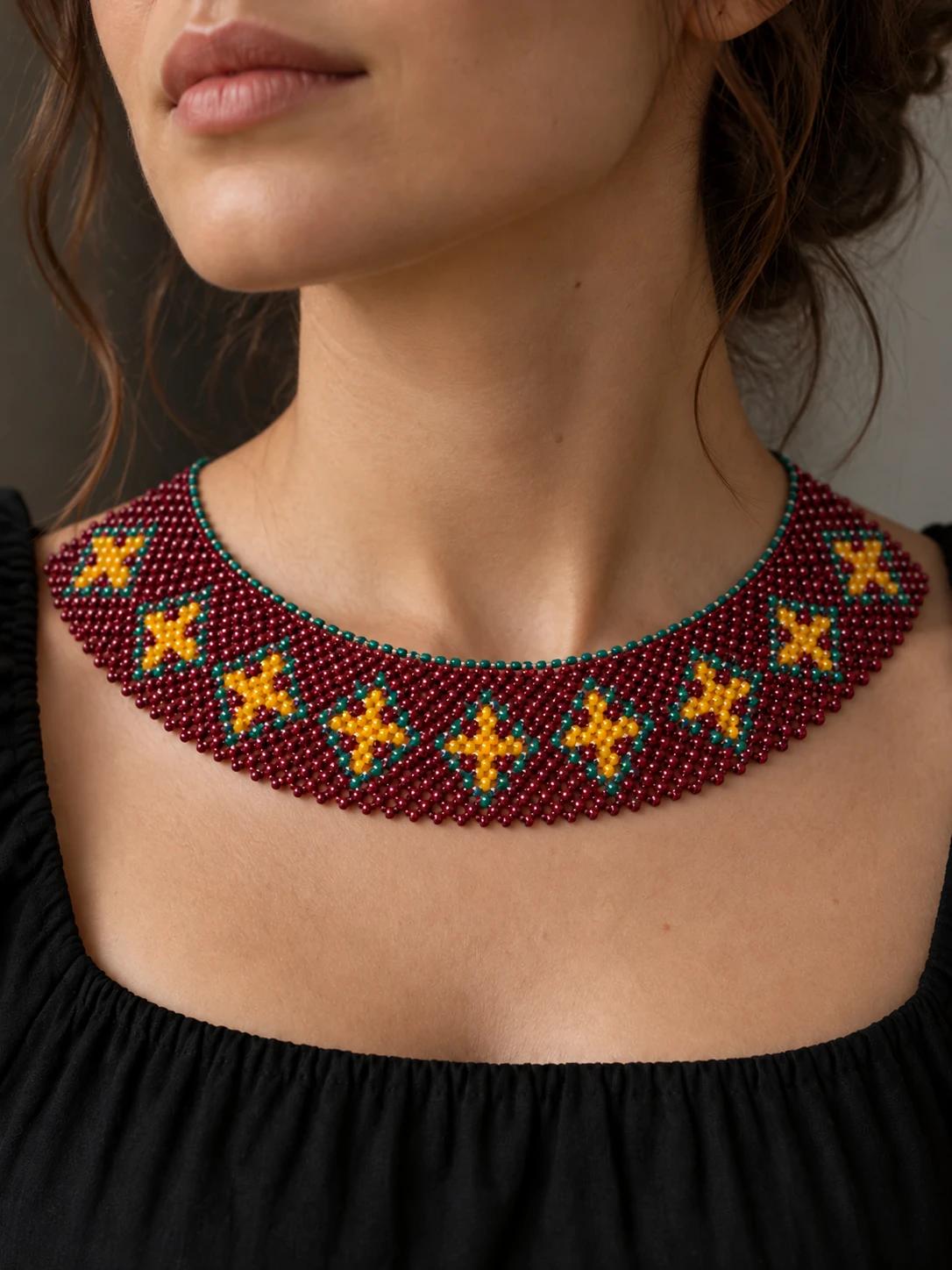
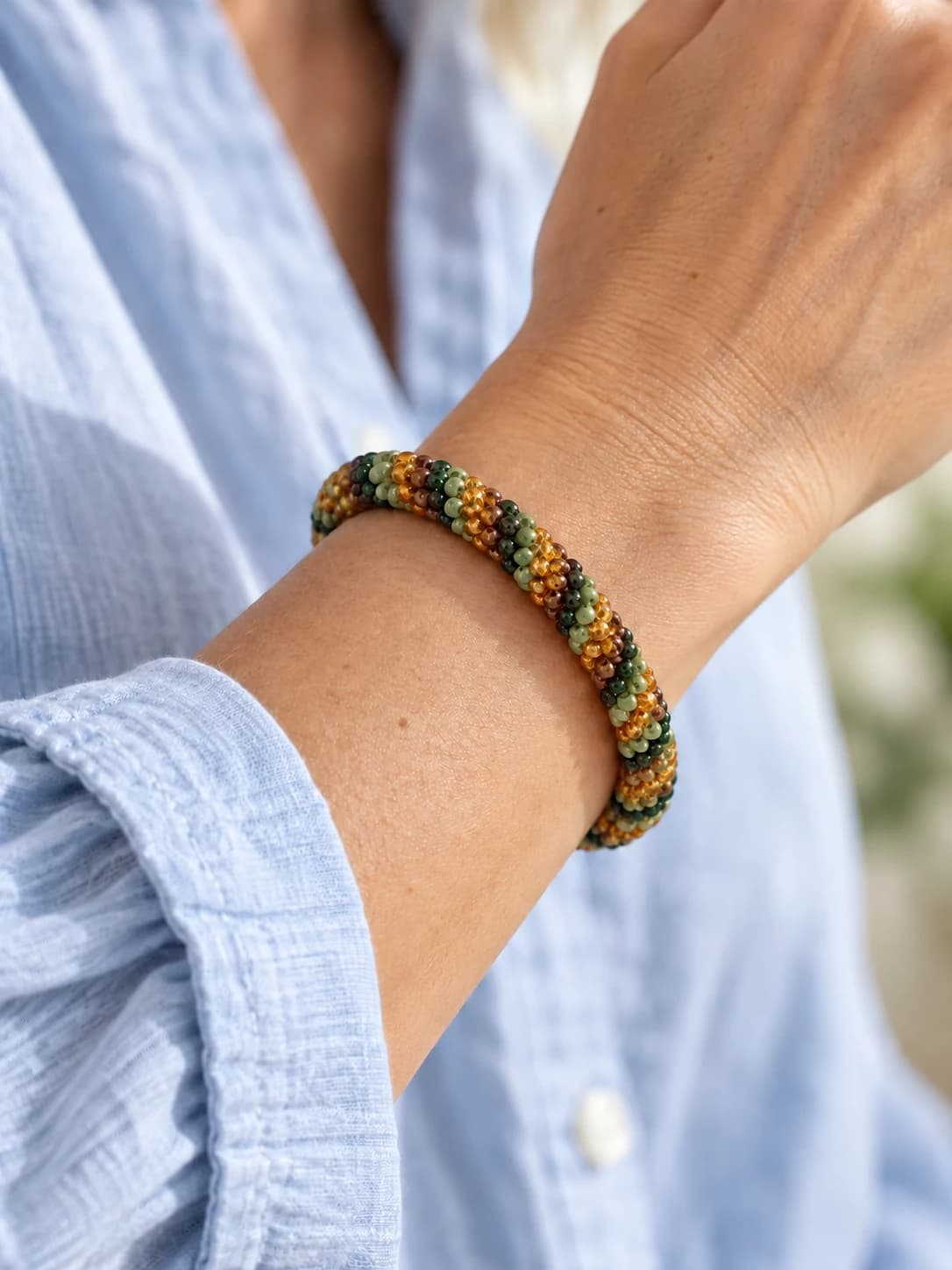
- Pinterest is a search engine for ideas: pin each finished piece with a searchable title ("sunflower loom bracelet pattern") and your listing link.
- Instagram Reels and TikTok: short clips of the piece being beaded, a 3D preview turning or Make mode on a phone show the pattern working.
- A free pattern as the first step brings beaders to your profile, where your paid patterns and contacts are. On Wevy a free Make only listing costs buyers nothing on any plan and doesn't count toward their pattern limit.
- Bundles and colourways: sell one design in three palettes, or a bracelet with matching earrings, for less than the singles.
- Translations: a Wevy listing can carry its title and description in a second language, and the PDF exports in any of Wevy's eight languages.
- Fast replies: in direct sales the buyer waits in a chat, so keep a ready message with the price, payment details and delivery format.
Selling finished beadwork instead of patterns
A pattern is designed once and sold many times; a finished piece is sold once, at a price that has to cover materials and hours of beading. Many designers do both: the piece for the photo and the first buyer, the pattern for everyone who wants to make their own.
Price finished pieces from cost, not from pattern prices. In the bead project cost calculator, 12 g of beads, $3 of findings and 2 hours at $15 an hour come to about $49 with a 30% markup, before fees.
A piece that sells well is a tested design for a pattern, and as a PDF it reaches beaders the piece never would. To start from a blank grid, see how to design a gerdan pattern.
Common mistakes and fixes
| What you see | Why, and how to fix it |
|---|---|
| Buyers ask which beads to buy | The key lists colours but not beads. Add the brand, size, article number and grams for every letter. |
| The piece comes out a different size | The size is given in beads only, or for another bead. Give centimetres for the bead you name and warn that other brands change it. |
| You keep less per sale than you expected | Transaction, processing, listing and ad fees add up, and fixed fees weigh most on cheap patterns. Run the price through the calculator for each channel. |
| Your chart turns up in someone else's shop | The listing pictures showed the full readable chart. Show the finished piece and a blurred or watermarked chart, and put your name and terms on every page. |
| Views but no sales | The listing shows only a chart. Add a photo or 3D preview of the finished piece, and put the technique, size and bead in the first line. |
| A buyer can't follow the instructions | Nobody tested the pattern. Have someone bead it from the PDF alone and add a line for every question they ask. |
Questions beginners ask
Can you sell bead patterns on Etsy?
Yes. Patterns sell on Etsy as digital downloads: you upload up to 5 files of up to 20 MB each, usually a PDF, and buyers download them after paying. As of November 2026 Etsy charges $0.20 per listing, 6.5% of each sale and a payment processing fee that depends on your country: 3% + $0.25 in the US, 6% + $0.30 in Ukraine.
How much should I charge for a bead pattern?
Sellers set their own prices. Divide your design and writing time by the copies you expect to sell, then compare 10 to 15 similar listings where you will sell. Bigger, harder and better-documented patterns justify more; check what is left after fees before you settle on a number.
Are bead patterns protected by copyright?
Your original chart, instructions and photos are protected automatically, without registration, in the US, the EU and Ukraine. The technique, the idea and common shapes like hearts, stars or a plain chevron are not, and neither is traditional folk ornament copied as it is.
Can I sell beadwork made from someone else's pattern?
It depends on the designer's terms, so read them before you sell. Many designers allow selling handmade pieces but not copying or reselling the pattern. Free patterns from the Wevy marketplace may be made into beadwork, but the pattern itself can't be redistributed unless the listing says so.
Can I sell a pattern made from a photo or a cartoon?
From your own photo or drawing, yes. From someone else's photo, a cartoon character or a brand logo you need the owner's permission, even if you changed the colours or the size.
What format should a bead pattern be in?
A PDF bead pattern is the standard: it prints, works offline and is what marketplaces like Etsy deliver. A make-only link is a good second format for people who bead from a phone, and the editable source file suits classes and other designers.
Does Wevy take a commission on pattern sales?
No. On the Wevy marketplace you set the price in UAH, USD or EUR, the buyer contacts you and pays you directly, and Wevy takes no commission. The number of live listings depends on the plan: 1 on Free, 10 on Hobby, unlimited on Pro.
How do I deliver a pattern after someone pays?
On Etsy and download shops delivery is automatic. In direct sales, send the PDF by email or messenger, or share a make-only link, as soon as you see the payment, and note who bought what in case they lose the file.